Clear Sky Science · en
Integrative network toxicology and experimental evidence reveal mechanisms underlying diethyl phthalate-induced initiation and progression of endometrial cancer
Everyday Chemicals and Women’s Cancer Risk
Plastic softeners are woven into modern life, showing up in packaging, cosmetics, and medical devices. One of them, diethyl phthalate (DEP), is so widespread that its breakdown product can be detected in the urine of most people. At the same time, rates of endometrial cancer—a cancer of the uterine lining—have been climbing worldwide. This study asks a pressing question for anyone concerned about environmental health: could long-term exposure to DEP be quietly nudging cells in the uterus toward cancer, and if so, how?
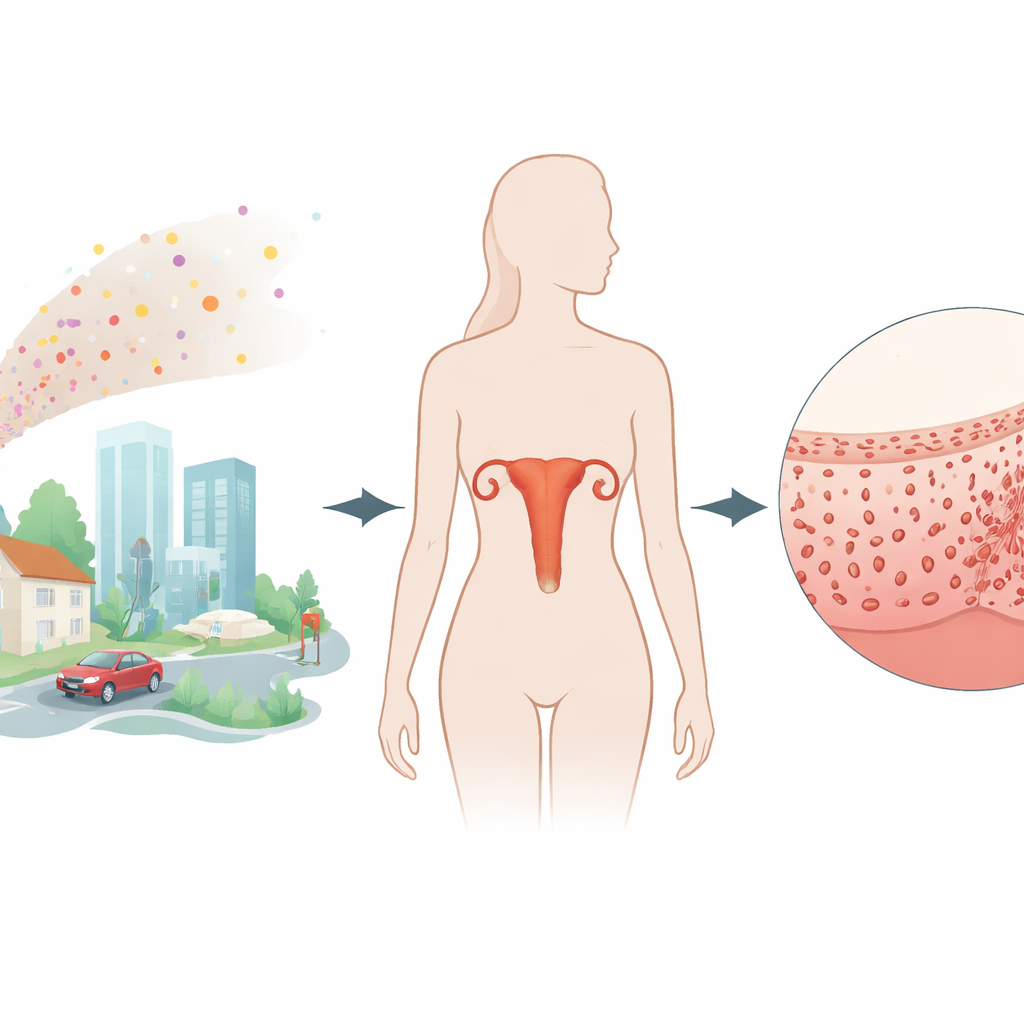
How the Study Connected Exposure and Disease
The researchers began by mining large public databases containing gene activity profiles from endometrial cancer tissues and healthy uterine lining. By comparing thousands of genes at once, they pinpointed which genes were consistently more or less active in cancer. They then overlaid this map with a second one: a list of human genes that previous chemical databases and prediction tools suggest might interact with DEP. Where these two maps overlapped, they found 19 genes that sit at the crossroads of DEP exposure and endometrial cancer, hinting at a mechanistic link between an everyday chemical and tumor development.
Smart Algorithms to Find the Most Critical Genes
Sorting through 19 candidate genes is still a tall order, so the team turned to machine learning. They trained and tested more than 100 different predictive models on combined patient datasets to see which sets of genes could best distinguish cancer tissue from normal tissue. Using an interpretability method called SHAP, which reveals how much each gene “pushes” a prediction toward cancer or healthy status, they ranked the candidates. Five genes—FOS, JUN, NR4A1, ADRA2C, and SLC6A2—emerged as core players, each individually showing strong power to separate cancer from non-cancer samples, and together forming a fingerprint of DEP-related changes in the uterine lining.
Zooming In on Chemical–Protein Encounters
To probe whether DEP could physically bind to the proteins made by these genes, the researchers used molecular docking and long computer simulations of atomic motion. These analyses suggested that DEP fits into pockets on several of the proteins, particularly ADRA2C, NR4A1, and SLC6A2, forming stable complexes over time. Such virtual experiments do not prove cause and effect on their own, but they strengthen the idea that DEP can directly latch onto key control proteins inside or on the surface of uterine cells, potentially nudging their behavior in ways that favor tumor growth.
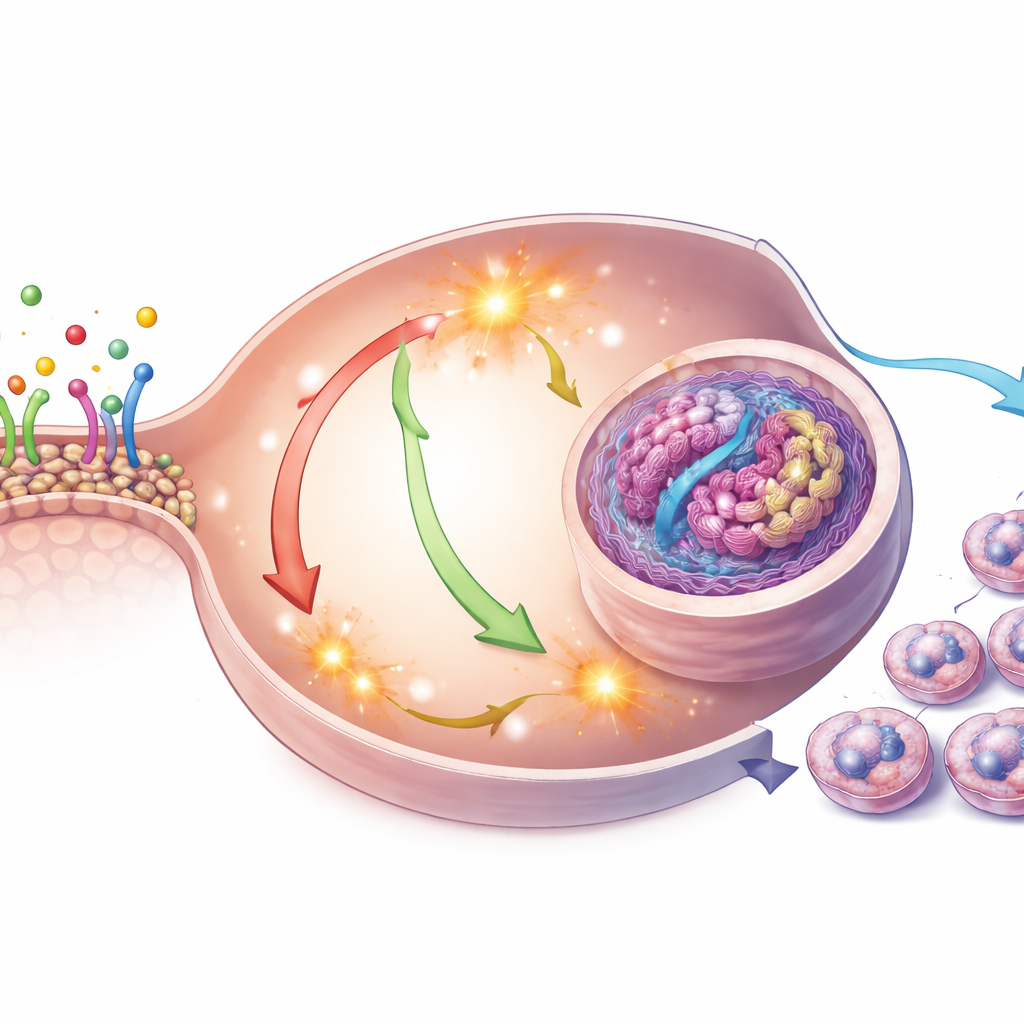
What Happens Inside Uterine Cells
The team then moved from computer models to living cells, exposing two human endometrial cancer cell lines to DEP at doses chosen to be biologically active but not immediately toxic. They found that DEP-treated cells multiplied faster and entered the DNA-copying phase of the cell cycle more readily. Inside these cells, levels of reactive oxygen species—chemically aggressive forms of oxygen—rose, while a natural antioxidant enzyme dropped. At the same time, major growth-control pathways inside the cell, often labeled MAPK/ERK and PI3K/AKT, became more active. This activation coincided with an increase in Cyclin D1 and CDK4, two proteins that act like gatekeepers pushing cells from a resting state into active division.
What This Means for Everyday Life
Taken together, the study paints a multi-layered picture: DEP can bind to specific cellular proteins, trigger oxidative stress, switch on growth-promoting signaling circuits, and accelerate the cell cycle in endometrial cancer cells. For a layperson, the message is that a common plastic additive has the potential to create a more “fertile ground” for cancer in the uterine lining, especially in a body already influenced by hormones and other risk factors. While the work was done in cell models and still needs confirmation in animals and people, it underscores the importance of scrutinizing routine chemical exposures and supports efforts to reduce contact with unnecessary endocrine-disrupting compounds.
Citation: Chen, X., Wang, Z., Wang, F. et al. Integrative network toxicology and experimental evidence reveal mechanisms underlying diethyl phthalate-induced initiation and progression of endometrial cancer. Sci Rep 16, 8066 (2026). https://doi.org/10.1038/s41598-026-39325-6
Keywords: endometrial cancer, diethyl phthalate, endocrine disruptors, environmental toxicology, cell signaling