Clear Sky Science · en
Physiological and biochemical markers associated with root lignification and micronutrient uptake in wheat genotypes with contrasting resistance to Gaeumannomyces tritici
Why this matters for your daily bread
Wheat is a global staple, and its roots are under constant attack from a devastating soil fungus that can quietly slash yields. This study looks below the surface to ask a simple but powerful question: why do some wheat varieties withstand this disease while others succumb? By tracing how tiny mineral nutrients and natural root "wall hardening" work together, the researchers outline practical clues for breeding sturdier crops and managing soils to keep harvests safer.
The hidden enemy in the soil
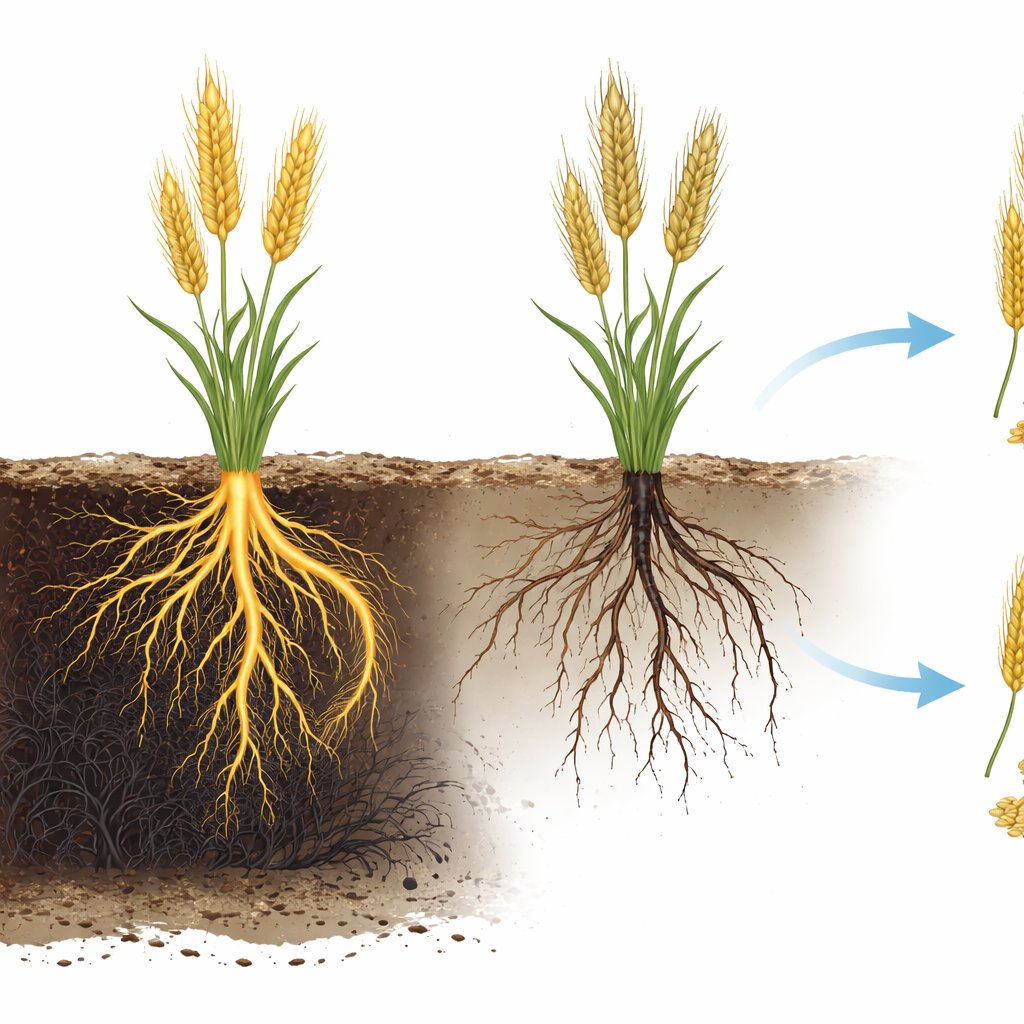
Take-all disease is caused by a root-invading fungus that rots the underground parts of wheat plants. Infected roots turn black and lose fine branches, starving the plant of water and nutrients and sometimes wiping out entire fields. Chemical control is difficult and often unreliable, so plant breeders are eager to find wheat types that can resist the disease on their own. The authors focused on two suspects that might tip the balance: how strongly roots reinforce their cell walls with lignin, a tough natural polymer, and how much of the trace minerals manganese and iron the plants carry in their seeds and roots.
Testing many wheat types under attack
The team first grew 17 different bread wheat genotypes in sterile greenhouse soil, either with or without the take-all fungus. They measured disease symptoms, root weight, lignin in the root walls, and manganese and iron levels in both roots and seeds. Clear patterns emerged. Varieties that stayed healthier under infection tended to have heavier, more branched root systems, higher lignin content in their roots, and greater concentrations of manganese and iron once the fungus was present. Their seeds also started out richer in manganese, suggesting that “inherited” nutrient reserves help young plants launch faster defenses before the fungus gains a foothold.
Enzymes that build a stronger root wall
Next, the researchers zoomed in on five representative varieties: two resistant and three susceptible. They examined the activity of two key enzymes, phenylalanine ammonia-lyase and peroxidase, along with total protein levels in the leaves after infection. These enzymes help drive the chemical pathway that produces lignin and other protective compounds. In resistant plants, fungus exposure strongly boosted both enzyme activities and overall protein content, whereas the most vulnerable lines showed weak or even suppressed responses. Statistical modeling singled out root manganese levels and total protein as the best predictors of how much lignin the roots accumulated.
Building a living shield in the roots
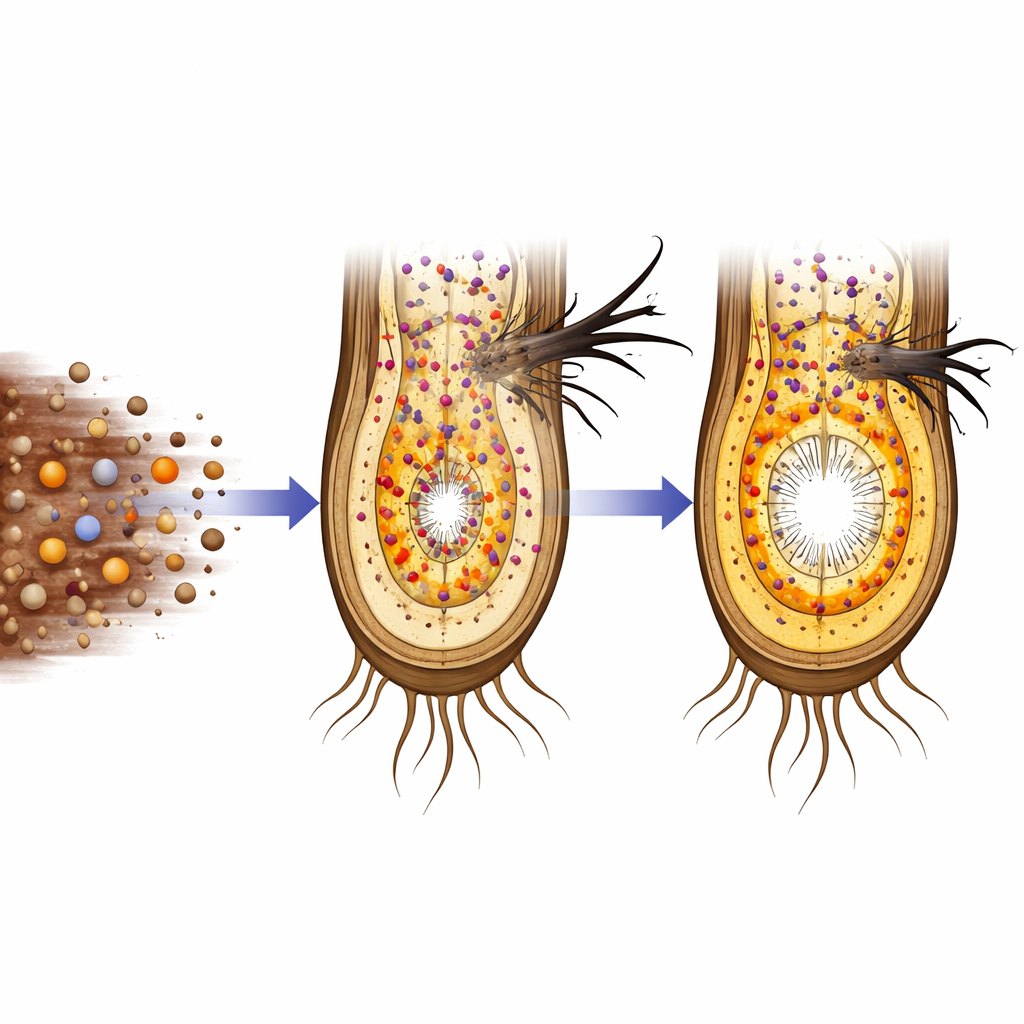
When all the measurements were combined, a coherent picture emerged. High seed stores and strong root uptake of manganese and iron appear to prime wheat plants to turn on their defense machinery quickly after sensing the pathogen. This leads to an enzyme surge, rapid lignin production, and thickening of the outer root cell walls. In resistant genotypes, the reinforced roots not only blocked fungal advance but also produced new secondary roots, helping the plants keep drawing up water and nutrients despite the attack. In contrast, susceptible genotypes had thinner, poorly lignified roots that decayed and failed to regrow, leaving the plants severely weakened.
What this means for future wheat fields
To a non-specialist, the takeaway is that strong roots are not just big—they are chemically well armed. This study shows that tiny amounts of manganese and iron, starting already in the seed, can help wheat build a living shield of lignin that stops a major root disease in its tracks. For breeders, this points to simple biochemical markers—seed and root micronutrient levels, lignin content, and certain enzyme activities—that can guide the selection of more resilient varieties. For farmers and agronomists, it suggests that smart nutrient management, especially ensuring adequate manganese and iron, could work alongside genetics to protect wheat yields from an invisible but costly underground foe.
Citation: Gholizadeh Vazvani, M., Dashti, H. & Saberi Riseh, R. Physiological and biochemical markers associated with root lignification and micronutrient uptake in wheat genotypes with contrasting resistance to Gaeumannomyces tritici. Sci Rep 16, 8056 (2026). https://doi.org/10.1038/s41598-026-39324-7
Keywords: wheat root disease, lignin, manganese and iron, plant immunity, crop breeding