Clear Sky Science · en
Correlation of chronological, skeletal and dental (Demirjian method) ages in an Iranian growing orthodontic population – a cross-sectional study
Why Timing Matters for Growing Smiles
Parents are often told that their child needs braces “at the right time,” but what does that really mean? This study looks at how children’s real physical development compares with the simple number of years they have been alive. By examining teeth and neck bones in growing orthodontic patients, the researchers ask a practical question: when planning treatments that rely on remaining growth, can dentists trust the birthday on the chart, or should they look deeper into the body’s own growth signals? 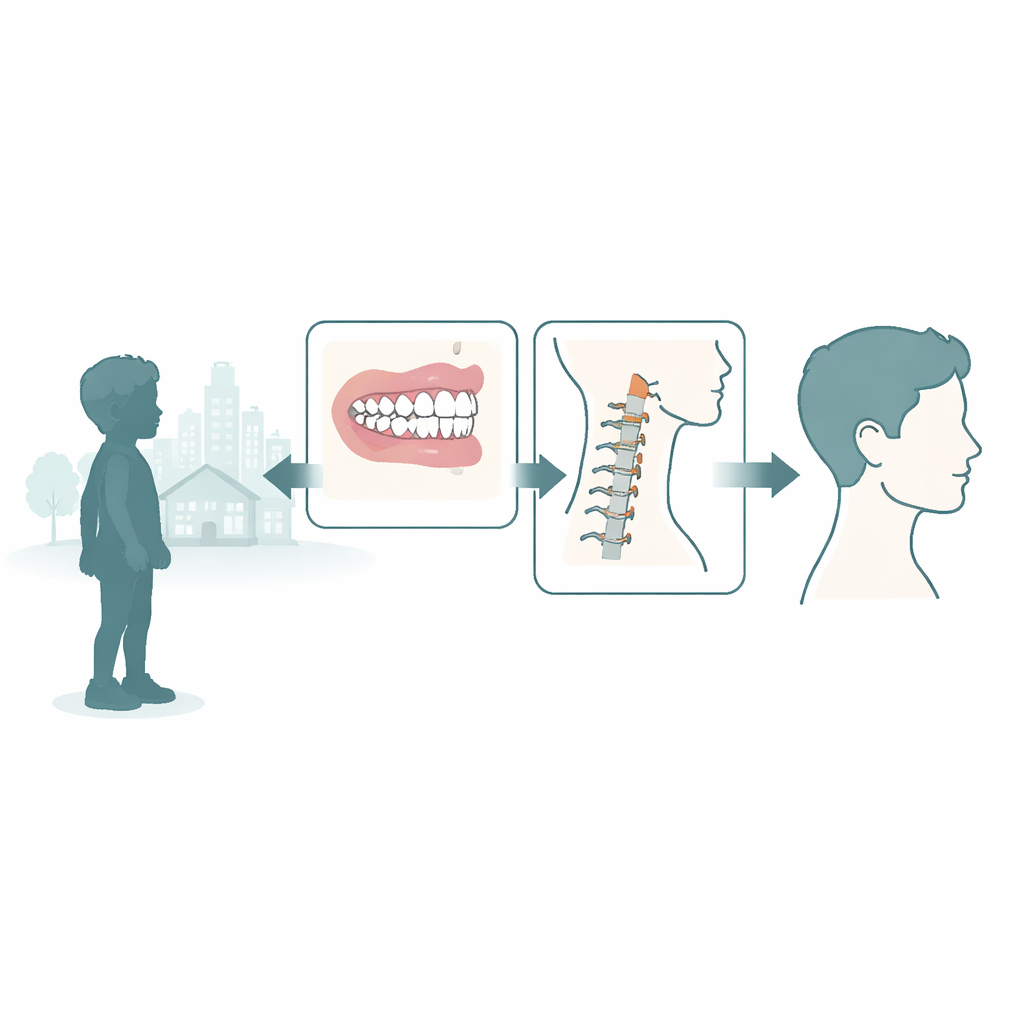
Looking Beyond the Birthday
Doctors and dentists frequently use chronological age—the age in years—to decide when to start treatments that depend on growth, such as correcting jaw position. But children do not all grow at the same pace. Factors like nutrition, body weight, illnesses, and family background can speed up or slow down physical development. To capture this hidden variation, specialists use two additional “clocks”: dental age, based on how far permanent teeth have formed inside the jaw, and skeletal age, based on how much certain bones have matured. These two measures can show how physically “old” a child really is, even when their birthday says otherwise.
How the Researchers Measured Growing Bodies
The study focused on 194 Iranian children and teenagers between 7 and 17 years old who were already visiting an orthodontic clinic. The researchers used existing dental X‑rays and side‑view head X‑rays, so no extra radiation was needed. Dental age was estimated with the widely used Demirjian method, which grades the development of seven permanent teeth in the lower jaw and converts these stages into an age. Skeletal age was gauged using the shapes of the second, third, and fourth neck vertebrae, a system known as cervical vertebral maturation (CVM). As the spine matures, the outlines of these bones change in predictable steps, from very flat shapes in early growth to tall, rectangular shapes after the growth spurt has ended.
How the Different Age Clocks Lined Up
When the team compared the three age measures, they found that dental age and chronological age were strongly linked for both boys and girls: as children got older in years, their teeth were almost always more developed too. On average, however, dental age came out about 0.22 years—roughly 80 days—ahead of real age, meaning the Demirjian method tended to make children in this Iranian sample look slightly “older” dentally than they were. Dental age was also strongly related to skeletal age, and chronological age showed a somewhat weaker but still clear link with skeletal maturity. Interestingly, the closest match between dental age and chronological age occurred at the earliest neck‑bone stage (called CVMS1), a period before the main adolescent growth spurt, especially important for treating certain jaw problems early.
What This Means for Orthodontic Treatment
Because neck‑bone stages II and III usually coincide with the rapid growth spurt, starting treatment at just the right stage can make it easier to guide jaw growth and correct skeletal imbalances. The study found that boys and girls reach these key stages at different average ages, reinforcing that “age in years” alone is a blunt tool for such fine‑tuned decisions. In this group, dental maturation tracked chronological age more closely than skeletal maturation did, suggesting that, for these patients, teeth provided a more stable sign of overall biological age than bones alone. 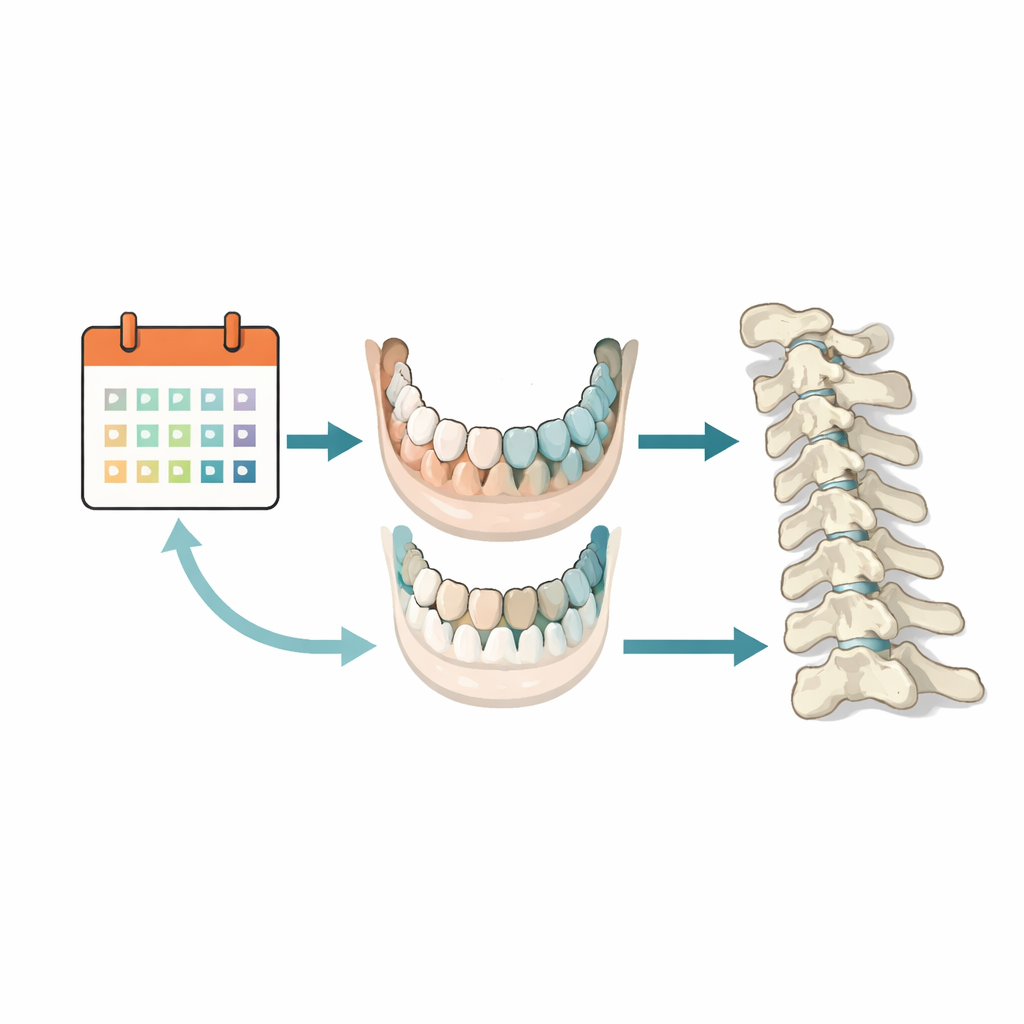
Take‑Home Message for Parents and Practitioners
For families, the main lesson is that two 12‑year‑olds can be at very different points in their growth, and this matters when planning braces or jaw‑growth treatments. For clinicians, the findings highlight that relying only on birthdays risks mistiming important interventions. In this Iranian orthodontic population, dental and skeletal assessments both added valuable insight, with dental development showing the strongest alignment with chronological age but also slightly overestimating it. The authors conclude that combining all three views—calendar age, dental development, and neck‑bone maturity—offers a more trustworthy picture of how much growth remains, leading to better‑timed and potentially more effective orthodontic care.
Citation: Mohammadian-Rastani, M., Gorjizadeh, F., Panahi, S.R. et al. Correlation of chronological, skeletal and dental (Demirjian method) ages in an Iranian growing orthodontic population – a cross-sectional study. Sci Rep 16, 7846 (2026). https://doi.org/10.1038/s41598-026-39319-4
Keywords: dental age, skeletal maturation, orthodontic timing, growth assessment, cervical vertebral maturation