Clear Sky Science · en
Acute effects of squat loading intensity on performance in competitive judo athletes
Why this matters for fighters and fitness fans
Before a big match or workout, athletes often wonder how hard they should push in the warm-up: go heavy to “wake up” the muscles, or save energy with something lighter? This study looked at that question in national-level judo athletes, testing whether heavy or moderately heavy squats just before a fight-style test would lead to better throwing performance. The results offer practical guidance not only for judo coaches, but for anyone interested in using strength exercises to sharpen short-term performance without causing early fatigue.
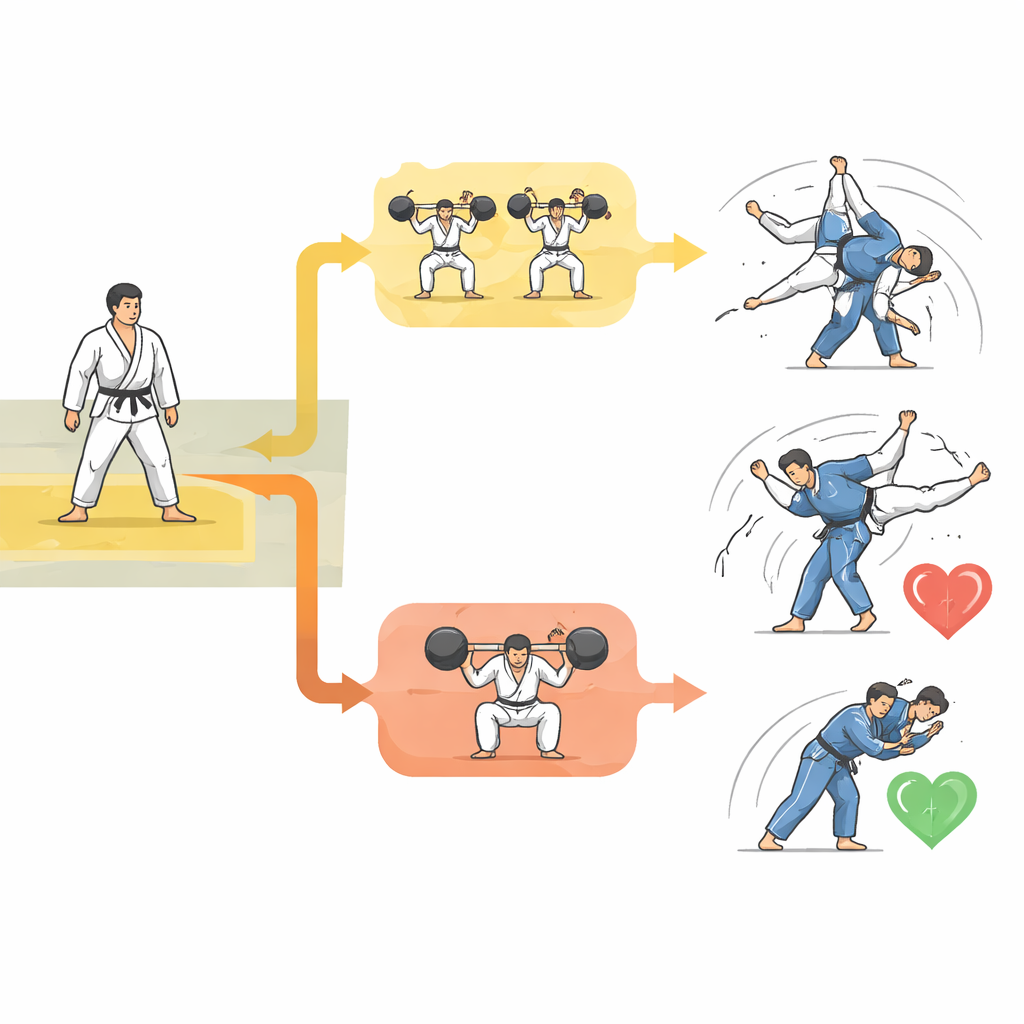
How the body gets a short-term boost
The research focused on a phenomenon called post-activation performance enhancement, a short-lived boost in strength and power that can appear several minutes after a demanding effort. Instead of relying on electrical stimulation in a lab, this effect comes from voluntary actions such as heavy lifts or explosive movements. The idea is that a well-chosen primer set can leave the nervous system more switched on, muscles slightly stiffer and warmer, and the athlete better prepared to produce force quickly. But if the primer is too hard, the extra fatigue can cancel out these benefits—especially in sports like judo that require repeated bursts of effort with little rest.
What the researchers tested on the mat
Twenty highly trained male judokas, all national-level competitors with years of practice and regular strength training, took part. Each athlete visited the lab on three separate days, always at the same time of day and under tightly controlled conditions. Every session began with the same judo-specific warm-up of rolls, foot sweeps, and mobility work designed to raise heart rate moderately without tiring the athletes. After this shared start, the sessions diverged: one day was just the warm-up (control), one added a single set of six back squats with a moderate load (around 80% of the weight they could lift for six reps), and one added a single maximal back squat with the heaviest weight they could safely lift once.
A fight-style test of real judo performance
Seven minutes after the squats or rest, the judokas completed the Special Judo Fitness Test, a widely used drill that mimics the rhythm of a bout. One athlete repeatedly sprinted between two partners and threw each of them with a standard shoulder throw in three short rounds lasting 15, 30, and 30 seconds, separated by brief pauses. Researchers counted how many throws each athlete completed and monitored heart rate right after the test and one minute later. They also calculated a simple index that combines throw count and heart rate: more throws and faster recovery show up as a better score.
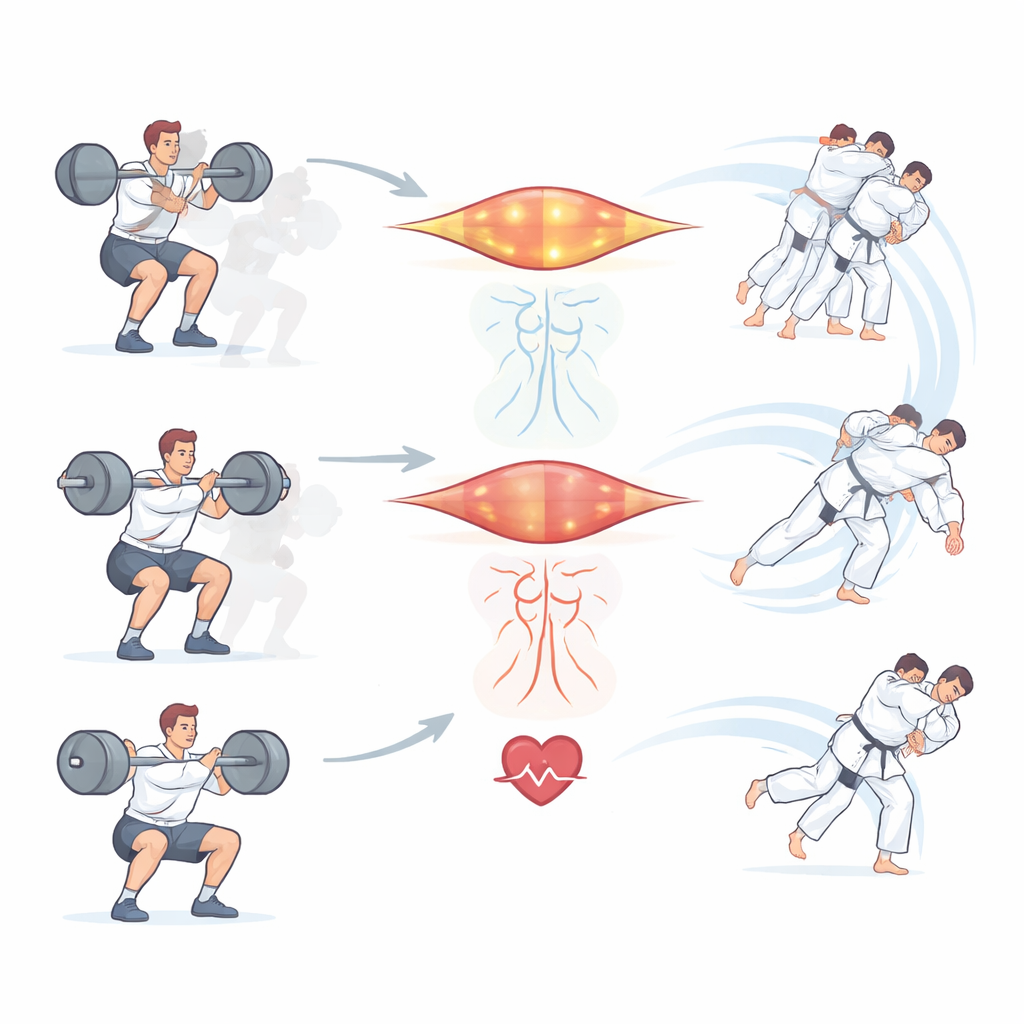
Moderate squats help throws, maximal squats help recovery
The moderate-load squat warm-up clearly improved performance. After this protocol, athletes completed about 6–7% more throws in total than after the normal warm-up alone, and more throws than after the maximal squat. Their overall fitness index during the test was also better, driven mainly by the higher throw count. In contrast, the single maximal squat did not significantly increase throwing volume compared with the control session. However, it did lead to a lower heart rate one minute after the test, indicating slightly faster recovery. Both squat conditions improved the combined fitness index compared with control, but through different pathways: moderate squats boosted how much work the athletes could do, whereas the maximal squat seemed to improve how quickly the heart settled down afterward.
What this means for warm-ups in practice
The findings suggest that for judokas facing short recovery periods before intense action, a moderate-load squat set hits the sweet spot between waking up the system and not wearing it out. Very heavy squats appear to demand a longer recovery window to translate into more powerful throws; if the match or test begins too soon, lingering fatigue may blunt any potential advantage. For coaches and athletes, building one set of moderately heavy squats into a pre-match routine may be a safe, efficient way to enhance throwing capacity, while saving true maximal lifts for training sessions where there is more time to rest.
Citation: Aydın, S., Eken, Ö. & Aldhahi, M.I. Acute effects of squat loading intensity on performance in competitive judo athletes. Sci Rep 16, 7819 (2026). https://doi.org/10.1038/s41598-026-39312-x
Keywords: judo warm-up, squat loading, explosive performance, combat sports conditioning, post-activation performance