Clear Sky Science · en
Identifying the shared genes and their related microRNAs, metabolites, and pathways in ischemic stroke and epilepsy
Why Stroke and Seizures Belong in the Same Story
Stroke and epilepsy are usually treated as separate conditions: one cuts off blood to the brain, the other causes sudden bursts of abnormal brain activity. Yet many people who survive an ischemic stroke later develop seizures, a complication known as post-stroke epilepsy. This study asks a simple but powerful question: do stroke and epilepsy share common biological roots in our genes and blood chemistry, and could those shared signals help doctors predict and eventually prevent seizures after stroke?
Looking for Common Signals in the Blood
To explore this connection, the researchers turned to large public databases of blood samples from people with ischemic stroke and people with epilepsy, and compared them to healthy controls. Instead of focusing on single genes, they used network-style analyses that group together genes that tend to switch on or off in unison. From thousands of genes that behaved differently in patients versus controls, they built clusters linked to each disease and then asked where the two maps overlapped. This revealed 38 genes that changed in a similar way in both stroke and epilepsy, hinting at shared disease mechanisms rather than isolated coincidences. 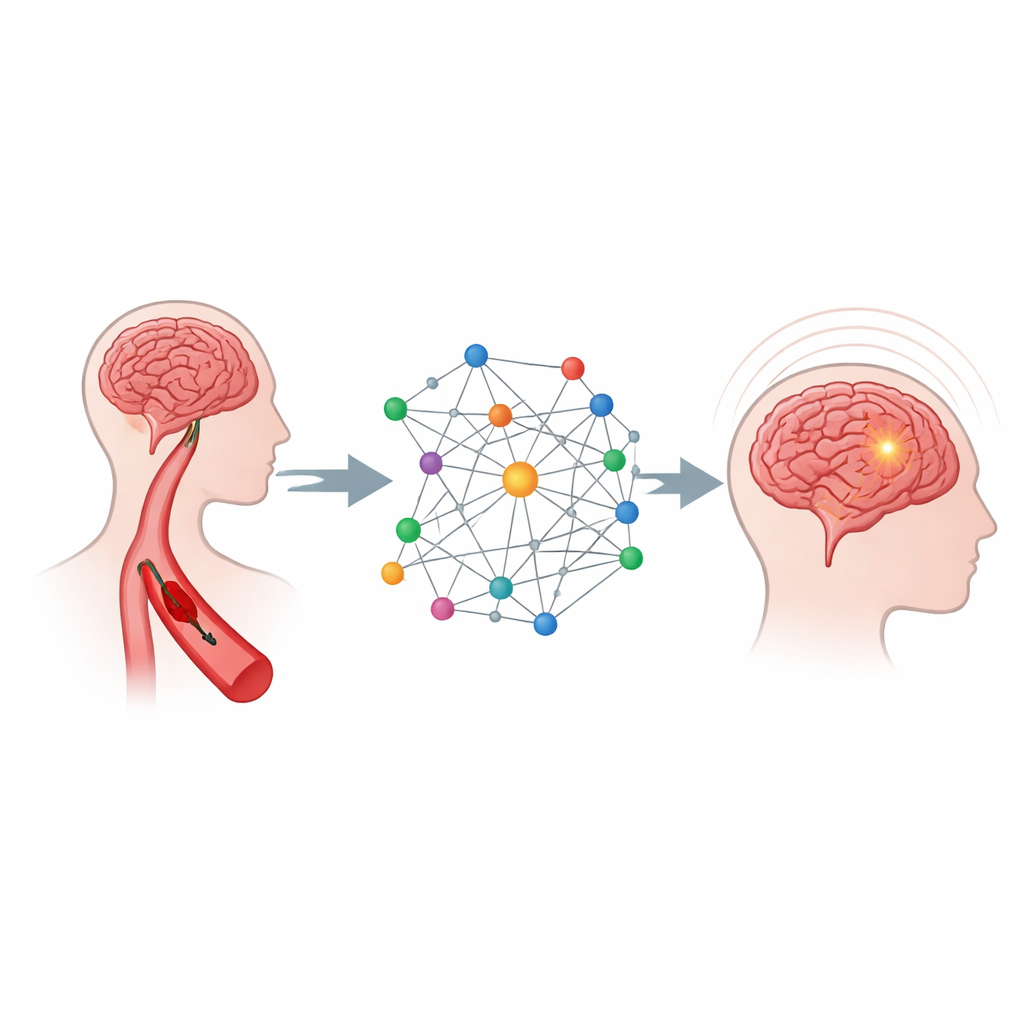
Narrowing Down to a Potential Key Player
Finding dozens of shared genes is only the first step; the challenge is to pinpoint which ones matter most. The team examined how these 38 genes interacted with other proteins in the cell, building a protein–protein network and using several mathematical tools to flag the most influential “hub” genes. Three stood out: IL10RA, CD2, and C3AR1. When the researchers tested how well each gene’s activity distinguished patients from healthy individuals across multiple datasets, all three showed promising diagnostic power. But only one, C3AR1, was consistently increased in both stroke and epilepsy across independent patient groups, marking it as the most robust shared signal.
From Genes to Small RNAs and Brain Chemicals
Genes rarely act alone, so the study next asked what regulates C3AR1 and how it might affect brain chemistry. The team looked at microRNAs—tiny RNA fragments that fine-tune gene activity—and identified a particular microRNA, called let-7b-5p, that is linked to both stroke and epilepsy and is predicted to control C3AR1. In parallel, they performed an untargeted survey of small molecules in the blood (metabolomics) using samples from children with epilepsy. This revealed 139 molecules that differed between children with epilepsy and healthy peers. When these metabolic shifts were mapped onto known biochemical pathways, C3AR1 repeatedly appeared in circuits connected to nerve signaling, especially those involving the neurotransmitter acetylcholine, which helps control how nerve cells communicate.
How Altered Brain Signaling Could Promote Seizures
By combining the gene and metabolite data, the researchers built a broader network linking C3AR1 to several brain signaling routes, including the synaptic vesicle cycle (how nerve cells package and release chemical messengers), cholinergic signaling (pathways driven by acetylcholine), taste-related signaling, and pathways associated with nicotine. In blood from children with epilepsy, acetylcholine levels were reduced, and C3AR1 sat at strategic points in pathways where this molecule exerts its effects. The authors propose that shifts in C3AR1 activity, possibly steered by let-7b-5p, could disturb acetylcholine-related signaling and the release of neurotransmitters at synapses. Over time, such imbalances might make brain circuits more excitable after a stroke, nudging them toward seizures. 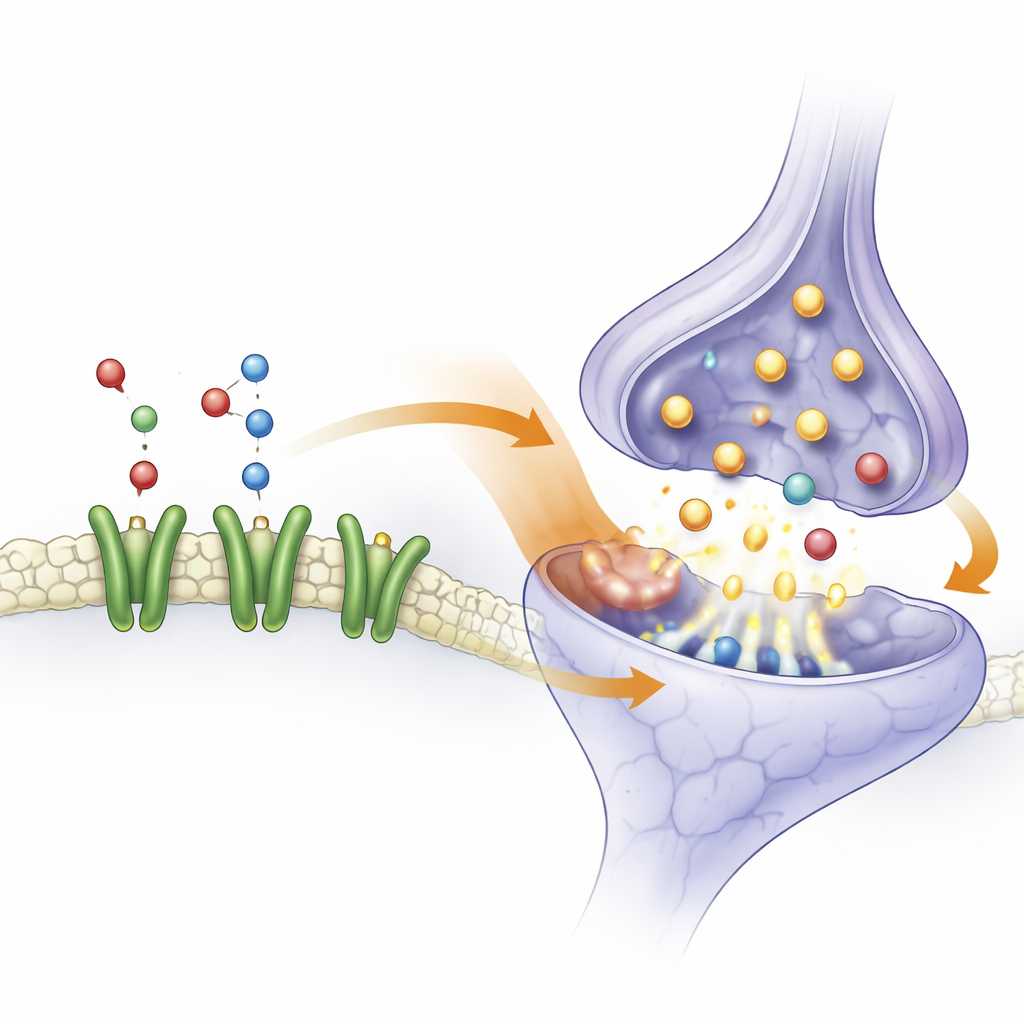
What This Could Mean for Patients
Taken together, the findings suggest that stroke and epilepsy share not only clinical links but also a biological backbone that includes the gene C3AR1, its regulatory microRNA let-7b-5p, and the neurotransmitter acetylcholine. Although these results come mainly from data analyses and a relatively small group of children with epilepsy, they raise the possibility that blood-based markers could one day help identify stroke survivors at high risk of developing seizures. The authors caution that C3AR1 alone is unlikely to be a perfect predictor; instead, panels of genes, microRNAs, and metabolites may offer the most reliable diagnostic tools. Still, this work points toward a future in which a simple blood test could guide personalized monitoring and treatment strategies for people living in the shadow of both stroke and epilepsy.
Citation: Chen, Y., Man, S., Li, Q. et al. Identifying the shared genes and their related microRNAs, metabolites, and pathways in ischemic stroke and epilepsy. Sci Rep 16, 8166 (2026). https://doi.org/10.1038/s41598-026-39299-5
Keywords: ischemic stroke, post-stroke epilepsy, biomarkers, C3AR1, metabolomics