Clear Sky Science · en
An analytical toolbox to verify the presence, quantity and origin of recycled cotton fibres in textile garments
Why the story of your T-shirt matters
Most of us own more clothes than ever, and we are told that buying “recycled” garments helps the planet. But how can anyone be sure that a T-shirt advertised as containing recycled cotton really does what the label claims? This paper tackles that everyday question by building a practical scientific toolkit that can reveal whether cotton in a garment is truly recycled, roughly how much of it there is, and whether it comes from unused factory leftovers or from clothing that has already lived a full life with a previous owner.
The problem with hidden waste and vague claims
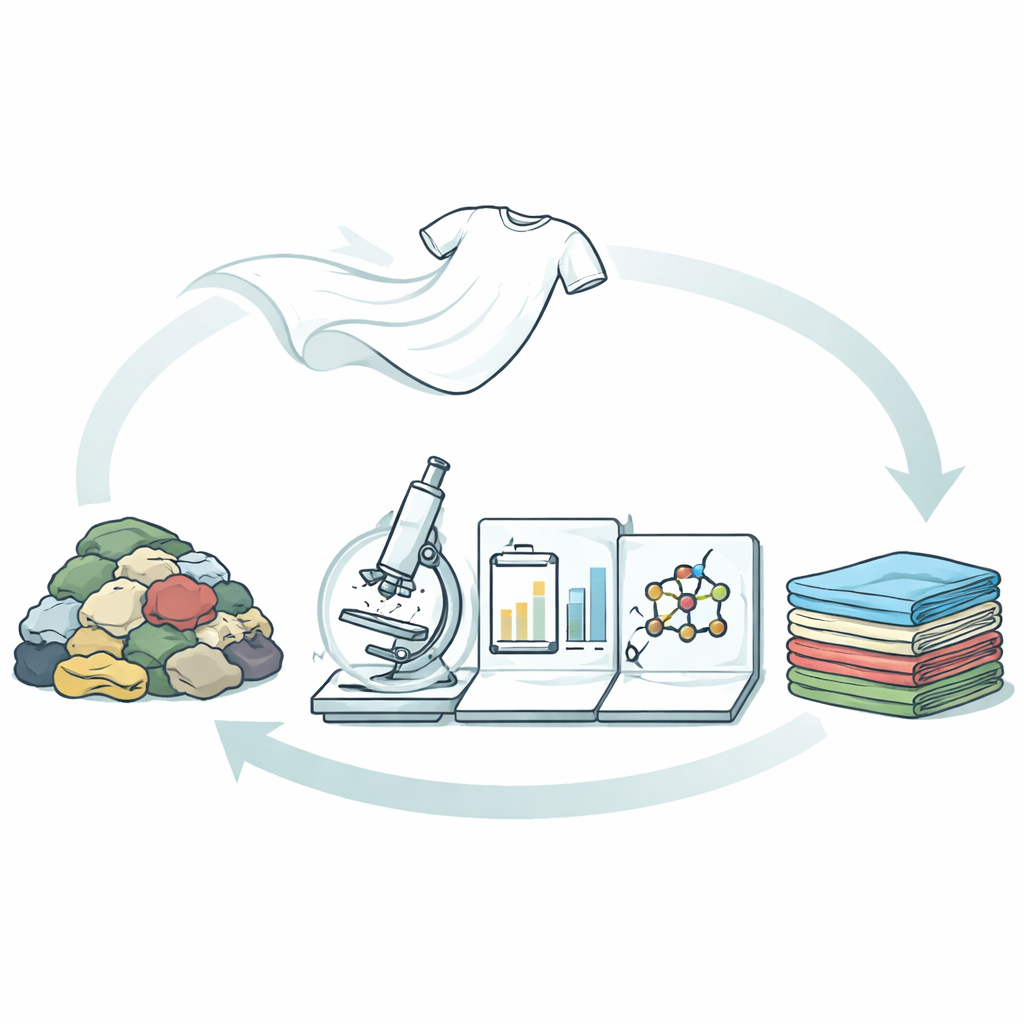
The textile industry consumes huge amounts of resources and generates mountains of waste. To curb this impact, Europe and other regions are pushing for a “circular” clothing system in which old textiles become raw material for new ones. Mechanical recycling of cotton—physically shredding old fabrics back into fibres—is currently the most common route. However, shredding shortens and weakens fibres, making them less attractive to manufacturers than fresh cotton. Because recycled fibres are costlier to use and supply chains are long and complex, there is a strong incentive for some producers to exaggerate their use of recycled content, a practice known as greenwashing. Until now, there has been no independent, laboratory-based way to check whether the amount and type of recycled cotton stated on a label is actually present inside the fabric.
Looking at fibre tips like detectives
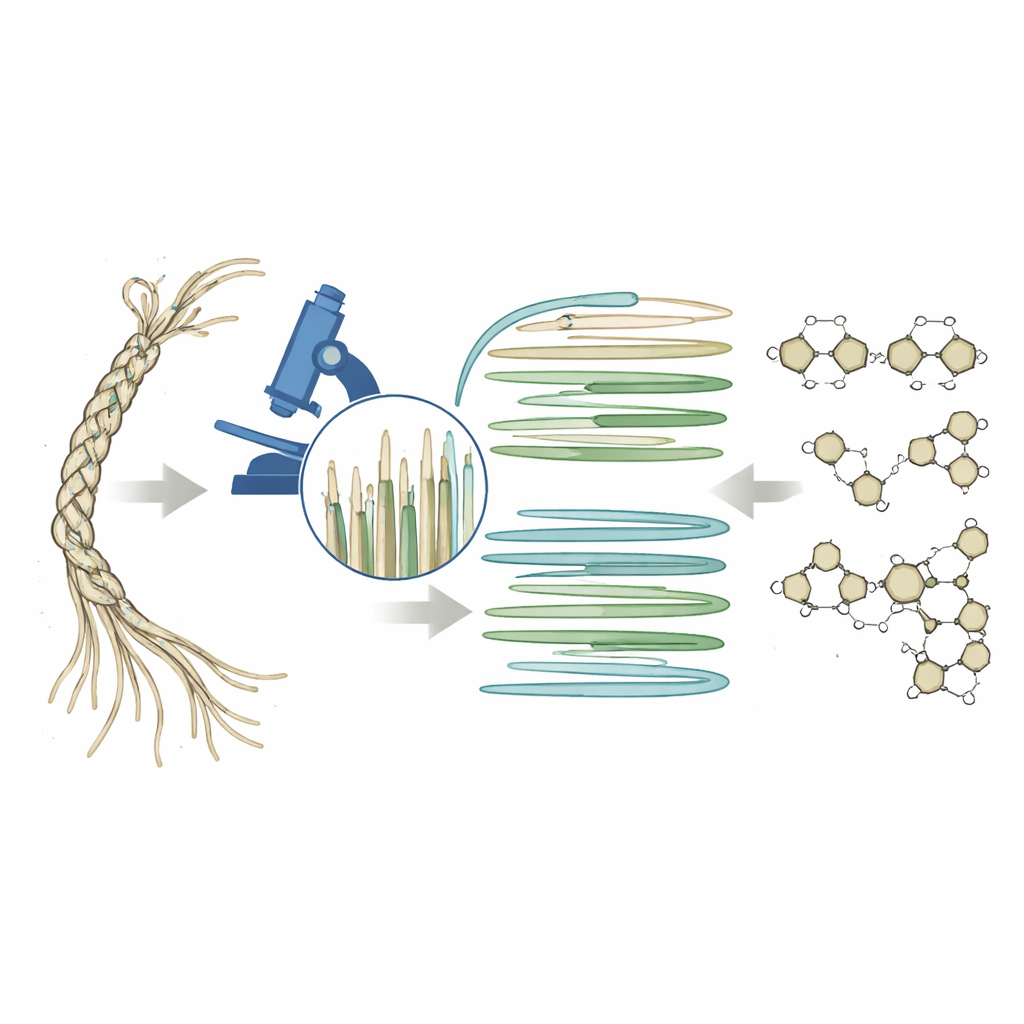
The first tool in the new analytical “toolbox” is simple in concept: look very closely at the ends of fibres. When old fabrics are cut and torn during mechanical recycling, the fibre tips become frayed, split or sharply chopped, unlike the smoother, more natural ends of unused cotton. The researchers carefully untwisted yarns from test fabrics and photographed hundreds of fibre ends under a microscope. Independent raters then sorted these images into “damaged” and “undamaged.” Yarns made with mechanically recycled cotton showed a very high share of damaged tips, while yarns spun only from virgin cotton had far fewer. This method cannot yet give an exact percentage of recycled content, but it can clearly signal whether mechanically recycled fibres are present at all.
Measuring how long the fibres really are
The second tool uses fibre length as a kind of fingerprint. Shredding during recycling tends to produce shorter cotton fibres than those found in new cotton or in manufactured fibres like polyester. The team gently pulled fibres out of yarns, measured thousands of individual lengths with a specialized instrument, and plotted how often each length occurred. They could then separate overlapping curves that corresponded to different fibre types—shorter recycled cotton, somewhat longer virgin cotton, and longer synthetic fibres. By converting these length patterns into weight estimates, they were able to reconstruct the composition of the yarns to within about plus or minus ten percentage points. That level of accuracy is enough to check whether a claimed recycled share is broadly honest or significantly overstated.
Reading the life story of cotton chains
The third tool looks even deeper, at the molecular “chains” that make up cotton. Each cotton fibre is built from long chains of sugar-like units; their average length, known as the degree of polymerisation, tends to shrink as the fabric is bleached, washed and worn. The researchers dissolved the cotton part of various test textiles and measured how easily the liquid flowed, which reveals the chain length. By comparing these values with earlier studies and industry measurements, they defined practical ranges: unused or little-used cotton typically shows high chain lengths, while heavily used, post-consumer textiles show much lower values. Applying this method to yarns and real commercial fabrics, they could tell whether the recycled cotton came mostly from pre-consumer waste (factory offcuts and unsold stock) or from genuinely worn garments.
Bringing the tools together to clean up fashion claims
None of these approaches alone tells the full story, but together they form a powerful verification set. Microscopy confirms whether mechanically recycled fibres are present. Fibre length patterns give a semi-quantitative estimate of how much recycled material is in a yarn. Chain-length measurements reveal whether that recycled cotton is largely unused factory waste or truly post-consumer material. The authors show that, when applied to textiles with known recipes as well as to industry-supplied fabrics, the toolbox can check and sometimes challenge sustainability claims. With further refinement, automation and standardisation, this toolkit could be adopted by testing laboratories worldwide and linked to emerging digital product passports. For everyday shoppers, that would mean that when a label promises recycled cotton, there is real, independently checked science standing behind those words.
Citation: Ten Berge, A.B.G.M., Temmink, R., Kuppen, M. et al. An analytical toolbox to verify the presence, quantity and origin of recycled cotton fibres in textile garments. Sci Rep 16, 8999 (2026). https://doi.org/10.1038/s41598-026-39268-y
Keywords: recycled cotton, textile recycling, greenwashing, circular fashion, fibre analysis