Clear Sky Science · en
A meta-analysis identifies driver genes and characterizes the molecular epidemiology of colorectal cancer
Why this research matters to everyday health
Colorectal cancer is one of the most common cancers worldwide, yet no two tumors are exactly alike. This study asks a simple but crucial question: if we pool genetic data from thousands of patients across many countries, can we finally get a clearer map of which DNA changes truly drive this disease, how they differ between tumor types, and what they mean for diagnosis and survival? The answers could sharpen cancer screening, guide drug development, and help explain why people of different ages, sexes, and tumor locations face different risks and outcomes.
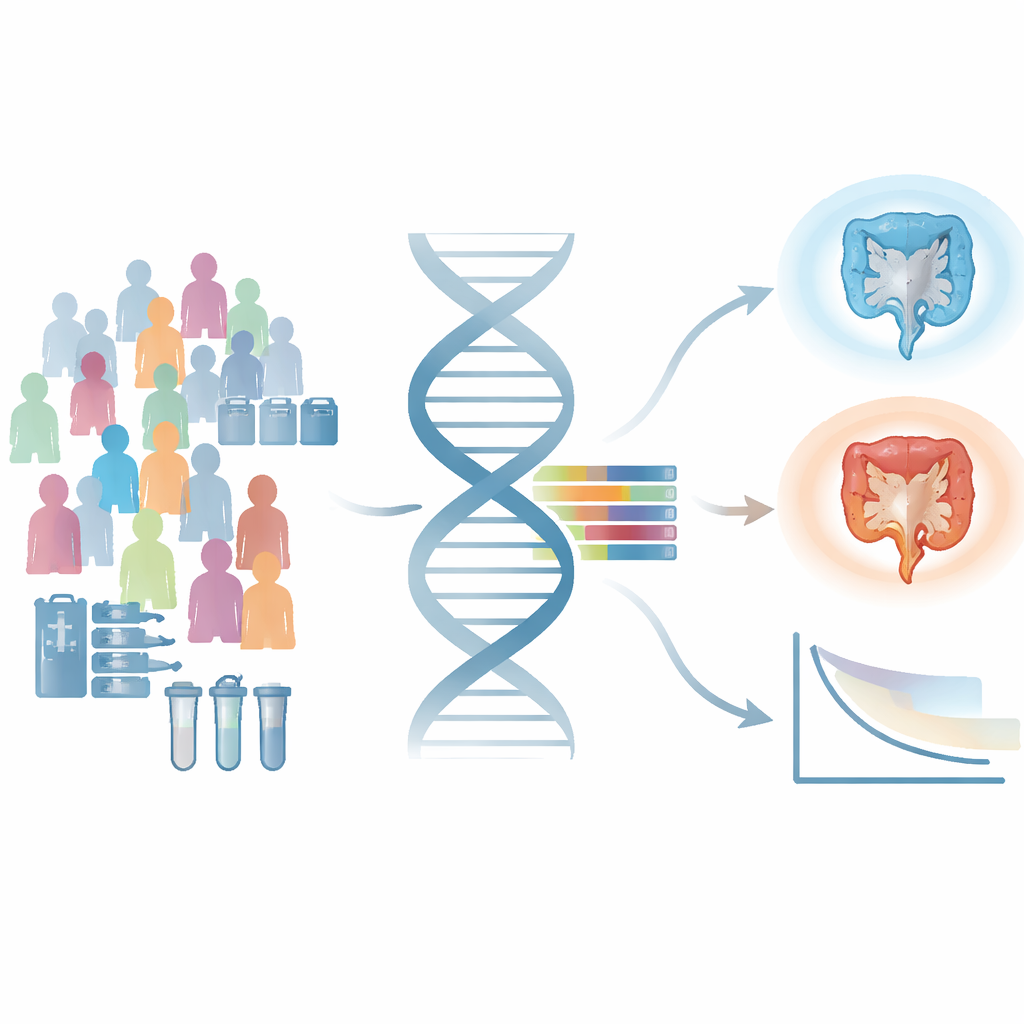
Bringing many studies together
The researchers combined new genetic data from over 2,100 Icelandic colorectal cancers with mutation data from more than 9,000 tumors previously studied in the United States, Europe and Asia. Instead of analysing each dataset in isolation, they treated the combined collection as one large project and then used statistical tools specifically designed to merge results across studies. A key step was dividing tumors into two major groups: those that are “microsatellite stable” (MSS), which mutate at a more typical rate, and those that are “microsatellite instable” (MSI), which have a very high number of DNA changes. Because these two groups behave differently in the clinic, the team analysed them separately at every stage.
Finding the core set of cancer-driving genes
Using methods that compare harmful mutations to harmless ones within each gene, the scientists searched for signs of “positive selection” — that is, changes that tumors repeatedly acquire because they give a growth advantage. This meta-analysis flagged 112 genes as strong drivers of colorectal cancer, many of which had not previously met strict statistical criteria in humans. Some genes are well known for their roles in other cancers, while others belong to established pathways that control cell growth and communication, such as WNT, RAS/MAPK and TGF-beta signaling. Importantly, dozens of these driver genes were missed or only weakly supported in earlier consensus catalogs, showing that much larger sample sizes can both uncover new players and cast doubt on some earlier suspects.
Two kinds of tumors, overlapping but distinct
By comparing MSS and MSI cancers, the study shows that both groups share many driver genes but also have clear preferences. For example, certain genes that help tumors hide from the immune system are strongly selected in MSI cancers, which already carry many mutations and are more visible to immune cells. In contrast, several genes that control how DNA is read and switched on or off are favored in MSS tumors. Even within shared pathways, different genes are emphasized in each subtype: some WNT and RAS genes are more often altered in MSS cancers, while other members of the same pathways are more frequently hit in MSI tumors. These patterns suggest that the two tumor types follow related but distinct evolutionary routes as they grow.
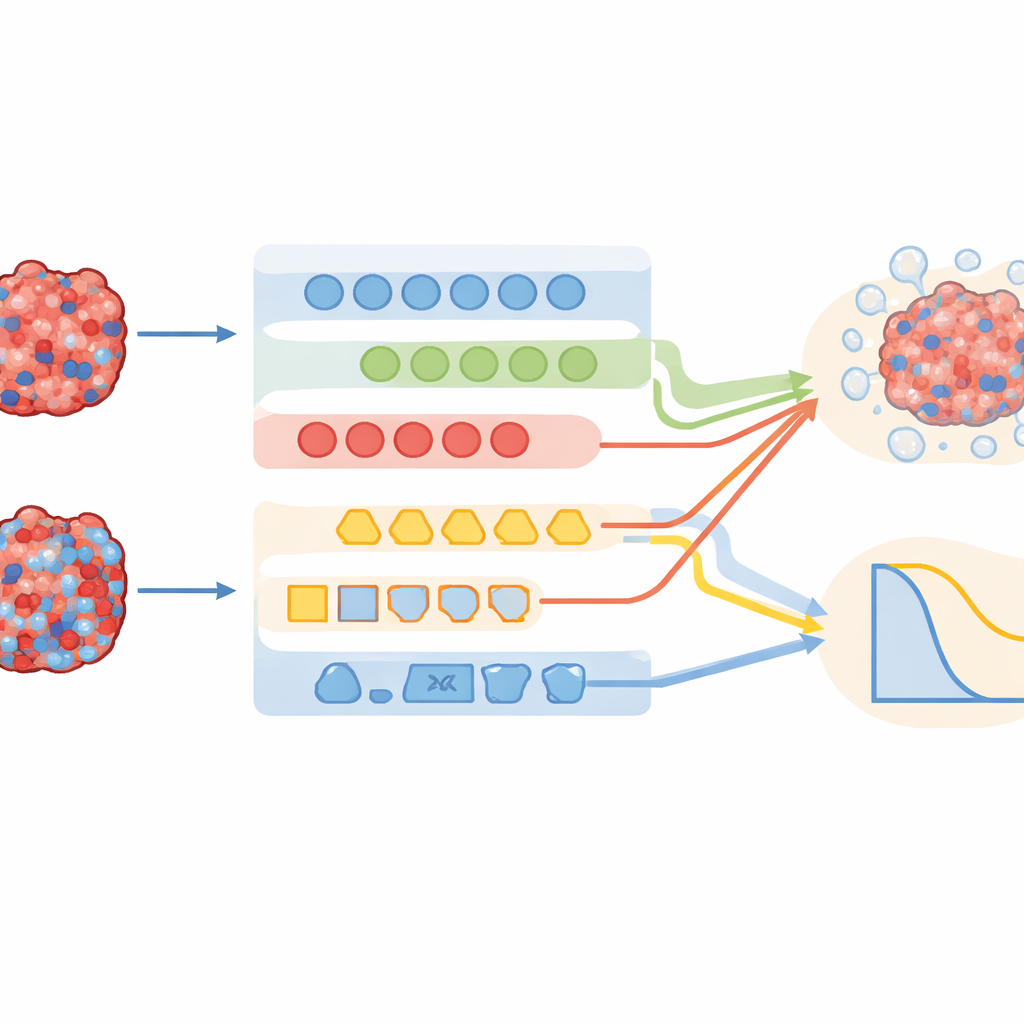
Links to tumor appearance and patient traits
The large combined dataset also allowed the team to look beyond genes and connect mutations to who gets which tumors and how those tumors look under the microscope. They found that some key mutations vary with sex, age and the exact location of the tumor in the intestine, and that these patterns can run in opposite directions in MSS versus MSI cancers. One striking discovery involves “mucinous” tumors, which produce large amounts of a gel-like substance. Among MSS cancers, mucinous tumors are far more likely to carry mutations in several TGF-beta pathway genes. In MSI cancers, nearly all tumors already have changes in this pathway, which may help explain why mucinous growth is so frequent in that group.
Genetic clues to survival
Because several cohorts included long-term follow-up, the researchers could test whether particular driver genes relate to overall survival, after accounting for tumor stage and other factors. For MSS cancers, mutations in the gene APC were linked with better outcomes, while changes in BRAF and another gene, RNF43, predicted poorer survival. No single gene showed a strong survival effect in MSI tumors once rigorous statistical corrections were applied, underscoring again that these two cancer types must be considered separately when interpreting genetic results.
What this means for patients and medicine
By uniting data from over 11,000 colorectal cancers, this study delivers one of the clearest pictures yet of the core genes that help these tumors arise, the ways they differ between two major tumor types, and how they connect to tumor appearance and patient survival. For lay readers, the take-home message is that colorectal cancer is not a single disease, but a collection of related evolutionary paths shaped by both our biology and our environment over many years. A more precise list of truly important driver genes, and a better understanding of how they interact with tumor type and patient traits, can inform future screening strategies, refine prognosis and point the way toward more targeted and personalized treatments.
Citation: Olafsson, S., Thorarinsson, T., Gudjonsson, S.A. et al. A meta-analysis identifies driver genes and characterizes the molecular epidemiology of colorectal cancer. Sci Rep 16, 9427 (2026). https://doi.org/10.1038/s41598-026-39255-3
Keywords: colorectal cancer genetics, cancer driver genes, microsatellite instability, tumor evolution, cancer prognosis