Clear Sky Science · en
Silk fibroin-coated resveratrol solid lipid nanoparticles for diabetic wound healing
Why stubborn wounds in diabetes matter
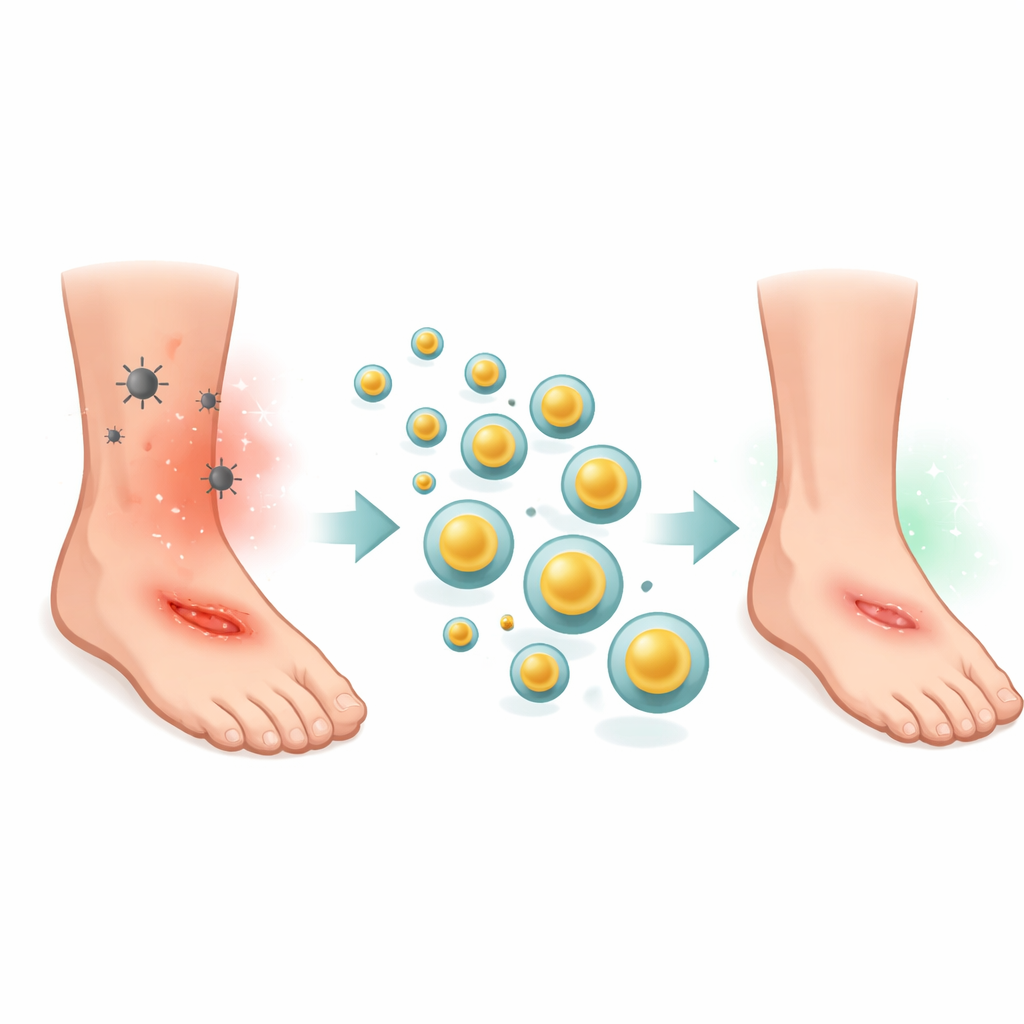
For many people with diabetes, a small cut on the foot can turn into a lingering wound that refuses to heal. Poor blood flow, persistent infection, and constant inflammation slow the body’s natural repair process and can even lead to amputations. This study explores a new way to help these hard-to-treat wounds by bundling a plant compound called resveratrol inside tiny fat-based particles coated with silk protein, aiming to protect the drug, release it slowly, and give damaged skin a better chance to recover.
A natural helper that needs a better delivery system
Resveratrol, found in grapes and berries, is known for its antioxidant, anti-inflammatory, and antibacterial powers—all valuable for calming irritated, infected wounds. But in real life it dissolves poorly in water, breaks down quickly in light and air, and disappears from the body before it can do much good. The researchers tackled this problem by loading resveratrol into solid lipid nanoparticles—tiny spheres made of a waxy fat—and then coating them with silk fibroin, the main protein from silkworm cocoons. The silk shell is biocompatible, slowly degradable, and can interact well with skin cells, making it an attractive wrapping for this fragile ingredient.
Building and tuning the tiny carriers
To make these particles, melted fat containing resveratrol was mixed with a warm soapy water phase to form a fine emulsion, then cooled so the fat hardened into nanoscale spheres. These were then gently mixed into a silk solution, allowing a protein layer to form around each particle. The team used a statistical design approach to fine‑tune key preparation steps such as mixing speed, fat amount, and surfactant level, seeking particles that were small, stable, and could hold a lot of drug. The optimized silk-coated particles averaged about 220 nanometers in diameter, carried most of the resveratrol they were given, and had a surface charge that helped keep them from clumping. Microscopy and spectroscopy confirmed a smooth, spherical shape and successful silk coating without damaging the drug.
How the particles behave in and around the wound
Laboratory tests showed that the silk coating slows how quickly resveratrol escapes. Plain resveratrol in solution was almost fully released within two days, whereas the silk-coated particles released about three‑quarters of their load over the same period, indicating a more controlled, long‑lasting delivery. The particles themselves also broke down gradually over several weeks, suggesting they could keep working in chronic wounds that take a long time to close. When exposed to blood-mimicking conditions, they did not significantly damage red blood cells, pointing to good compatibility for topical use.
Helping cells fight stress, germs, and inflammation
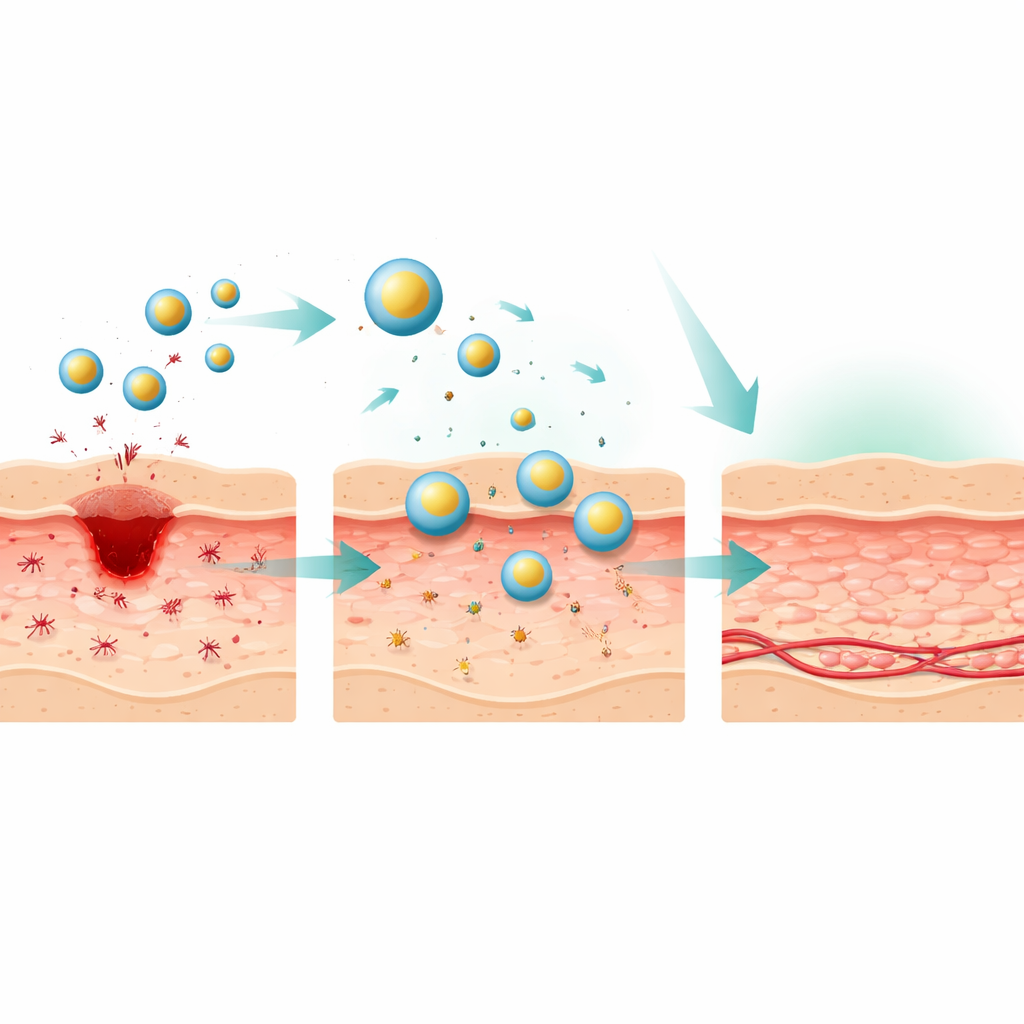
The team then tested how the silk-coated nanoparticles interacted with fibroblasts, the cells that build new connective tissue. At practical doses, these particles were not toxic and actually supported higher cell survival than plain resveratrol. They were more effective at neutralizing free radicals and other reactive molecules that damage cells, and they reduced the levels of harmful oxygen species inside cells. In scratch tests that mimic a wound, fibroblast layers treated with the silk‑coated particles closed the gap much faster than those treated with uncoated particles or with resveratrol alone—reaching around 90% closure within 48 hours. The same formulation also suppressed growth of two common wound bacteria and shifted inflammatory signals by lowering a damaging messenger (TNF‑α) and boosting a helpful one (IL‑10). In a membrane test using chicken eggs, it encouraged the growth of new blood vessels, a key step in bringing oxygen and nutrients to healing tissue.
What this could mean for people with diabetes
Taken together, the findings suggest that wrapping resveratrol in a silk‑coated fat nanoparticle converts a fragile natural molecule into a practical, multi‑purpose wound treatment. The new system protects the drug, releases it steadily, and adds the silk’s own benefits for cell growth and tissue repair. In simple terms, these particles act like tiny, long‑acting repair capsules: they calm inflammation, fight germs, mop up harmful molecules, and encourage skin cells and blood vessels to rebuild damaged tissue. While these results come from lab and egg models and still need to be confirmed in animal and human studies, they point toward a promising new dressing or topical therapy for stubborn diabetic wounds that are currently very hard to manage.
Citation: Bogadi, S., Rahamathulla, M., Karri, V.V.S.R. et al. Silk fibroin-coated resveratrol solid lipid nanoparticles for diabetic wound healing. Sci Rep 16, 8518 (2026). https://doi.org/10.1038/s41598-026-39254-4
Keywords: diabetic wound healing, resveratrol, silk fibroin, nanoparticles, topical therapy