Clear Sky Science · en
Small prey fight back: post-capture defences shape prey–predator size relationships
When the Underdog Turns the Tables
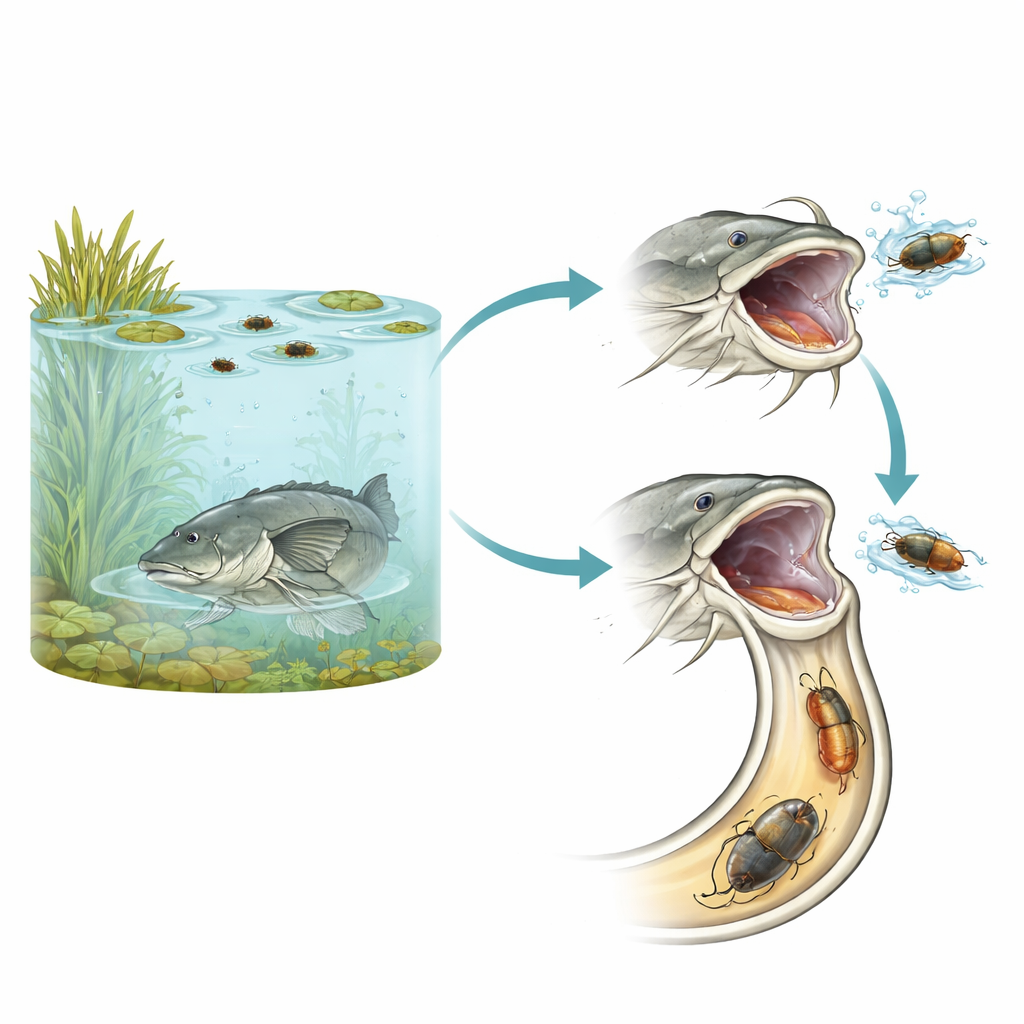
In most nature documentaries, small animals are portrayed as easy meals for larger predators. Yet this study reveals a surprising twist: tiny aquatic beetles can sometimes fight their way out from inside the mouth of a hungry catfish. By watching these underwater showdowns in aquariums, the researcher shows that being small—and very squirmy—can sometimes be an advantage, reshaping which prey big fish actually manage to eat.
Why Size Usually Favors the Big Hunter
Ecologists have long known that bigger predators tend to eat bigger prey, in part because their wide mouths allow them to swallow large victims whole. The Japanese common catfish, a widespread freshwater fish, is a classic example of a “gulping” predator: it rushes forward, opens its mouth, and sucks in whatever is in front of it—fish, frogs, shrimp, or insects. In theory, such a hunter could easily devour very small creatures. Yet field observations suggest that some large fish ignore tiny insects and focus on more substantial meals. Traditional explanations blame the low energy payoff of small prey or the difficulty of even noticing them. This study adds a new piece to the puzzle: what happens after the prey has already been sucked in.
Beetles in the Lion’s (Catfish’s) Mouth
To explore this hidden stage of the hunt, the researcher offered eight species of aquatic beetles—ranging from just a few millimetres to almost two centimetres long—to catfish in controlled aquariums. All beetles were successfully drawn into the fish’s mouth, but the story did not end there. Depending on the species, only 20 to 90 percent were actually swallowed and digested. Smaller beetles were especially likely to be spat out alive, sometimes within a second, sometimes after minutes of struggling. Families of beetles known to produce noxious defensive chemicals were also rejected more often and provoked vigorous “oral flushing,” a rapid pumping of the catfish’s mouth and gill covers that may help wash away irritating secretions.
How Tiny Legs Make a Big Difference
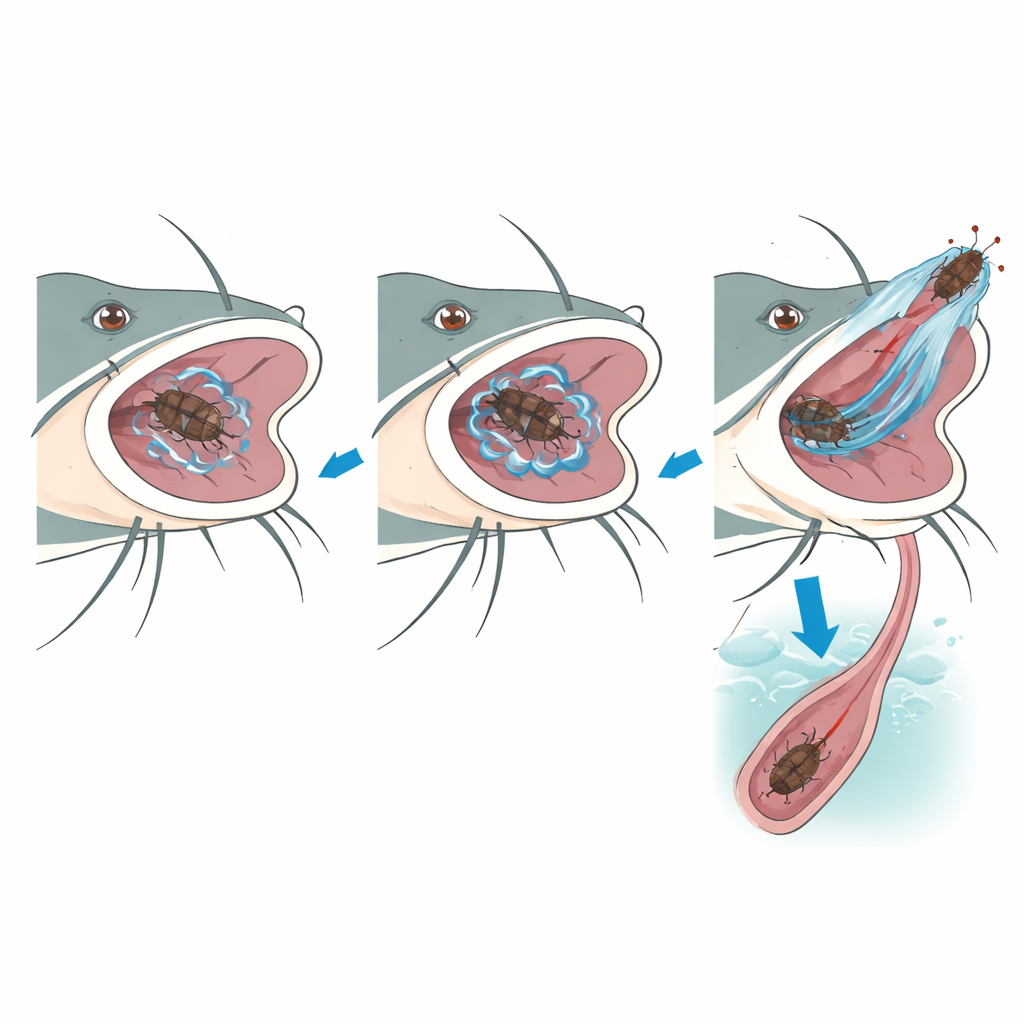
One small water scavenger beetle, Regimbartia attenuata, turned out to be particularly adept at escape. Earlier work had shown that this species can survive being eaten by frogs and later crawl out of the other end of their digestive tract. In the catfish experiments, however, the beetles did not escape through the rear; instead, about 70 percent were spat out from the mouth, alive and unharmed. To find out why, the researcher gently amputated the beetles’ middle and hind legs, which are their main swimming limbs. These legless beetles were suddenly much easier victims: most were swallowed and remained inside the fish until only undigested fragments were excreted. The contrast suggests that rapid leg-driven movement and clinging inside the mouth make it hard for the catfish to keep its grip on a small beetle, tipping the balance toward rejection.
Fish Countermoves and Hidden Costs of a Meal
The beetles are not the only players with tricks. The catfish responded to some prey with repeated opening and closing of the mouth and gill covers, a behaviour known as oral flushing. This was most common when they captured chemically defended beetles and larger individuals, hinting that the fish were trying to dilute or dislodge noxious secretions or awkwardly shaped bodies. Yet even with this countermeasure, tiny, agile beetles could sometimes win the tug-of-war inside the mouth. From the fish’s perspective, each such struggle adds “handling time”—the extra seconds or minutes spent wrestling with a troublesome morsel instead of finding the next one. For small prey that offer little energy, those extra costs can make them effectively not worth eating, even after capture.
What This Means for Ponds and Food Webs
Seen from a distance, a pond may look like a simple scene of big fish feeding on smaller creatures. This study shows that the reality is more complicated, and that a lot can happen in the dark space inside a predator’s mouth. Small beetles that thrash, cling, or deploy chemicals after capture can sometimes force a predator to spit them out, lowering the true success rate of attacks. Over many encounters, such post-capture defences can make certain prey types effectively less available, even if they are abundant, and can help explain why large predators may seem to “prefer” larger, easier victims. By weakening the links between predators and some of their potential prey, these hidden struggles may help stabilize freshwater food webs, allowing small but well-defended creatures to persist alongside powerful hunters.
Citation: Sugiura, S. Small prey fight back: post-capture defences shape prey–predator size relationships. Sci Rep 16, 7198 (2026). https://doi.org/10.1038/s41598-026-39251-7
Keywords: predator prey interactions, aquatic beetles, fish predation, anti predator defence, food web stability