Clear Sky Science · en
Anatomical and functional asymmetry predicts G-force tolerance in high-Intensity physical performers
Why balance matters when forces rise
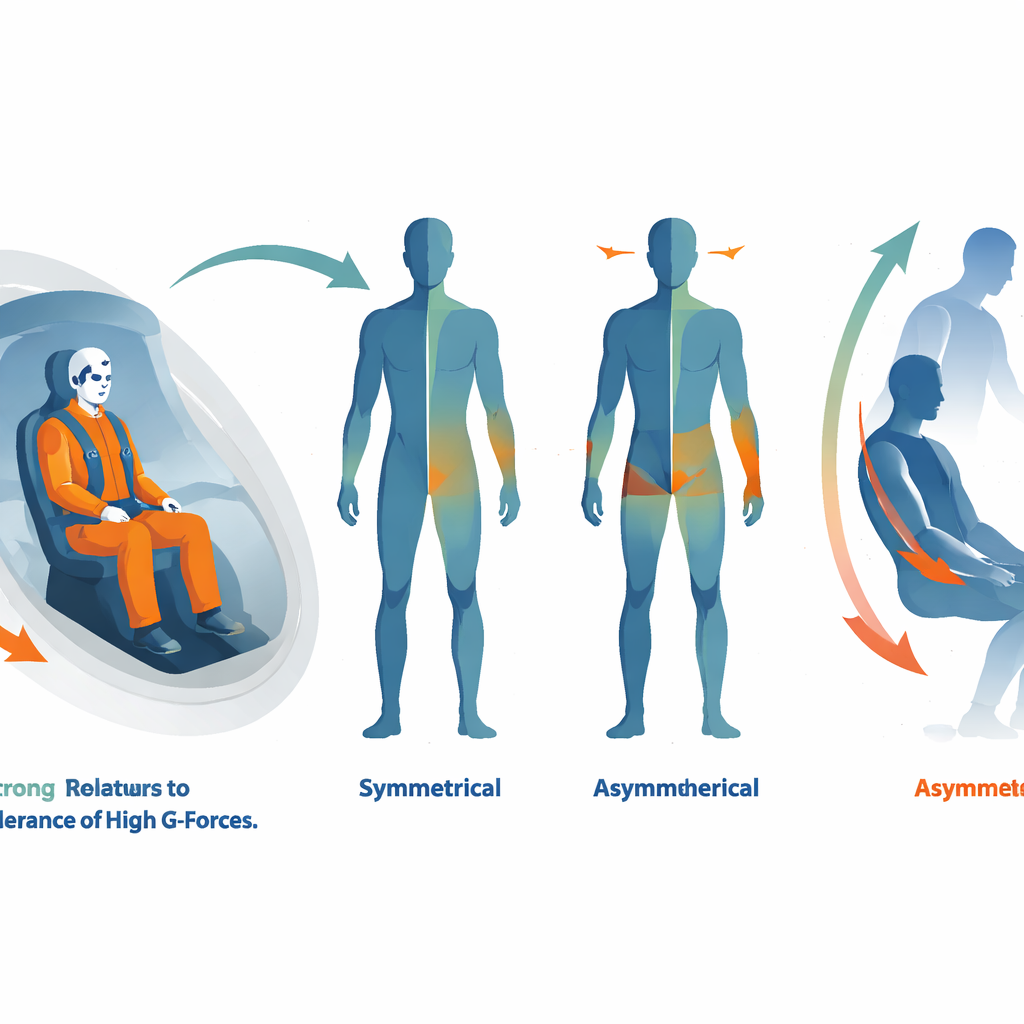
Most of us think of balance as something that keeps us from tripping on a curb. For fighter pilots and Air Force cadets, balance can mean the difference between staying conscious in a tight turn and blacking out as gravity-like forces spike to several times normal. This study asks a deceptively simple question with big implications: does the symmetry of the body—how evenly we move, stand, and even bite—help determine who can withstand extreme G-forces?
Putting future pilots in a spinning test
To explore this, researchers worked with thirty male cadets from the Republic of Korea Air Force Academy, all accustomed to demanding physical training. Each cadet took a "G-test" in a human centrifuge, where they sat in a cockpit-like seat and were rapidly spun until they experienced five times normal gravity for up to 30 seconds. Cadets who stayed conscious and maintained posture for the full half-minute were placed in the pass group; those who could not were placed in the fail group. Around these tests, the team measured basic body composition, overall strength, patterns of movement, and how forces were distributed when the cadets clenched their teeth.
Checking movement and hidden imbalances
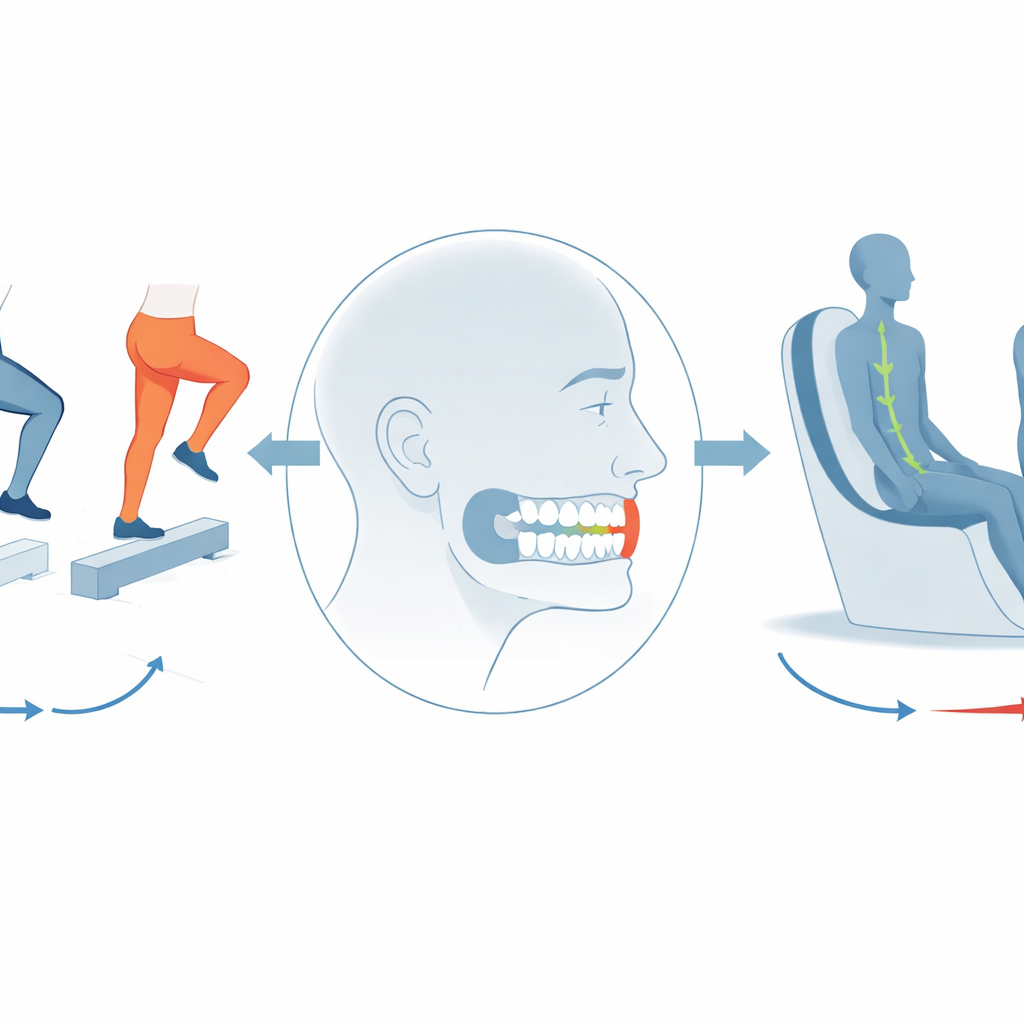
To capture how the cadets moved, the scientists used a standardized set of seven simple actions, such as stepping over a hurdle, lunging in a straight line, raising one leg while lying down, and pushing up from the floor. Each action was scored from poor to excellent, with special attention to differences between the right and left sides. Large mismatches hinted that the body might be compensating for stiffness, weakness, or past strain. The team also assessed body composition with a bioelectrical device that estimated skeletal muscle mass, and they used ultrasound to measure the thickness of the jaw muscles that help clench the teeth.
What the teeth say about the whole body
One unusual feature of this work was its focus on bite force. Using a pressure-sensitive sheet placed between the upper and lower teeth, the researchers recorded where and how strongly each cadet bit down. From this, they calculated total bite force, how much of it occurred on the left versus right side, and the contact area and pressure on each side. Prior studies have suggested that how the jaw closes can subtly affect posture and stability, so the team wanted to know whether a more evenly balanced bite was linked to better performance under high G-forces.
Symmetry linked to staying conscious
The results painted a consistent picture. Cadets who passed the G-test tended to have more skeletal muscle mass than those who failed, even though their height, weight, and body fat were similar. They also performed better on most of the movement tasks, especially the hurdle step and leg-raise tests, and showed smaller gaps between the right and left sides. In contrast, the fail group had more pronounced side-to-side differences in these movements. A similar pattern appeared in the jaw: those who failed showed larger imbalances in bite area and pressure between the left and right sides. Statistical analyses confirmed that certain bite-force measures and overall muscle mass were strongly tied to G-test outcomes, suggesting that both strength and symmetry matter.
What this means for training the body
To a layperson, the takeaway is straightforward: how evenly your body moves and how well it is balanced may influence your ability to withstand extreme physical stress, not just your risk of everyday injury. For Air Force cadets and other high-intensity performers, the study suggests that building muscle alone is not enough; training that improves coordinated, symmetrical movement and possibly even jaw balance may help them resist the crushing pull of high G-forces. While the research cannot yet prove cause and effect, it highlights symmetry—of limbs, posture, and bite—as a promising target for future training programs aimed at keeping people safe and effective in the most demanding environments.
Citation: Lee, KL., Sung, JY. & Kim, HJ. Anatomical and functional asymmetry predicts G-force tolerance in high-Intensity physical performers. Sci Rep 16, 8755 (2026). https://doi.org/10.1038/s41598-026-39250-8
Keywords: G-force tolerance, body symmetry, functional movement, bite force, air force cadets