Clear Sky Science · en
Inflammation is associated with greater social media use over face-to-face interaction, especially among individuals high in introversion or neuroticism
Why Feeling Under the Weather Might Change How We Connect
Most of us know the tug of wanting company while also feeling too tired to meet up in person. This study explores a surprising angle on that everyday dilemma: how low-level inflammation in the body—often too mild to feel like being “sick”—relates to whether people turn to social media or face-to-face conversations to meet their social needs. The findings suggest that our immune system may quietly nudge our choice of communication style, especially for people who are more introverted or emotionally sensitive.
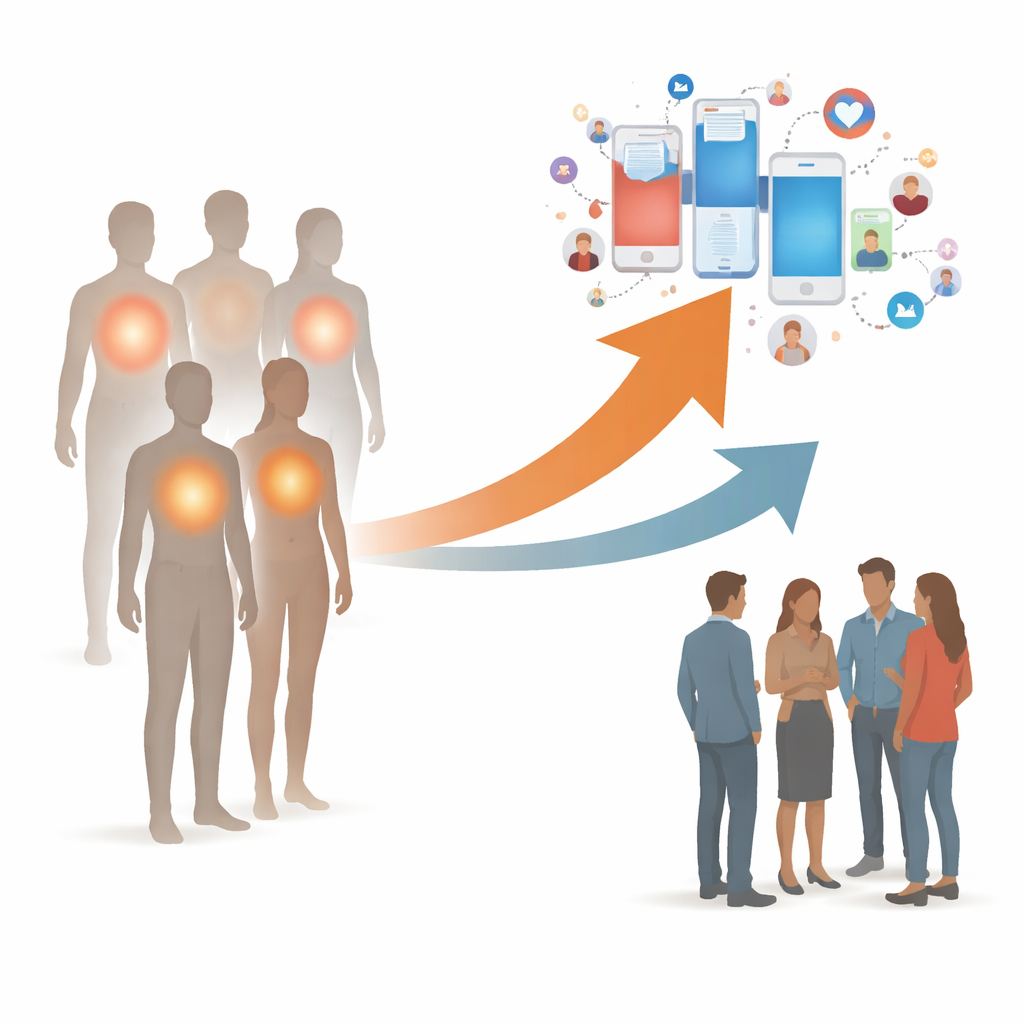
From Swollen Joints to Shifting Social Habits
Inflammation is the body’s built-in defense system, helping us fight infections and heal injuries. When activated, it doesn’t just cause redness or swelling; it also sends signals to the brain that can change how we think and feel. Past research has shown that strong inflammatory responses can make animals and humans withdraw from others, feel more tired, and become more alert to threats. But newer work reveals a more complex picture: under certain conditions, inflammation can actually increase the desire to seek support from close others. This raised an intriguing question for the authors: in everyday life, when inflammation quietly fluctuates with stress, sleep, diet, and other factors, does it push people toward particular ways of connecting with others?
Social Media as a Low-Effort Safe Harbor
The researchers focused on two common ways college students interact socially: in-person, face-to-face contact and social media use. Social media platforms make it easy to stay in touch without being in the same place or even online at the same time. They allow people to control how they present themselves, choose whom to interact with, and often avoid obvious signs of rejection. Compared with in-person conversations, scrolling, reacting, and messaging on a phone usually require less physical and emotional energy. The authors reasoned that when people’s immune systems are revved up—even mildly—they may be especially drawn to this lower-effort, lower-risk way of maintaining social ties.
Blood Spots, Phone Logs, and Personality Traits
To test these ideas, the team studied 154 college students. In the lab, students answered questions about their personalities, how often they used social media for social interaction (such as messaging or commenting), and how often they met friends or family in person during a typical week. They also provided finger-prick blood samples so the researchers could measure C-reactive protein, or CRP, a standard marker of systemic inflammation. Later, students who used iPhones were asked to send objective screen-time records showing how many minutes they had spent on major social media apps that week. The researchers then created two key scores: one capturing how much total social media time a person had relative to their face-to-face time, and another capturing how much they used social media specifically to interact with others relative to in-person time.
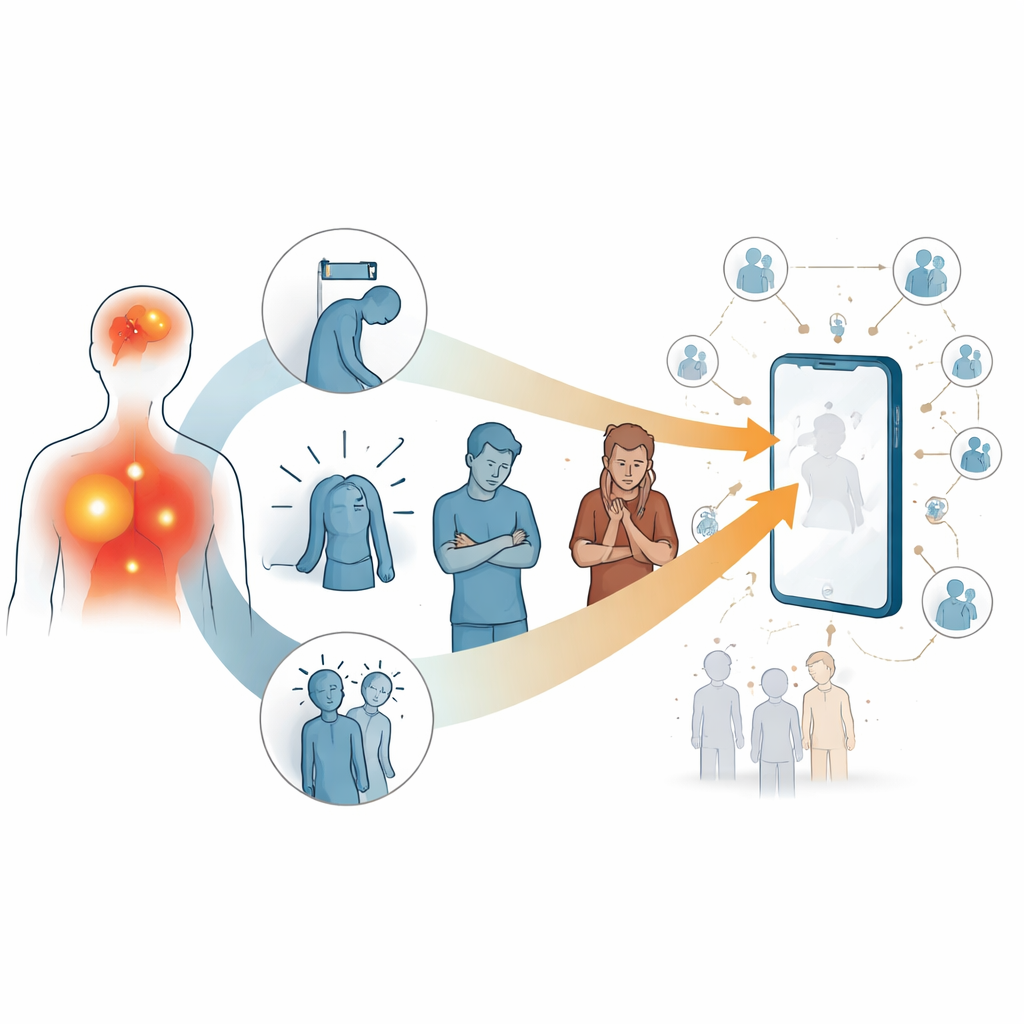
When Low-Grade Inflammation Meets Introversion and Worry
Overall, students with higher CRP levels tended to spend more of their social time on social media than in face-to-face interactions. The link was modest but consistent across several statistical models. It was even clearer among students who scored higher on introversion (those who find social gatherings draining and prefer quieter settings) and those higher in neuroticism (those who are more prone to anxiety and emotional ups and downs). For these groups, higher inflammation went hand-in-hand with a stronger tilt toward using social media—both in total time and for direct social interaction—over in-person socializing. In contrast, students who were more outgoing or emotionally steady showed little or no connection between their inflammation levels and how they chose to interact socially.
What This Means for Everyday Life and Well-Being
To a lay reader, the key message is that the mind–body link runs both ways, and it may be subtler than we think. Even low-grade inflammation, which can rise with a bad week of sleep or a stretch of stress, may nudge some people—especially introverts and worriers—toward the easier, more controllable social world on their screens and away from in-person gatherings. Social media can provide a useful lifeline for staying connected when we feel run down or vulnerable. Yet face-to-face contact still appears to be the most powerful way to feel truly connected, and relying too heavily on social media may relate to worse mood over time. This study does not prove cause and effect, but it highlights a surprising possibility: our immune system might quietly influence not just how we feel, but whether we choose to scroll, text, or show up in person when we seek human connection.
Citation: Lee, D.S., Jiang, T. & Way, B.M. Inflammation is associated with greater social media use over face-to-face interaction, especially among individuals high in introversion or neuroticism. Sci Rep 16, 9416 (2026). https://doi.org/10.1038/s41598-026-39242-8
Keywords: inflammation, social media, face-to-face interaction, introversion, neuroticism