Clear Sky Science · en
Potential of non-specific blood biomarkers combined with EBV-specific antibodies for triaging in nasopharyngeal carcinoma screening
Why Your Routine Blood Test Might Reveal Hidden Cancer Risks
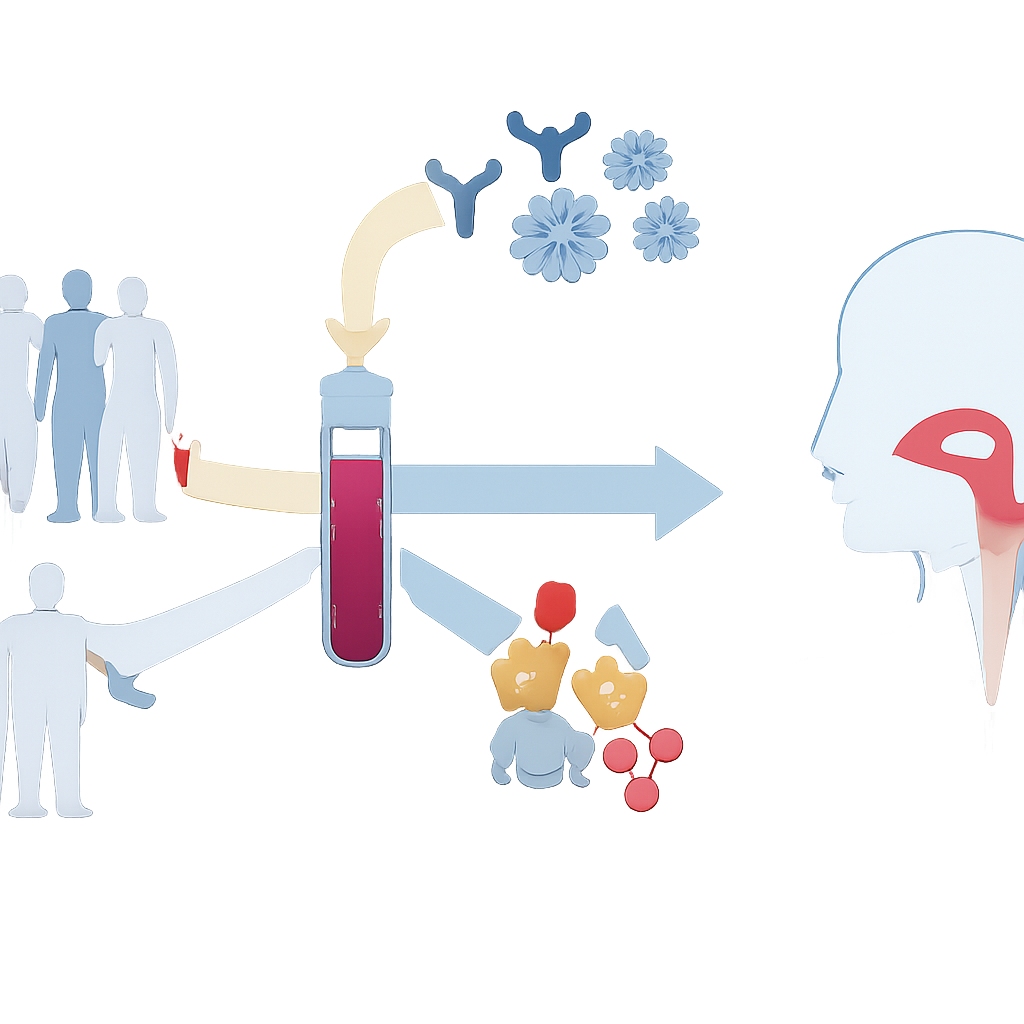
Many people go for yearly health checkups, give a tube of blood, and never think twice about what those numbers might really mean. This study suggests that ordinary blood tests, when combined with a virus-related test already used in parts of Asia, could help flag people at higher risk for a hard‑to‑detect throat cancer long before symptoms appear. The work focuses on nasopharyngeal carcinoma, a tumor that forms deep behind the nose, and explores whether everyday blood indicators can sharpen the early warning provided by antibodies against Epstein–Barr virus (EBV), a common infection linked to this cancer.
A Common Virus and a Hidden Cancer
Nasopharyngeal carcinoma (NPC) is a cancer that starts in the lining behind the nose and above the back of the throat. It is relatively rare worldwide but much more common in parts of East and Southeast Asia. One of its biggest challenges is that it can grow quietly for years, often being discovered only when it has advanced and become harder to treat. A long‑recognized clue is the body’s immune response to EBV, a widespread virus that usually causes mild illness but is strongly tied to NPC in high‑risk regions. People who later develop NPC often show unusually high levels of certain EBV‑related antibodies in their blood long before diagnosis.
Looking Beyond One Test at a Time
In many high‑risk areas, doctors already use EBV antibody tests to pick out people who might benefit from closer follow‑up, such as endoscopic exams or imaging. However, these tests are not perfect: some healthy people test positive and never develop cancer, which can lead to unnecessary anxiety and extra procedures. The researchers behind this study wondered whether they could do better by adding information that clinics already have—routine blood test results that reveal aspects of a person’s immune state, inflammation, fats in the blood, and protein balance. If certain patterns in these everyday measurements travel together with strong EBV antibody responses, they might help refine who is truly at higher risk.
What the Researchers Measured in Thousands of Adults
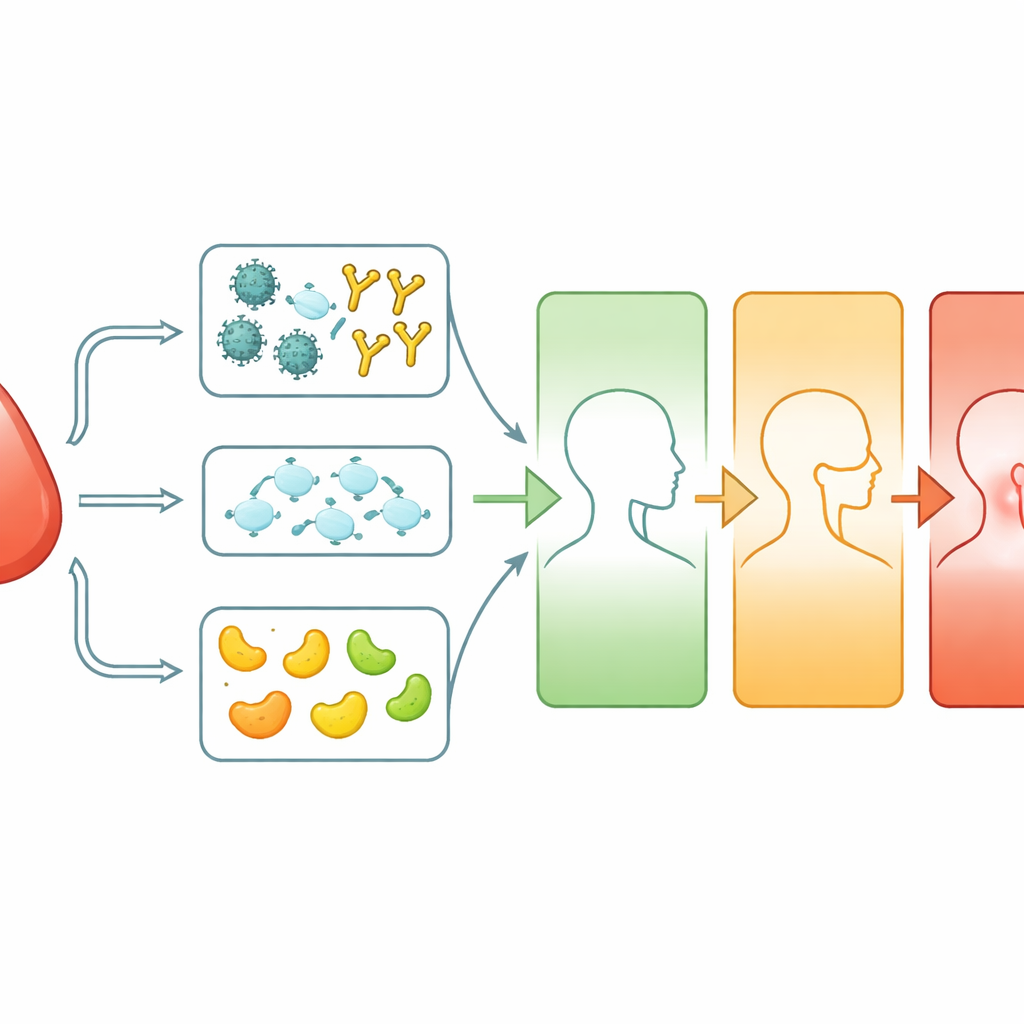
The team analyzed records from 4,600 adults who visited a health examination center in Zhongshan City in southern China, an area with particularly high NPC rates. All participants had four EBV antibody tests, as well as standard panels of blood chemistry and cell counts. People were divided into a “negative” group, with no EBV antibodies detected, and a “positive” group, where at least one of the four antibodies was above the set threshold. The scientists compared many routine blood indicators between these groups and then used statistical models that accounted for age and sex to see which markers were most strongly linked to EBV antibody positivity and to increasing levels of overall EBV‑related risk.
The Blood Clues That Tracked With Virus Antibodies
Several blood features stood out. People with higher levels of a protein category called globulin—a major component of the immune and inflammatory response—were more likely to have positive EBV antibodies. A widely used tumor‑related protein, carcinoembryonic antigen (CEA), also tended to be higher among those with stronger EBV antibody signals. In contrast, the percentage of lymphocytes, a type of white blood cell important for immune defense, was slightly lower in the antibody‑positive group. Levels of “bad” cholesterol (LDL‑C) were also lower among those with EBV antibody positivity, a finding that may relate to how the virus interacts with specific cell surface receptors. When the researchers ranked people into low, medium, and high EBV‑based risk categories, these same markers—globulin, CEA, lymphocyte percentage, and LDL‑C—continued to track with risk level in an orderly way.
What This Could Mean for Future Checkups
For a person walking into a clinic, these findings do not yet translate into an immediate new test or score. The study was done at a single hospital and looked back at existing records, so it cannot prove cause and effect or guarantee that every person with these blood patterns will develop NPC. Still, it suggests that combining EBV antibody tests with a handful of routine measures already captured in standard blood work could one day make screening more accurate and more targeted. In the future, people in high‑risk regions might be triaged based on this combined blood profile, with those showing both strong EBV antibody responses and suspicious changes in routine markers being prioritized for specialized exams. If confirmed by larger, long‑term studies, this approach could help catch nasopharyngeal cancer earlier, when treatment is more effective and lives are more likely to be saved.
Citation: Zhuang, C., Yi, G., Lin, H. et al. Potential of non-specific blood biomarkers combined with EBV-specific antibodies for triaging in nasopharyngeal carcinoma screening. Sci Rep 16, 9164 (2026). https://doi.org/10.1038/s41598-026-39239-3
Keywords: nasopharyngeal carcinoma, Epstein-Barr virus, blood biomarkers, cancer screening, early detection