Clear Sky Science · en
Shrimycocin-A, a next generation broad spectrum and systemic biofungicide from coconut shell agro waste for crop protection
Turning Farm Trash into Plant Protection
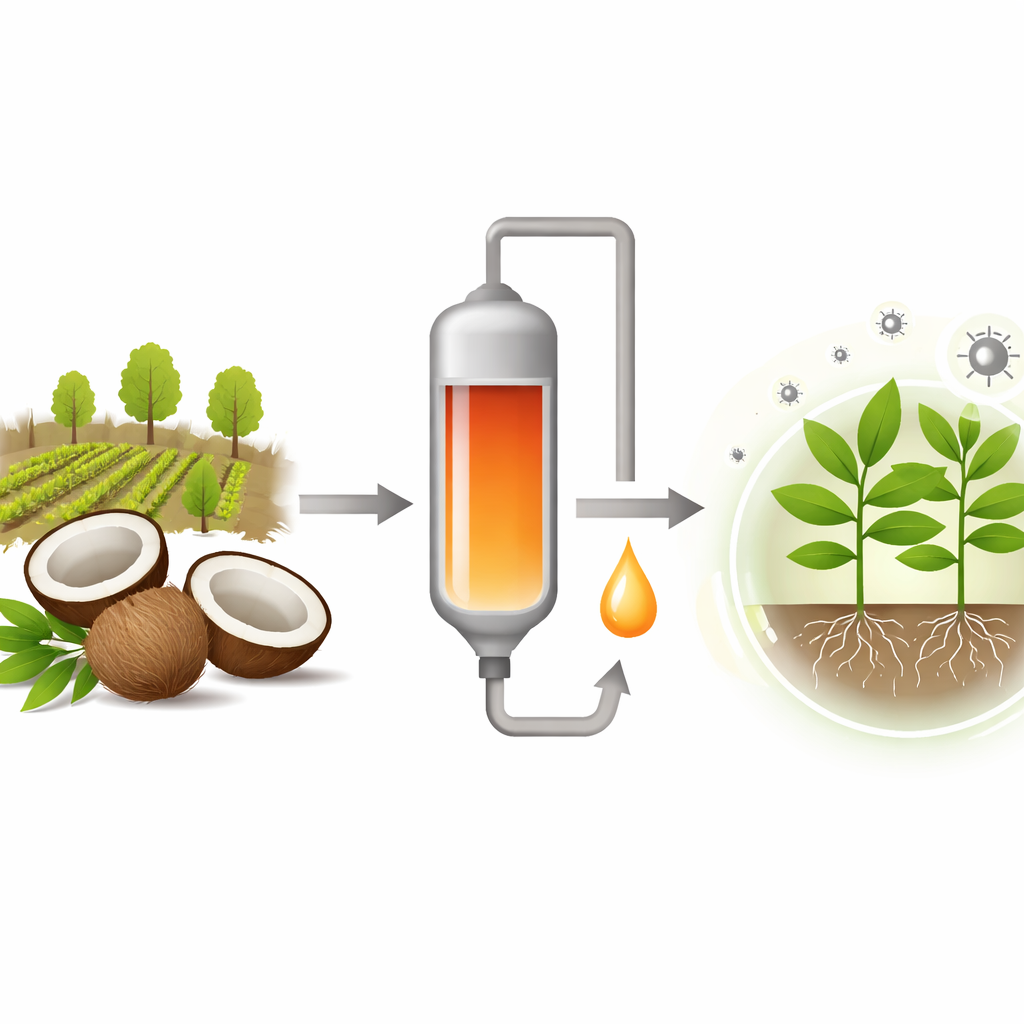
Chemical fungicides help farmers protect their crops, but they also leave behind residues in food, disturb soil life, and can harm people who work with them. This study explores a different path: turning discarded coconut shells, an abundant agricultural waste, into a powerful, plant-safe, and environmentally friendlier fungicide called Shrimycocin-A. By doing so, it offers a way to protect harvests, cut chemical pollution, and add value to a material that is usually burned or thrown away.
Why Fungus Is a Big Problem for Food
Microscopic fungi destroy huge portions of major crops such as rice, wheat, maize, and beans, and many strains have learned to shrug off existing fungicides. Overuse of chemicals has helped these “super fungi” evolve resistance, while also threatening soil organisms, beneficial microbes, and even human health. Some plant fungi are now appearing as dangerous infections in people working on farms. This rising tide of hard-to-kill fungal diseases has created an urgent need for new tools that can protect plants without adding to long-term health and environmental risks.
From Coconut Shell to Biofungicide
Coconut shells are produced by the millions of tons each year and are mostly treated as waste or burned as fuel. The researchers built a simple thermal extraction process that gently heats dried shell pieces in a glass reactor up to 400–450 °C, condensing the resulting vapors into a dark, viscous liquid. By carefully separating the water-soluble and insoluble parts and repeatedly purifying the most active fraction, they isolated a concentrated antifungal mixture they named Shrimycocin-A, or Shri-A. Chemical analysis showed that this fraction is rich in small plant-derived molecules, especially two related polyphenols (syringol and catechol) that work together to attack fungi.
How the New Treatment Fights Tough Fungi
Shri-A proved active against a wide range of plant disease fungi that infect maize, tomato, herbs, and other crops, including strains already tolerant to standard fungicides. It also inhibited several human-infecting yeasts in the Candida group. In lab tests, relatively low doses of Shri-A stopped fungal growth and even prevented spores from germinating, cutting off new infections before they start. Importantly, the mixture stayed effective after heating to 100 °C and across moderately acidic to near-neutral conditions, meaning it can handle hot climates, sunlight, and typical farm water without losing its punch.
Cracking Walls, Leaky Membranes, and Failing Engines
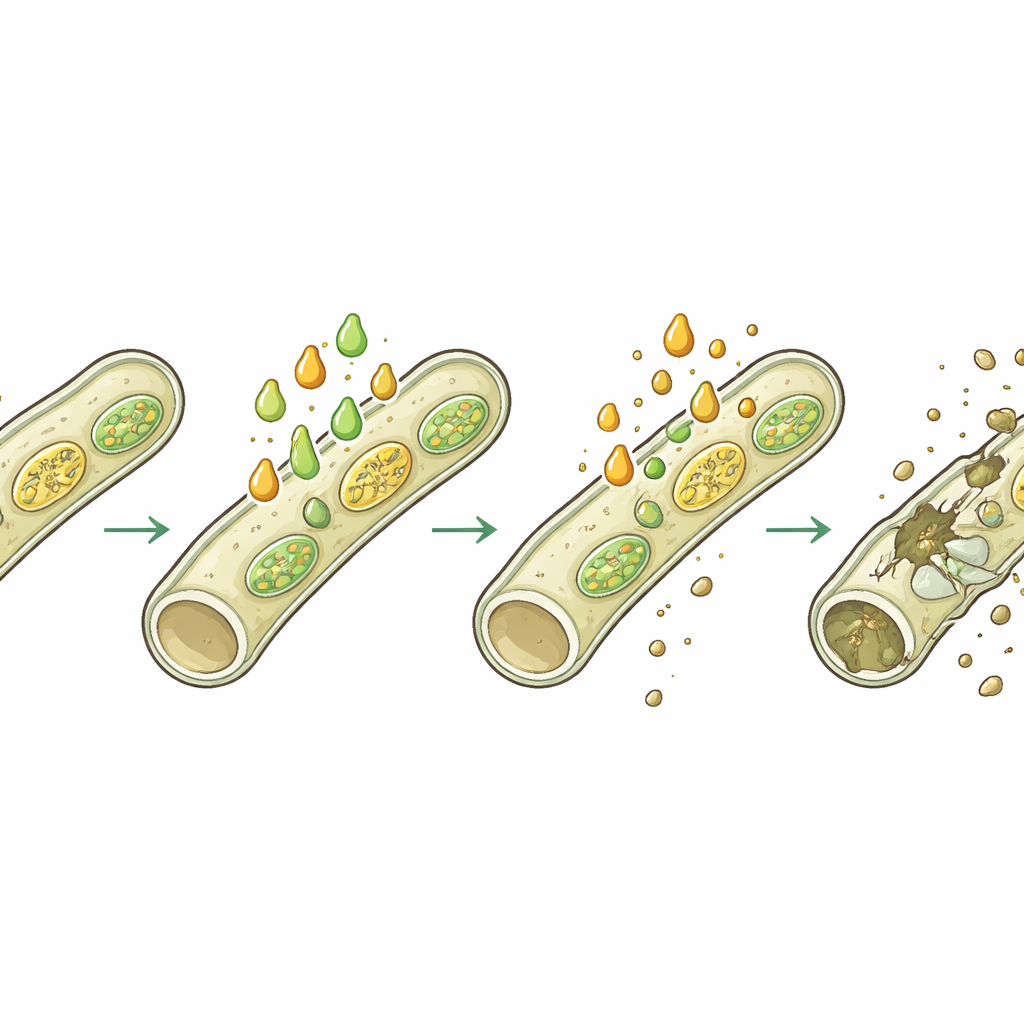
To understand how Shri-A kills fungi, the team looked closely at treated cells using dyes, microscopes, and flow cytometry. They found that Shri-A attacks on multiple fronts at once. It damages the sturdy outer wall so that ions and sugars begin leaking out, alters the fatty components of the cell membrane that normally keep the cell sealed, and disrupts the tiny internal power stations known as mitochondria. Under the electron microscope, fungal threads exposed to Shri-A appear twisted, perforated, and collapsed. Computer docking studies suggest that key components of Shri-A can latch onto several important fungal proteins, including enzymes involved in building walls and processing sterols, mimicking or combining the action of existing drug classes but in a single natural blend.
Safe Passage Through the Plant and the Soil
A practical fungicide must move through plant tissues without harming them or the surrounding ecosystem. When tomato roots were dipped in a Shri-A solution, the main active molecules showed up in the upper leaves within hours and stayed detectable for up to two days, indicating systemic movement through the plant’s plumbing. Yet seed germination, leaf health, and early plant growth remained normal at and above the working dose. Tests on earthworms—a key indicator of soil health—showed that Shri-A caused far less harm than a common synthetic insecticide, and its levels of heavy metals such as lead and cadmium were extremely low. A water-based formulation using plant-derived surfactants was developed so farmers could apply Shri-A as a spray or soil drench in a way compatible with existing practices.
Real-World Disease Control on Crops
In glasshouse trials, Shri-A was put to the test against three serious crop diseases: charcoal rot in maize, leaf blight in tomato, and powdery mildew in ornamental balsam. Sprayed preventively on maize, the new product reduced stem rot to a small fraction of that seen in untreated plants. Applied after symptoms appeared in tomato and balsam, it helped a majority of plants recover, often matching or even outperforming standard synthetic fungicides such as carbendazim and propiconazole. These results held across multiple seasons, suggesting the effect is robust and repeatable.
A New Kind of Fungicide from an Old Shell
Overall, the work shows that wasted coconut shells can be transformed into a next-generation biofungicide that is broad-spectrum, heat-stable, plant-systemic, and comparatively gentle on non-target organisms. By breaking down fungal defenses at several points at once, Shrimycocin-A may also slow the emergence of resistance compared with single-target chemicals. While more field trials and long-term safety studies are still needed, this approach points toward a future where crop protection and environmental care can advance together, using smart chemistry derived from agricultural leftovers rather than adding to the world’s chemical burden.
Citation: Sinha, A.K., Bandamaravuri, A.S. & Bandamaravuri, K.B. Shrimycocin-A, a next generation broad spectrum and systemic biofungicide from coconut shell agro waste for crop protection. Sci Rep 16, 9413 (2026). https://doi.org/10.1038/s41598-026-39236-6
Keywords: biofungicide, coconut shell waste, plant disease control, sustainable agriculture, fungal resistance