Clear Sky Science · en
Effect of moisture stress on different cucurbits: a morpho-physiological and biochemical perspective
Why thirsty crops matter
As heatwaves and erratic rains become more common, farmers are struggling to grow vegetables with less and less water. Cucurbit crops—such as cucumbers, pumpkins, and gourds—are dietary staples across much of the world, yet many of them wilt quickly when soil dries. This study asks a practical question with big implications for food security: among popular cucurbits, which ones cope best with drought, and can those hardy species be used to help more fragile crops like cucumber survive in drier fields?
Testing how vines handle drought
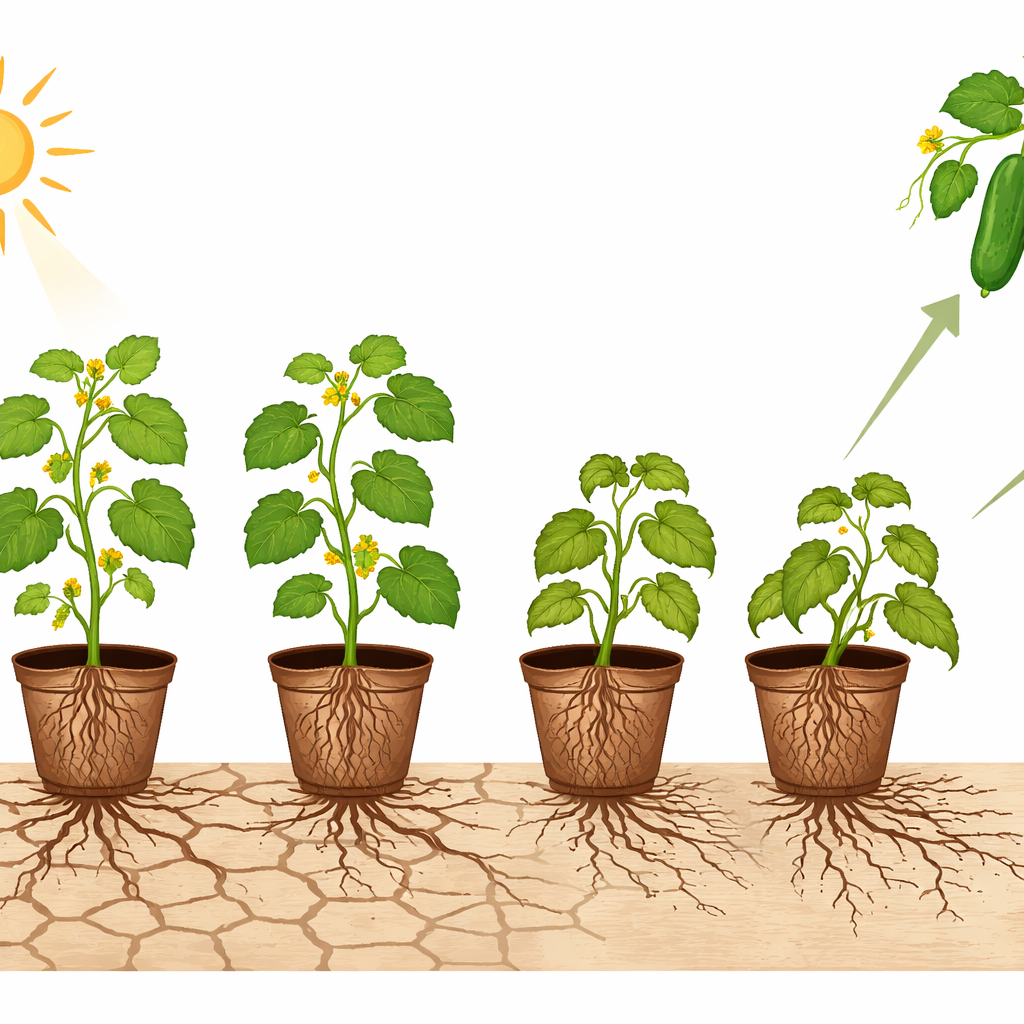
The researchers grew seven types of cucurbits, including bottle gourd, sponge gourd, ridge gourd, pumpkin, ash gourd, a snap melon hybrid called Summerfit, and both cultivated and wild cucumbers. Young plants were raised in pots inside a protective house and exposed to three watering regimes: well-watered soil, moderately dry soil, and quite dry soil. After about two months, the team measured how tall the plants grew, how extensive their root systems were, how green their leaves remained, and several markers of internal stress and protection inside the leaves.
Water loss, cell damage, and leaf health
When water was scarce, all the plants suffered: their leaves held less water, their cell membranes became more leaky, and the green pigments that power photosynthesis declined. At the same time, substances linked to cellular damage, such as certain reactive oxygen by-products, rose sharply—especially in the most sensitive cucumbers. Some species, however, lost far less ground. Bottle gourd and ash gourd, in particular, kept more water in their leaves and maintained more stable cell membranes under the driest conditions, while their leaf photosynthetic machinery remained comparatively efficient.
Built‑in biochemical protection
The study also probed the plants’ internal “shield” against drought-induced damage. Under dry conditions, cucurbits boosted the activity of antioxidant enzymes and accumulated simple protective molecules like proline, sugars, and phenolic compounds, which help stabilize cells and mop up harmful molecules. Here again, the more resilient species stood out. Bottle gourd, ash gourd, pumpkin, and the Summerfit hybrid showed especially strong increases in these protective systems, suggesting that their tissues are better equipped to prevent or repair drought damage than those of cultivated and wild cucumbers.
Roots that reach deeper
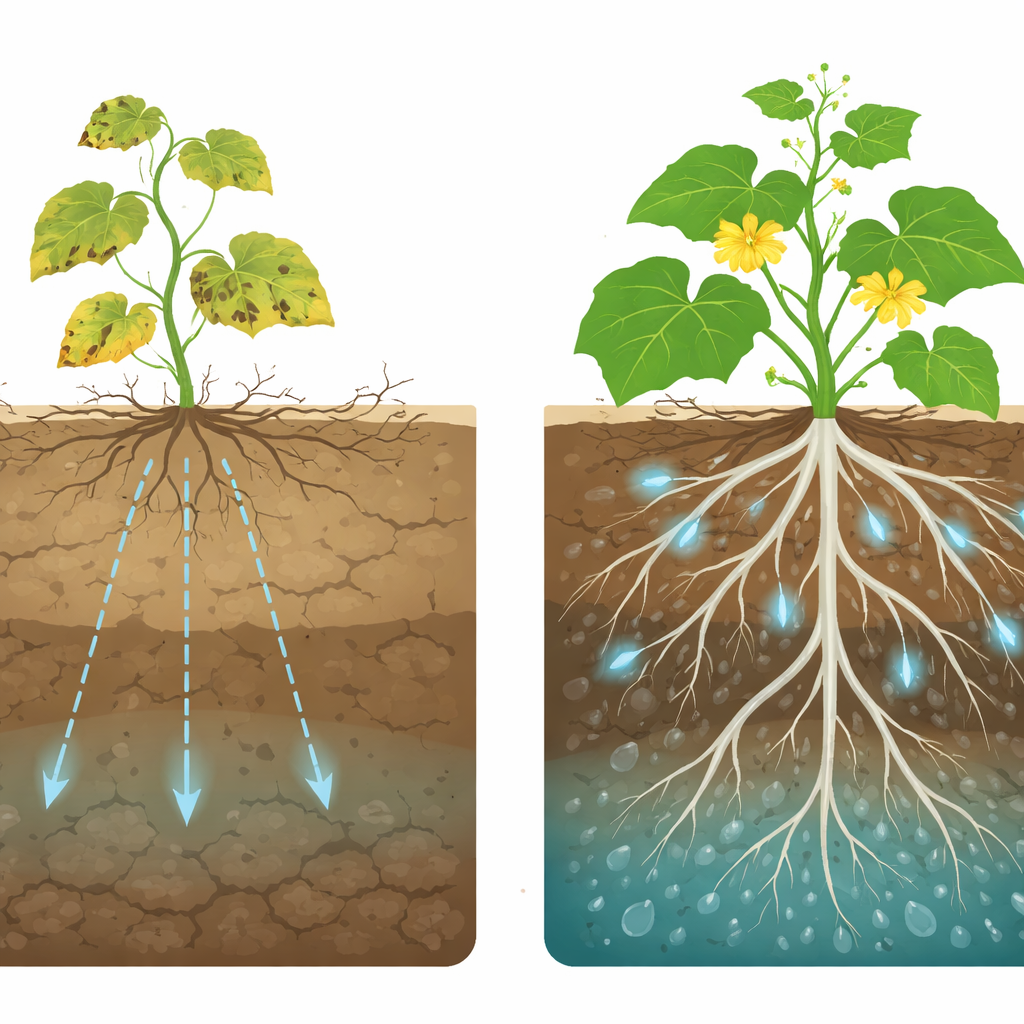
Below ground, differences were just as striking. Drought tended to reduce root length, surface area, and volume in all plants, but ash gourd and bottle gourd maintained much more extensive root systems than most of their relatives. Their roots penetrated deeper and occupied more soil, giving them greater contact with whatever moisture remained. Statistical analyses that grouped plants by their overall performance consistently placed bottle gourd and ash gourd together as the most drought-tolerant, while cultivated cucumbers and their wild cousin clustered as the most drought-sensitive.
Turning hardy gourds into helpers
For growers, the key message is that some cucurbits are naturally better drought survivors than others, thanks to a combination of tougher roots and stronger internal defenses. Ash gourd and bottle gourd emerge as standout performers: they keep their tissues hydrated, limit cell damage, run a more active antioxidant system, and explore the soil more effectively when water is scarce. Because cucumbers can be grafted onto other cucurbit root systems, these hardy gourds are promising candidates as rootstocks to support cucumber crops in water-limited environments. With further field testing, grafted plants that use drought‑tolerant roots could help farmers maintain yields even as climate change makes reliable irrigation harder to guarantee.
Citation: Vaishya, S.K.U., Singh, D., Kumar, R. et al. Effect of moisture stress on different cucurbits: a morpho-physiological and biochemical perspective. Sci Rep 16, 7905 (2026). https://doi.org/10.1038/s41598-026-39230-y
Keywords: drought tolerance, cucurbit crops, root systems, cucumber grafting, climate-resilient agriculture