Clear Sky Science · en
Association between sleep duration from midlife and the risk of physical frailty in late life
Why How Long You Sleep in Midlife Matters Later
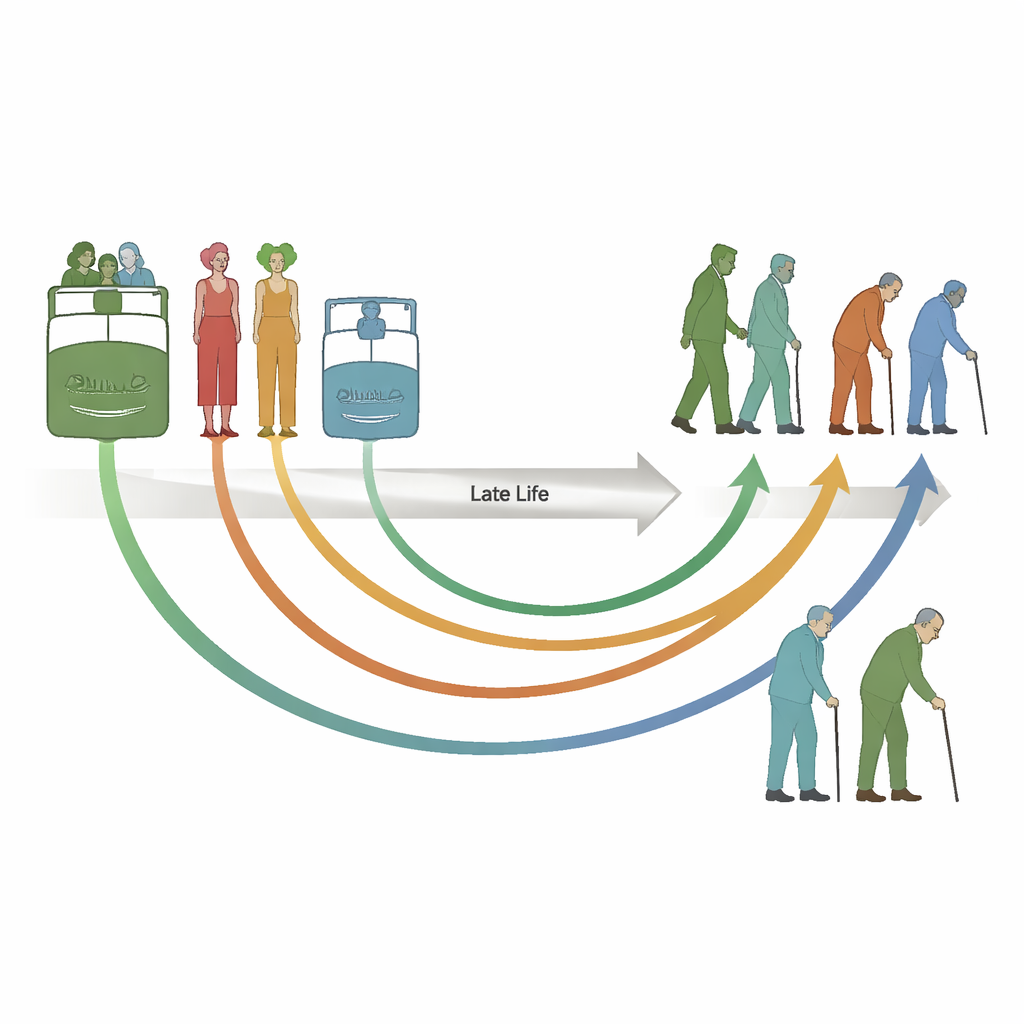
Most of us think of sleep as something we can catch up on later in life. This long-term study from Singapore challenges that idea, showing that how much you sleep in your 40s and 50s may shape how strong, energetic, and independent you are in your 70s and beyond. The researchers followed more than ten thousand adults for about twenty years and discovered that both too little and too much sleep in midlife were linked to becoming physically frail in old age.
A Long Look at Sleep and Aging
The study drew on the Singapore Chinese Health Study, which began in the 1990s with over 63,000 Chinese adults aged 45 to 74. For this analysis, the team focused on 10,792 people who were younger than 65 at the start and who later completed detailed tests of physical function in their 70s. Participants reported how many hours they slept each day, including naps, at three points over about two decades: around ages 52, 64, and 72. At the final visit, trained staff visited them at home to measure how quickly they could stand up and walk, how strong their handgrip was, whether they had lost significant weight, and whether they felt full of energy.
Too Little or Too Much Sleep Both Raise Risk
When the researchers compared people who slept different amounts, they treated seven hours per day as the middle ground. Those who slept five hours or less at midlife were about 40 percent more likely to be physically frail in their 70s than seven-hour sleepers, even after taking into account age, sex, education, smoking, alcohol use, exercise, body weight, and major health conditions. Surprisingly, people who slept nine hours or more were at even higher risk: their odds of frailty were roughly 60 percent higher than the seven-hour group. Similar patterns appeared when sleep was measured again in the mid-60s, and when sleep and frailty were measured at the same time in the early 70s. In other words, both very short and very long sleepers were more likely to be weak, slow, or easily exhausted in late life.
Muscles, Energy, and Everyday Strength
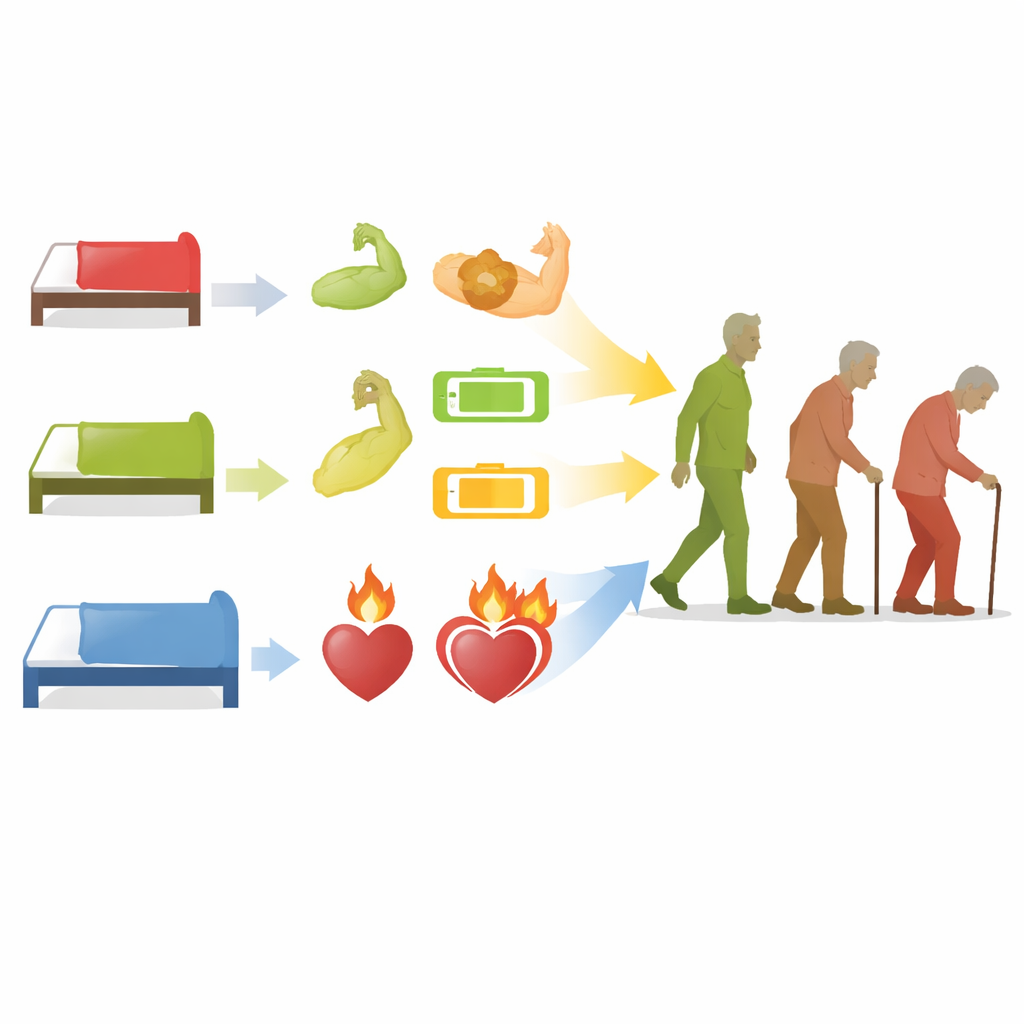
Looking more closely, the team found that midlife sleep habits were especially tied to muscle strength years later. Both short and long sleepers in midlife were more likely to have weak handgrip strength in their 70s—a simple measure that predicts difficulty with everyday tasks and even risk of death. Later in life, unusual sleep durations were linked not only to weak grip, but also to slower walking, greater weight loss, and a higher chance of feeling drained of energy. Experimental studies in younger adults suggest that missing sleep can interfere with the body’s ability to build and repair muscle, alter hormones, and promote a more “wear and tear” internal environment. Long sleep is often associated with fragmented, low-quality rest and hidden health problems, which may also undermine physical resilience over time.
Can Changing Sleep Habits Undo the Risk?
The researchers then asked a practical question: if someone sleeps too little or too much in midlife, can changing their habits later protect them? They compared people who kept a steady sleep pattern with those whose sleep changed by two hours or more between their early 50s and mid-60s. As expected, people who stayed short sleepers or stayed long sleepers had higher odds of frailty than those who consistently slept six to eight hours. But even people who moved from short to longer sleep, or from long to shorter sleep, still carried elevated risk decades later. Because these changing-sleep groups were relatively small, the exact size of the risk is uncertain, yet the overall message was consistent: early patterns of very short or very long sleep seemed to leave a lasting mark.
What This Means for Your Future Self
This research cannot prove that sleep duration directly causes frailty, and it has limitations, such as relying on self-reported sleep and assessing frailty only once. Still, its strengths—a large sample, long follow-up, repeated sleep reports, and careful accounting for other health factors—make its findings hard to ignore. For the average person, the takeaway is simple: regularly sleeping around seven hours a night in midlife may help preserve strength and independence in older age, while habitually sleeping far less or far more could raise the chances of becoming physically frail. Maintaining a steady, healthy sleep pattern over many years may be one of the quieter, but important, investments you can make in your future mobility and quality of life.
Citation: Chua, K.Y., Chua, R.Y., Li, H. et al. Association between sleep duration from midlife and the risk of physical frailty in late life. Sci Rep 16, 8426 (2026). https://doi.org/10.1038/s41598-026-39228-6
Keywords: sleep duration, physical frailty, healthy aging, muscle strength, longitudinal cohort