Clear Sky Science · en
Comparison of vertical jump performance between the Maasai, track and field athletes, and non-athletes: a cross-sectional study
Why this jumping study matters
Jumping may look simple, but it reveals a lot about how the human body uses muscle, tendons, and lifelong habits. This study explores why Maasai men from East Africa, known for their traditional jumping dances, can keep hopping high over and over—and how their performance compares with trained track-and-field athletes and everyday non-athletes from Europe.
Three very different groups of jumpers
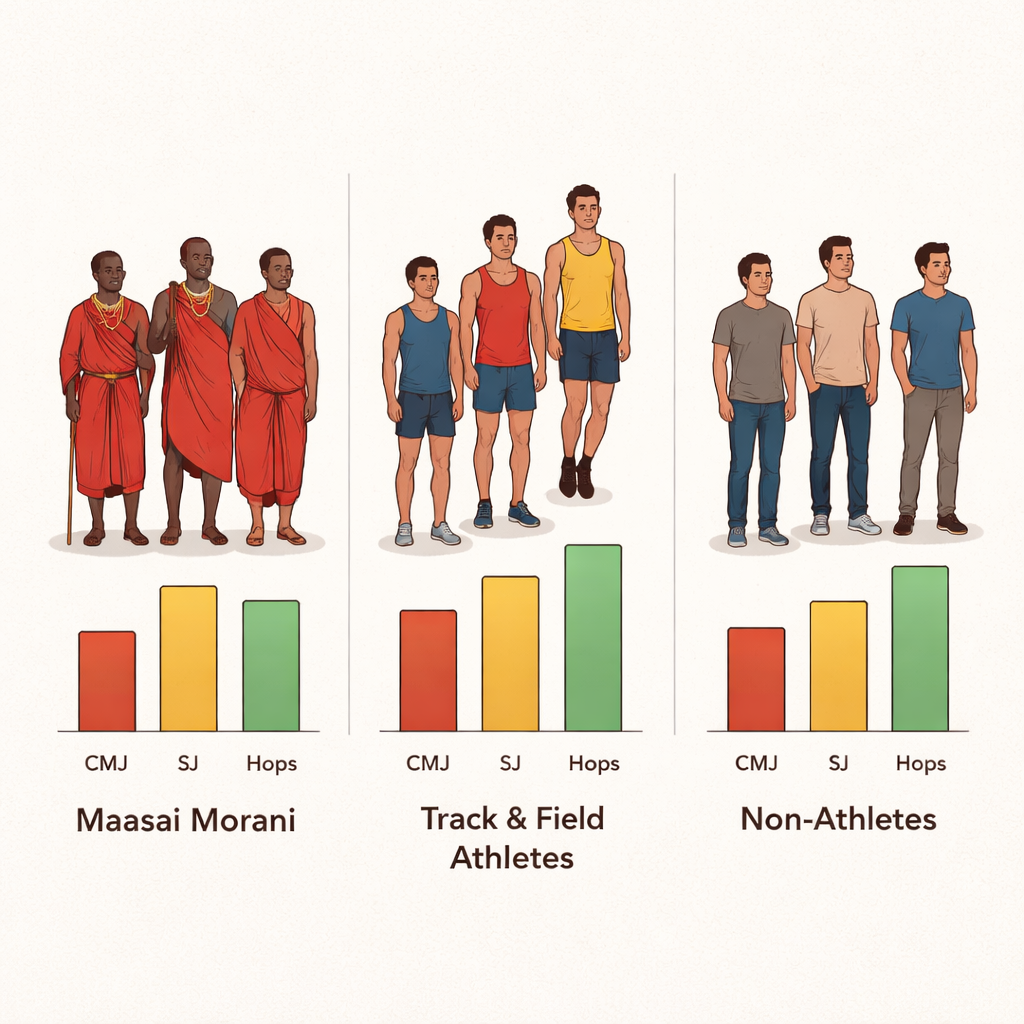
Researchers compared three groups of men aged 16–35: Maasai warriors (called Morani) from rural Tanzania, Slovenian high jumpers and sprinters, and Slovenian men who did not train in sports. All tests were non-invasive and done according to strict ethical rules. The team measured body weight and then asked participants to perform three types of jumps: a countermovement jump (a quick dip and jump), a squat jump (starting from a held squat), and 15 seconds of continuous hops, all done barefoot. Jump height and timing were recorded using a smartphone app that analyzes high-speed video.
Explosive jumps versus repeated hops
In the single, explosive jumps, the track-and-field athletes came out clearly on top. On average they jumped much higher than both the Maasai and the non-athletes in both the countermovement and squat jumps. The Maasai and non-athletes were closer to each other and did not differ significantly in these one-off jumps. This fits with what we know about modern training: athletes who regularly lift weights and perform power exercises develop strong leg muscles that excel at brief, maximum efforts.
The surprise advantage of cultural practice
The picture changed when participants were asked to hop repeatedly for 15 seconds. Here, the Maasai matched the performance of the athletes and far outperformed the non-athletes. Their average hop height was nearly identical to that of the trained jumpers, even though they do not follow structured sports programs. However, the Maasai stayed on the ground slightly longer between hops than the athletes, suggesting a different jumping style: they appear to take a bit more time on the ground but still achieve impressive height, likely by making very efficient use of their tendons and muscles.
Endurance, efficiency, and the body’s “spring”
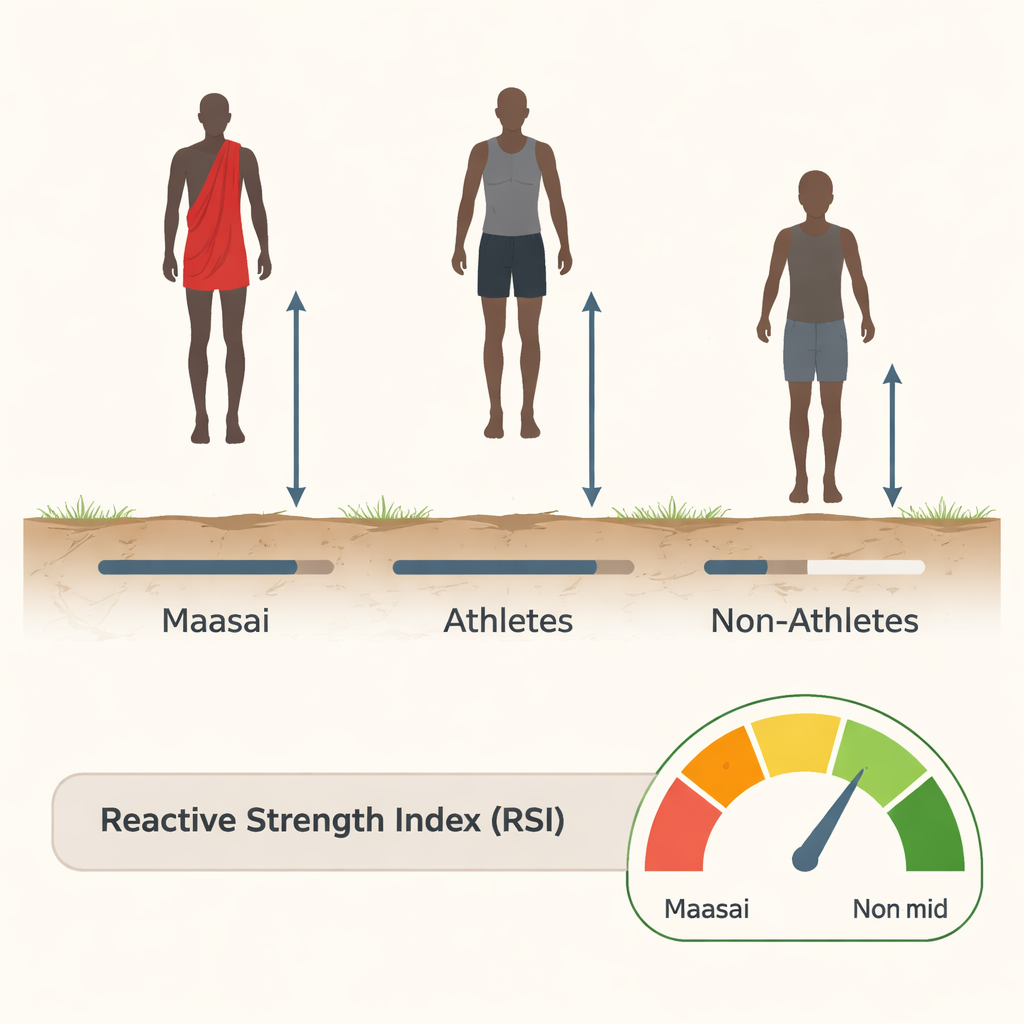
The researchers also looked at how quickly performance declined during the hopping test and at a measure called the reactive strength index, which combines jump height and ground contact time. Athletes showed the best overall efficiency, with high jumps and very short contact times. The Maasai, though, still had a higher index than non-athletes, and their hop heights stayed quite steady across the 15 seconds. Earlier work suggests that Maasai men often have long Achilles tendons and other leg features that act like strong springs. Combined with a lifetime of ceremonial jumping beginning in childhood, these traits may help them recycle elastic energy with each hop.
What this means for everyday movement
To a layperson, the main message is that how we move throughout life can shape our bodies in powerful ways, sometimes rivaling formal athletic training. Structured training helped the Slovenian athletes jump highest in single efforts, but the Maasai’s long-standing cultural practice of rhythmic hopping helped them keep up in repeated jumps and resist fatigue. The study suggests that everyday, meaningful physical traditions—whether dances, games, or rituals—can build remarkable physical abilities and efficient movement patterns over time.
Citation: Robnik, P., Chilongola, J., Kombe, E. et al. Comparison of vertical jump performance between the Maasai, track and field athletes, and non-athletes: a cross-sectional study. Sci Rep 16, 7670 (2026). https://doi.org/10.1038/s41598-026-39223-x
Keywords: vertical jumping, Maasai, athletic performance, repetitive hopping, tendon elasticity