Clear Sky Science · en
Adaptive multi mechanism integration in the crested porcupine optimizer for global optimization and engineering design problems
Smarter Search for Better Designs
From lighter bridges to more efficient pressure vessels, modern engineering often boils down to one tough question: among countless possible designs, which one is best? Traditional calculation methods struggle when the design space is huge and bumpy, full of many competing "pretty good" options. This paper introduces an upgraded computer search method, inspired by the defensive maneuvers of crested porcupines, that is built to roam such difficult landscapes more reliably and find better designs with less trial and error.
Why Finding the Best Option Is So Hard
Choosing an optimal design is rarely as simple as turning one knob. Real projects juggle many variables at once—sizes, shapes, materials—under strict safety and performance limits. The resulting "landscape" of possibilities can have many peaks and valleys, where each valley represents a different workable design. Simple methods that follow the steepest downhill slope can easily get stuck in the first valley they encounter. Swarm-style methods, which send many candidate solutions searching in parallel, offer a way out, but even they often converge too quickly, lose diversity and settle for second-best. The original Crested Porcupine Optimizer (CPO), based on how porcupines ward off predators, is one such swarm method: clever, but still prone to getting trapped and slowing down on especially complex problems.
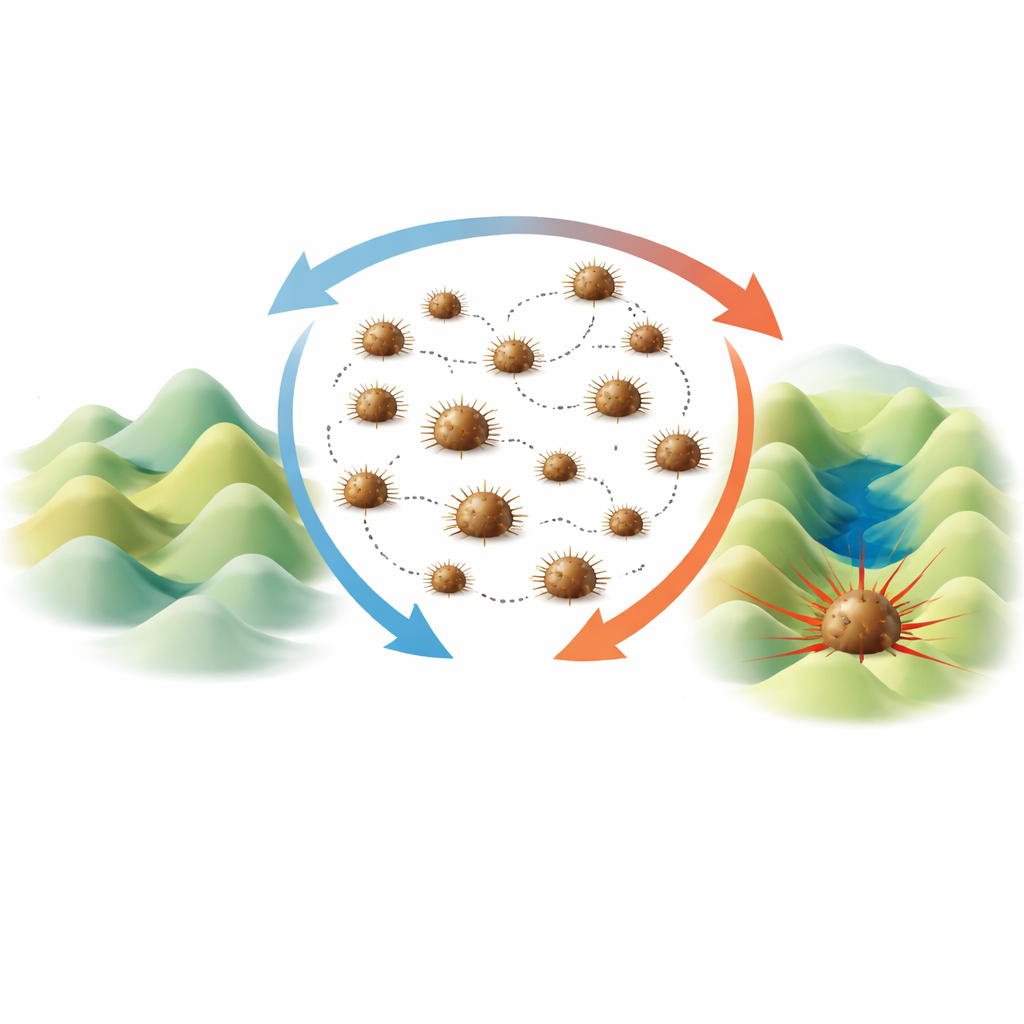
Giving the Digital Porcupines a Better Start
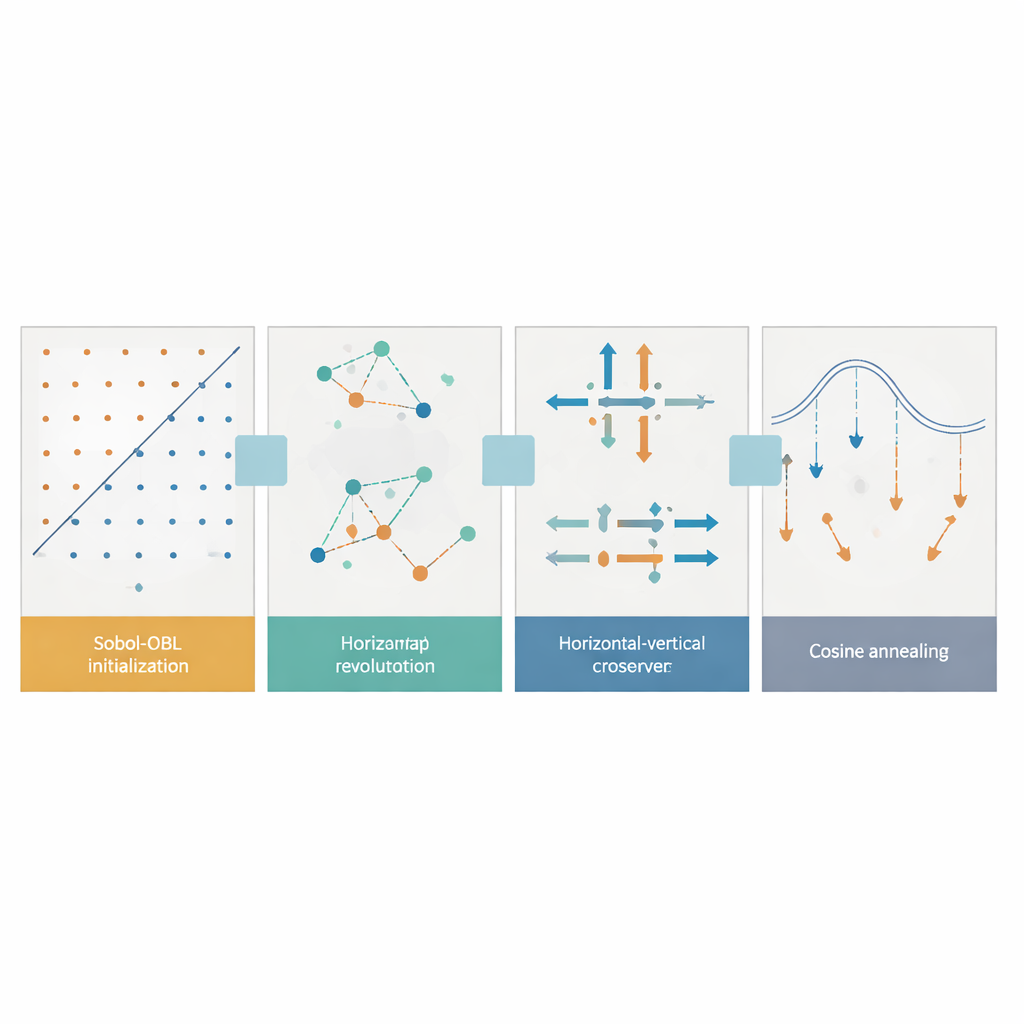
The authors propose an enhanced version called SDHCPO that strengthens CPO at several key stages. First, instead of scattering candidate designs purely at random, they use a technique known as Sobol-opposition initialization. In plain terms, this creates a highly even, grid-like spread of starting points across the whole design space, then deliberately also samples their mirror images on the opposite side. Weak starting points may be replaced by their opposites if those look more promising. This simple idea reduces empty "blind spots" in the search and makes it more likely that at least some candidates begin near truly good regions.
Keeping the Swarm from Getting Stuck
Once the search is under way, SDHCPO adds two forms of controlled mixing to keep the population from collapsing too quickly around a mediocre design. One mechanism borrows from differential evolution, a long-tested strategy that creates new candidates by combining the differences between several existing ones. This injects stronger, structured randomness that pushes some porcupines into unexplored territory instead of letting them simply trail the current leader. A second mechanism, called horizontal–vertical crossover, works at the level of individual coordinates of a design: it lets stagnant dimensions "trade" values either with other members of the swarm or with different parts of the same design. In effect, the swarm can reshuffle useful traits without having to start over, which helps break out of narrow ruts in certain directions.
From Wild Exploration to Steady Refinement
As the search progresses, a good algorithm must gradually switch from roaming widely to honing in carefully. In the original porcupine method, this late-stage behavior was controlled by random weights, leading to jittery and sometimes wasteful movements near promising designs. SDHCPO replaces this with a smooth, time-controlled "cosine" schedule that steadily reduces the step size as iterations go by. Early on, this schedule allows bold moves that jump between distant valleys; later, it encourages small, precise adjustments around the best valley found so far. When combined with the advanced initialization and mixing steps, this gives SDHCPO a coordinated rhythm: diversify aggressively at the beginning, blend and prune in the middle, then quietly refine near the end.
Proving Its Worth on Tests and Real Structures
To see whether these upgrades pay off, the authors pit SDHCPO against seven other modern swarm methods on two demanding collections of test functions widely used in the optimization community. Across dozens of tasks, and even when the number of variables is pushed from 30 up to 50, SDHCPO typically finds better solutions and does so more consistently, with less run-to-run scatter. The team then applies the method to five classic design challenges, including welded beams, springs, pressure vessels, and a large 72-bar space truss whose mass must be minimized while meeting vibration limits. In nearly all cases SDHCPO matches or surpasses the best-known designs, sometimes cutting structural weight while still respecting all safety constraints.
What This Means for Everyday Engineering
For a non-specialist, the key message is that SDHCPO is a smarter, more reliable way to search through vast design spaces. By starting with a more even spread of trial designs, deliberately stirring and recombining them, and then smoothly tightening its focus, the algorithm is less likely to settle for a merely adequate solution. Instead, it tends to keep improving until it locates truly high-quality designs. As engineering problems—from lightweight structures to traffic control—grow more complex, tools like SDHCPO promise to make better use of computing power, helping engineers explore more options and arrive at safer, cheaper, and more efficient solutions.
Citation: Xie, H., Mao, J., Wan, X. et al. Adaptive multi mechanism integration in the crested porcupine optimizer for global optimization and engineering design problems. Sci Rep 16, 9275 (2026). https://doi.org/10.1038/s41598-026-39222-y
Keywords: metaheuristic optimization, swarm intelligence, engineering design, global optimization, nature-inspired algorithms