Clear Sky Science · en
Quantitative analysis of root system architecture and fresh weight biomass traits highlight phenotypic variation in radish (Raphanus sativus L.) germplasm
Why radish roots matter
Most of us notice only the crunchy, colorful part of a radish that ends up in a salad or in kimchi. But hidden below the soil is a surprisingly complex root system that determines how well the plant finds water and nutrients, copes with drought, and ultimately how it looks and tastes on our plates. This study peels back the soil to examine how radish roots differ across the world, and how that hidden diversity can be used to breed hardier, higher‑quality crops.
A global cast of radishes
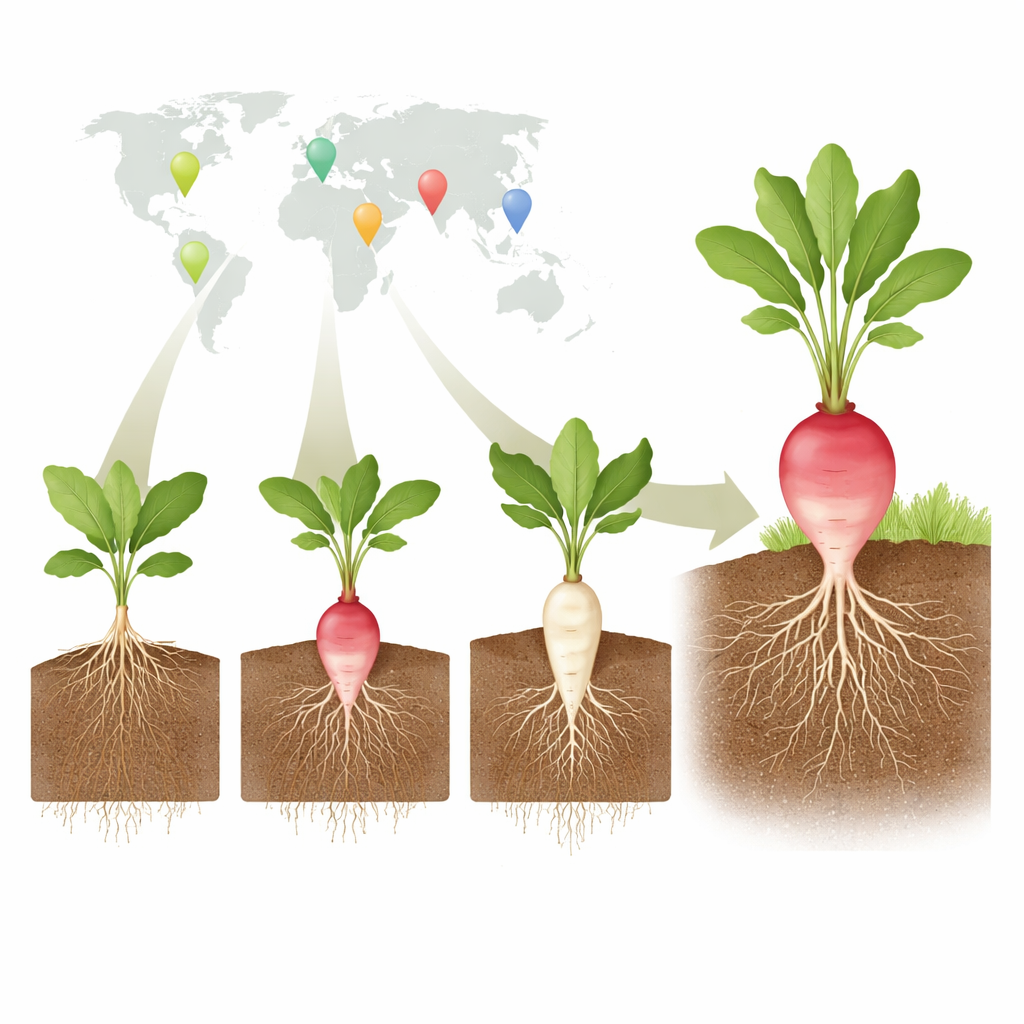
The researchers assembled 23 types of radish from nine countries, including wild relatives, traditional farmer varieties known as landraces, and modern commercial cultivars. All belonged to a fast‑maturing “Cherry Belle” market class, making them comparable in growth time but very different in origin and history. These plants represent a spectrum from tough survivors that evolved in harsh coastal environments to carefully selected varieties bred for uniform, attractive roots. By studying this mix, the team hoped to capture both rugged resilience and supermarket‑ready traits in a single experiment.
Looking inside the underground world
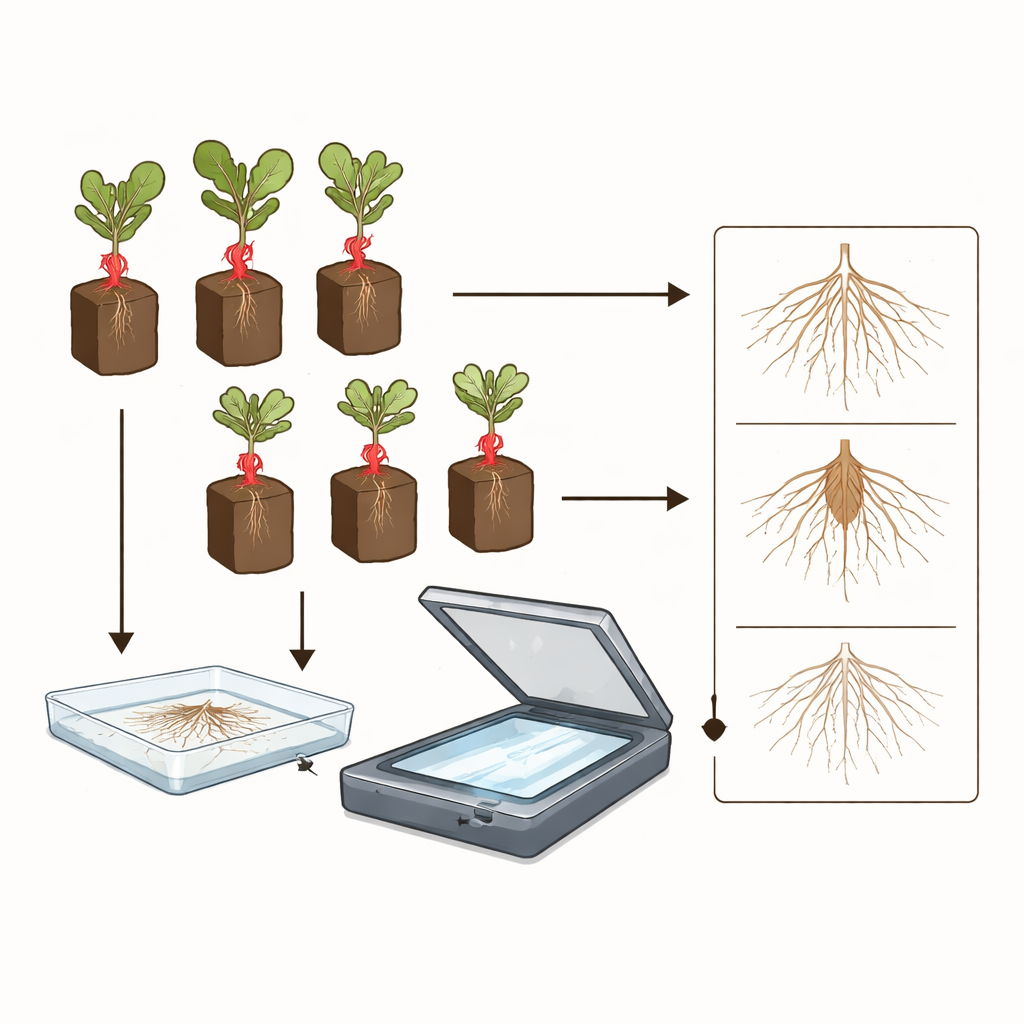
To compare these radishes fairly, the team grew them in a controlled greenhouse using identical soil and climate conditions. After 20 days—about when small salad radishes are ready to harvest—they carefully washed the roots and placed them in shallow water on clear trays. High‑resolution scanners captured detailed two‑dimensional images of each root system. Specialized software then measured how long the roots were, how much area they covered, how thick they were, how many times they branched, and how much fresh weight came from roots and shoots. In total, 16 different traits were recorded, turning each tangled root system into a set of precise numbers.
Hidden variety beneath similar leaves
Even though the plants looked broadly similar above ground, their roots told a very different story. Some Chinese and Korean accessions produced thick, heavy roots with large diameters and high root weight, traits linked to storage capacity and marketable yield. Turkish entries developed very long, highly branched roots with many tips and forks, suggesting strong ability to explore deep and wide soil volumes. Landraces tended to have especially extensive root systems, while wild relatives showed the greatest spread in fine‑scale traits such as surface area and number of root tips. Modern cultivars were more uniform, with relatively consistent root volume and diameter, reflecting deliberate selection for predictable appearance. Overall, nearly every measured trait varied strongly by genotype, confirming that root structure is largely written into each radish’s genetic identity.
Patterns behind the complexity
To make sense of this diversity, the scientists used statistical tools that group traits and varieties by similarity. They found that root length, surface area, total branching, and the number of tips tended to rise and fall together, forming a coordinated “exploration package” that helps plants search soil more effectively. At the same time, root thickness and biomass allocation behaved somewhat independently, pointing to different strategies: some radishes invest in long, fine networks, while others favor thick storage roots. Principal component and cluster analyses sorted the 23 accessions into functional groups that did not strictly follow geography, indicating that similar root types have evolved or been selected in different regions for similar purposes, such as drought tolerance or yield.
What this means for future crops
For non‑specialists, the main message is that not all radishes are created equal below the surface. This study shows that global radish germplasm harbors a rich mix of root designs—from fine, exploratory systems suited to poor, dry soils to thick, compact roots ideal for high‑yield production. By mapping how these underground traits vary and how they link to overall plant weight, breeders gain a menu of options for combining toughness, efficiency, and appearance. In a world facing more frequent droughts and the need for sustainable fertilizer use, tapping into this hidden root diversity could help deliver radishes—and other crops—that thrive with fewer resources while still meeting market and culinary demands.
Citation: Ochar, K., Ki, DW., Moon, S. et al. Quantitative analysis of root system architecture and fresh weight biomass traits highlight phenotypic variation in radish (Raphanus sativus L.) germplasm. Sci Rep 16, 8001 (2026). https://doi.org/10.1038/s41598-026-39212-0
Keywords: radish roots, root system architecture, crop diversity, drought resilience, plant breeding