Clear Sky Science · en
Trajectories of mental distress and quality of life during Ramadan fasting in young Israeli Muslims are gender-specific
Why this matters
Ramadan is one of the world’s largest annual changes in daily life, reshaping when hundreds of millions of people eat, sleep, work, and meet family. Yet scientists know surprisingly little about how this month-long fast affects day‑to‑day mental health, especially differently for women and men. This study followed young Muslim adults in Israel across the weeks before, during, and after Ramadan to see how feelings of stress, anxiety, mood, and overall life satisfaction actually change over time.
A month that reshapes daily life
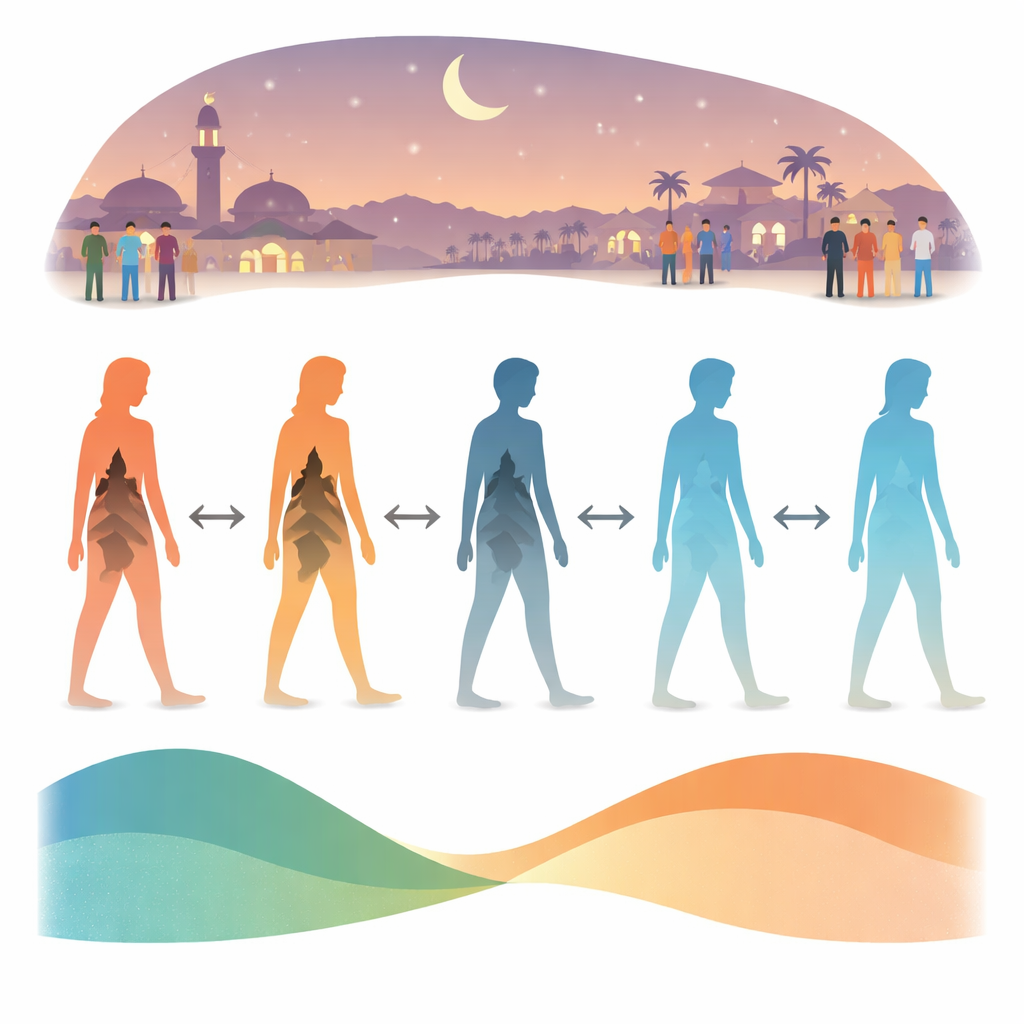
Ramadan is far more than skipping food and drink from dawn to sunset. It also brings late-night prayers, communal meals, charity, and extra social visits. These changes disrupt sleep patterns, working hours, and family routines. The researchers saw Ramadan as a kind of natural stress test: a structured period in which everyday habits are temporarily transformed. Because virtually the same pattern repeats each year, it offers a rare opportunity to study how people adapt to a coordinated shift in schedule, expectations, and social demands.
Tracking mood through five key moments
The team recruited 284 healthy young Muslim adults from across Israel, about 58 percent of them women. Participants completed online questionnaires at five time points: a week before Ramadan began, after the first week of fasting, at the end of the fourth week of Ramadan, one week after Ramadan, and again four weeks later. At each point, they rated symptoms of depression, anxiety, and stress using a standard psychological tool, and gave a simple one‑item rating of their overall quality of life. The same people were measured repeatedly, allowing the researchers to trace personal “trajectories” across the full Ramadan cycle.
Stress eases, but not in a straight line
On average, mental distress eased over the study period. Global scores combining depression, anxiety, and stress fell in two main steps: first between the week before Ramadan and the end of its first week, and again in the week after Ramadan ended. By a month after Ramadan, distress levels were still lower than before the fast. When the three types of symptoms were examined separately, depression improved mainly in the first week of Ramadan, whereas anxiety and stress showed a more complex pattern: early improvement, some worsening by the final week of fasting, and further relief once normal routines resumed.
Different paths for women and men
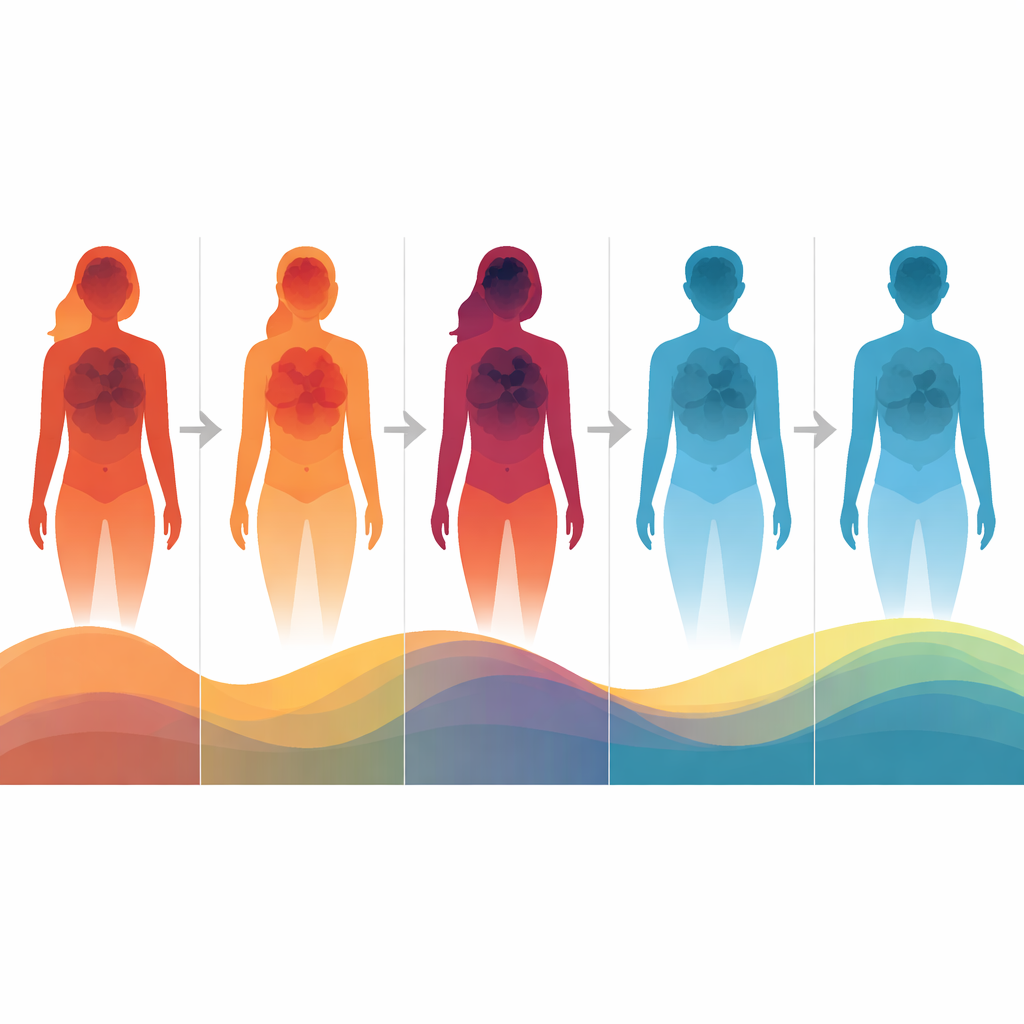
Throughout the study, women reported higher levels of depression, anxiety, and stress than men. Both sexes showed the same overall two‑step improvement in global distress, but a closer look revealed a gender‑specific twist: during the later weeks of Ramadan, women experienced a temporary upturn in distress, whereas men did not. The data suggest that women may be more sensitive to cumulative fatigue, disrupted sleep, and added responsibilities during the month. Factors such as household work, organizing meals, and social expectations likely contribute, although the study did not measure these directly for each day.
Quality of life dips before it rebounds
Unlike distress symptoms, self‑rated quality of life did not simply improve. Ratings worsened from the first to the last week of Ramadan, then recovered in the following month. This dip was particularly noticeable for women, who were more likely to report that their life felt “not good” or “bad” during the fasting month. Many participants said that, during Ramadan, they worked or studied less but faced more social pressure and extra spending. Most wished they could cut back on social obligations and costs without reducing the spiritual side of the fast. These findings suggest that religious and emotional benefits can coexist with a sense of being overburdened.
What this means for everyday life
For the young adults in this study, Ramadan fasting was linked to short‑term improvements in depression, anxiety, and stress that persisted at least a month after the fast. At the same time, people—especially women—felt their overall quality of life worsen temporarily under the weight of extra social and practical demands. In simple terms, the month may soothe emotional symptoms while making daily life feel harder. The authors argue that communities and policymakers could amplify Ramadan’s mental health benefits by easing social time pressure and domestic load, particularly for women, so the spiritual rewards are not overshadowed by avoidable strain.
Citation: Sindiani, M., Korman, M. Trajectories of mental distress and quality of life during Ramadan fasting in young Israeli Muslims are gender-specific. Sci Rep 16, 9882 (2026). https://doi.org/10.1038/s41598-026-39211-1
Keywords: Ramadan fasting, mental health, gender differences, quality of life, social pressure