Clear Sky Science · en
Comparison of low temperature thermoplastic and 3D printed (TPU and PLA) CMC joint stabilization orthoses in healthy participants
Helping Hands in Everyday Life
The base of the thumb does a surprising amount of work, from turning keys to lifting cups. When this small joint wears out, as in carpometacarpal (CMC) osteoarthritis, simple tasks can become painful and exhausting. One of the main non-surgical ways to help is a thumb brace, or orthosis, that supports the joint. This study explores whether newer 3D-printed braces made from different plastics can match or even improve on traditional molded plastic braces in terms of comfort and how well people can still use their hands.
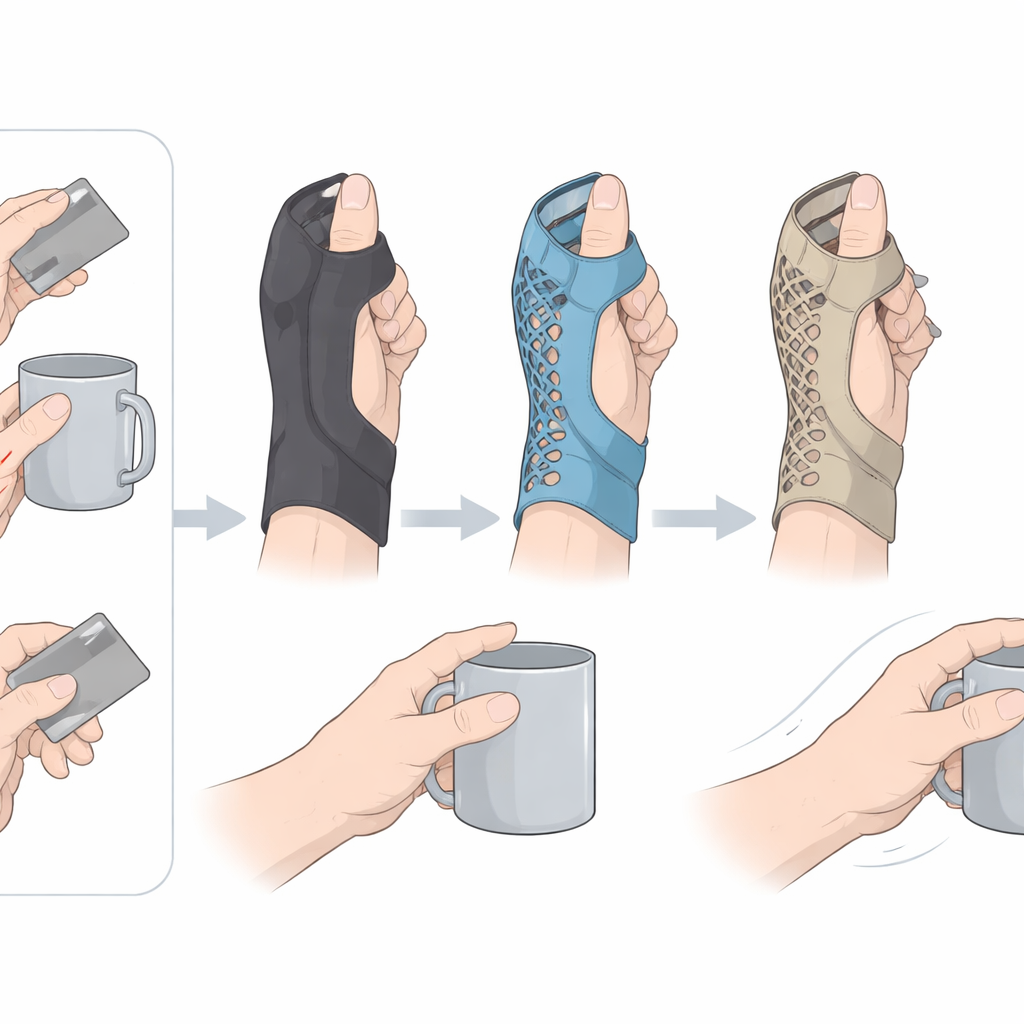
Why Thumb Braces Matter
The CMC joint at the base of the thumb allows us to pinch, grip, and oppose the thumb to the fingers, which is essential for everyday function. That same freedom of movement makes the joint prone to wear and tear, especially in older adults. As the joint degenerates, people often develop pain, swelling, and loss of strength, which undermines independence in tasks like writing, cooking, or using a phone. Braces that stabilize this joint are a cornerstone of conservative care and have been shown to reduce pain and improve function. Traditionally, these devices are made from low temperature thermoplastic (LTT), a material heated and molded directly on the patient’s hand by a skilled clinician.
A New Way to Build Braces
Three-dimensional (3D) printing offers a more digital path to custom orthoses. The hand is scanned, a brace is designed in software, and a printer builds it layer by layer. This process can produce devices with consistent shape and fine-tuned thickness, and allows the use of different printable plastics. In this study, the researchers focused on two widely used printing materials: thermoplastic polyurethane (TPU), which is flexible and springy, and polylactic acid (PLA), which is more rigid and holds its shape firmly. They compared these two 3D-printed options with the familiar molded LTT brace to see how each material influenced comfort and the ability to perform everyday hand tasks.
How the Study Was Done
Thirty healthy young adults, half women and half men, each received three braces for the dominant hand: one traditional LTT brace, one 3D-printed TPU brace, and one 3D-printed PLA brace. All three were designed with the same overall shape to stabilize the thumb base in a commonly used support position. Participants wore each brace for two hours while going about normal activities. After each trial they rated how satisfied they were with the device, including aspects like comfort, weight, and ease of use, using a standardized questionnaire. They also completed a well-established hand function test that times how quickly someone can perform tasks such as picking up small objects, turning over cards, or simulating feeding. The order of braces was randomized, and rest breaks were built in to reduce learning or fatigue effects.
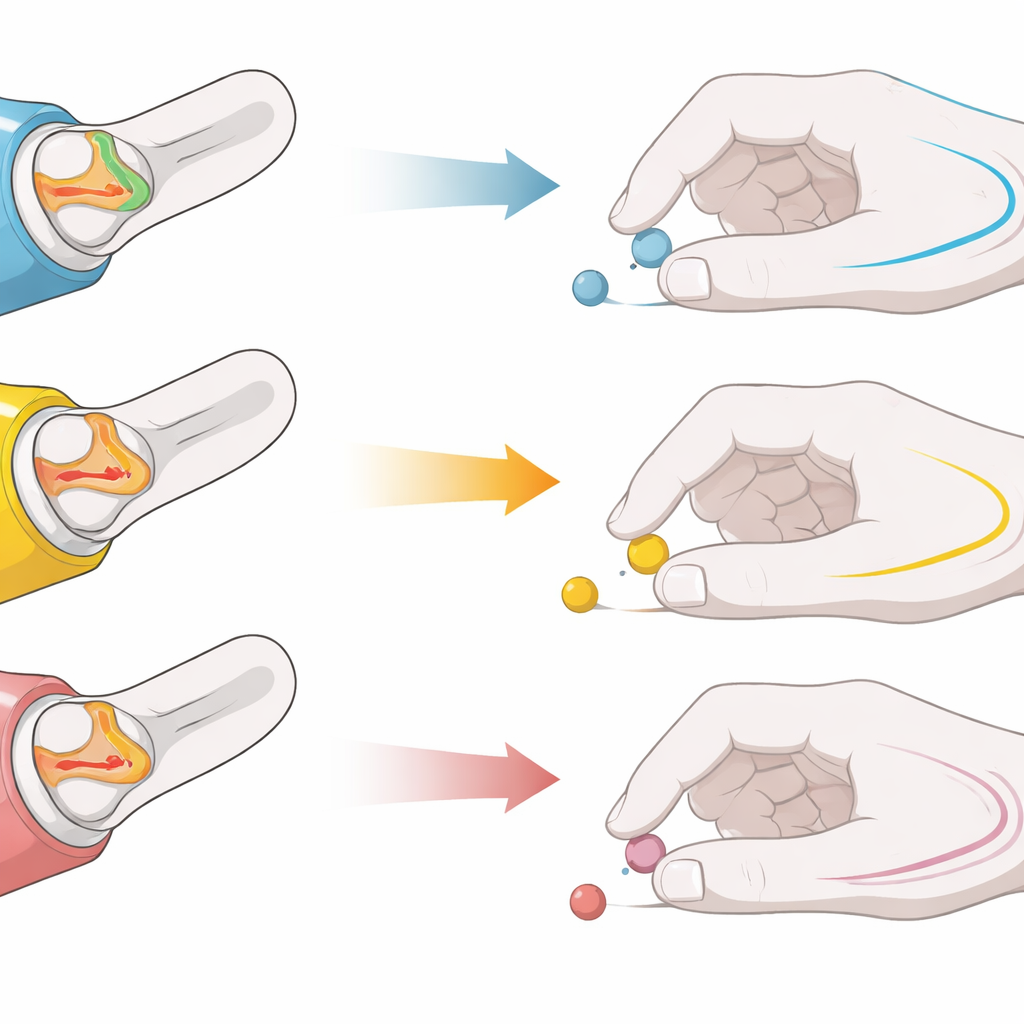
What the Researchers Found
When it came to overall satisfaction with the devices, the flexible TPU braces and the traditional molded LTT braces scored similarly and both were clearly preferred over the stiffer PLA braces. Participants rated TPU and LTT higher in comfort and overall experience, while PLA lagged behind. On the performance side, TPU showed a distinct edge. In the combined hand function score, participants completed tasks faster with the TPU brace than with either LTT or PLA. Certain subtasks also highlighted material-specific strengths: TPU supported quicker card handling and simulated feeding, while LTT showed an advantage over PLA in picking up small objects. In contrast, PLA never outperformed the other materials in any timed task. These differences likely reflect how a more flexible material can bend slightly with the thumb while still supporting it, whereas a very rigid material can feel more restrictive.
What It Means Going Forward
This work was done in healthy young volunteers over short two-hour periods, so it does not prove that TPU braces will be superior for people actually living with CMC osteoarthritis over weeks or months. Still, the results suggest that 3D-printed TPU braces can match the comfort of standard molded plastic devices and may even allow smoother, quicker hand movements, while rigid PLA appears less appealing to users. The findings offer early guidance for clinicians and designers choosing materials for future thumb braces and point toward TPU as a promising option. Larger, longer studies in patients with painful thumb arthritis will be needed to confirm whether these material advantages translate into better pain relief, daily function, and long-term wear.
Citation: Güven, E., Özgün, A.K. & Alsancak, S. Comparison of low temperature thermoplastic and 3D printed (TPU and PLA) CMC joint stabilization orthoses in healthy participants. Sci Rep 16, 8214 (2026). https://doi.org/10.1038/s41598-026-39208-w
Keywords: thumb brace, 3D printed orthosis, hand function, osteoarthritis, medical device materials