Clear Sky Science · en
KNAT7 transcription factor regulates metabolite and ion profiles to control cell wall biosynthesis in Populus
Why this matters for future energy and forests
As the world looks for cleaner sources of energy, fast-growing trees like poplar are becoming green factories for biofuels and biomaterials. But the same tough cell walls that make wood strong also make it hard to turn into fuel. This study explores how a single control gene in poplar, called KNAT7, helps steer the tree’s internal chemistry and mineral balance to shape wood structure. Understanding this control switch could help breeders and biotechnologists design trees that grow well, resist stress, and are easier to convert into renewable energy.
A genetic dial for building better wood
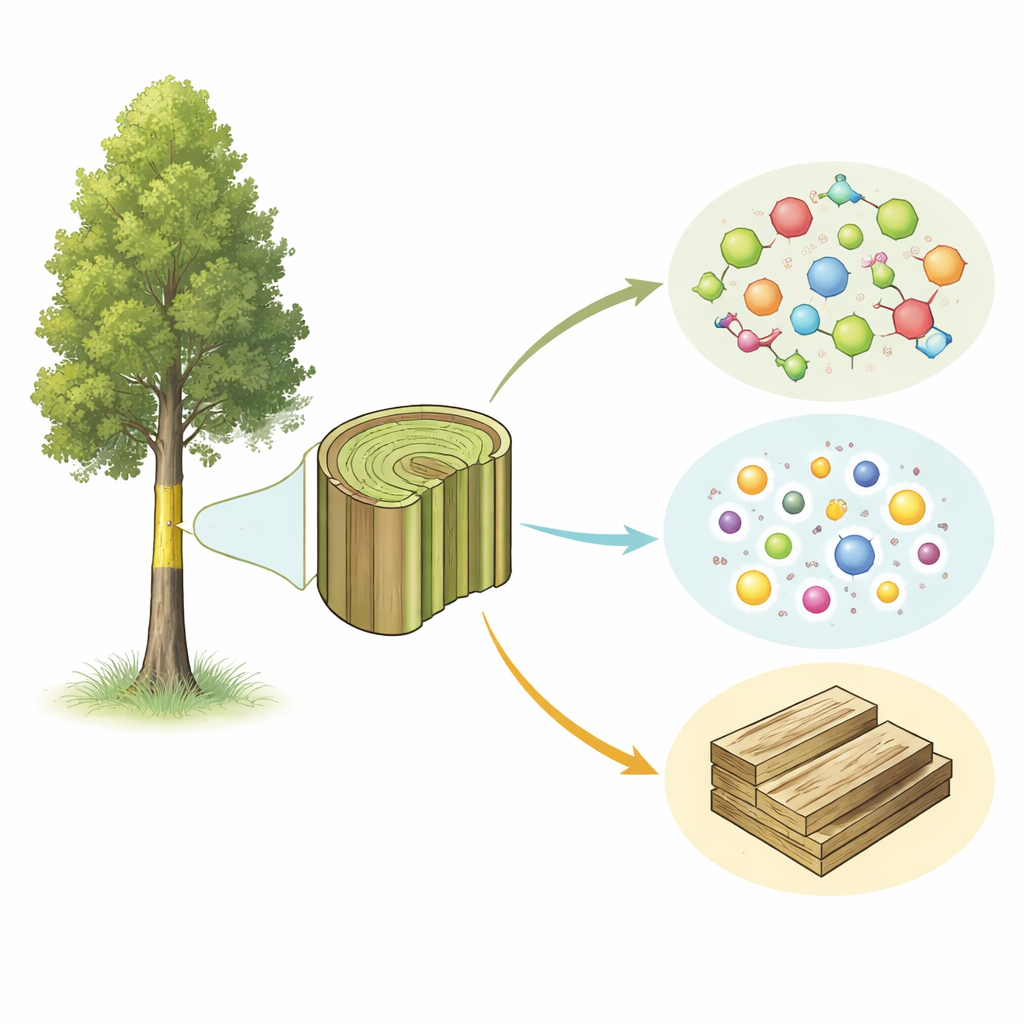
At the heart of the work is KNAT7, a transcription factor—a type of protein that turns many other genes on or off. KNAT7 is active in the parts of the stem where thick, woody cell walls are built. The authors engineered poplar trees so that some lines produced extra KNAT7, while others had KNAT7 dialed down. They then sampled the developing wood from these trees and measured hundreds of small molecules and essential elements. By comparing these profiles, they could see how shifting this single genetic dial reprograms the tree’s internal supply chains for building wood.
Sugars, building blocks, and chemical defenses
The team found that trees with boosted KNAT7 piled up a wide range of soluble sugars, including glucose, sucrose, mannitol, and cellobiose. These sugars serve as both energy sources and raw material for cellulose and other wall polymers, hinting that more KNAT7 pushes extra carbon toward cell wall construction. Levels of several amino acids also rose, especially glutamic acid, phenylalanine, and tyrosine. Phenylalanine and tyrosine feed directly into the pathway that produces lignin, the stiff, waterproof component that helps wood stand upright and resist decay. At the same time, overexpressing lines accumulated more phenolic compounds linked to plant defense, such as resveratrol and salicylic acid, suggesting KNAT7 coordinates both structural reinforcement and protection against stress.
Shifting chemical pathways and ion balance
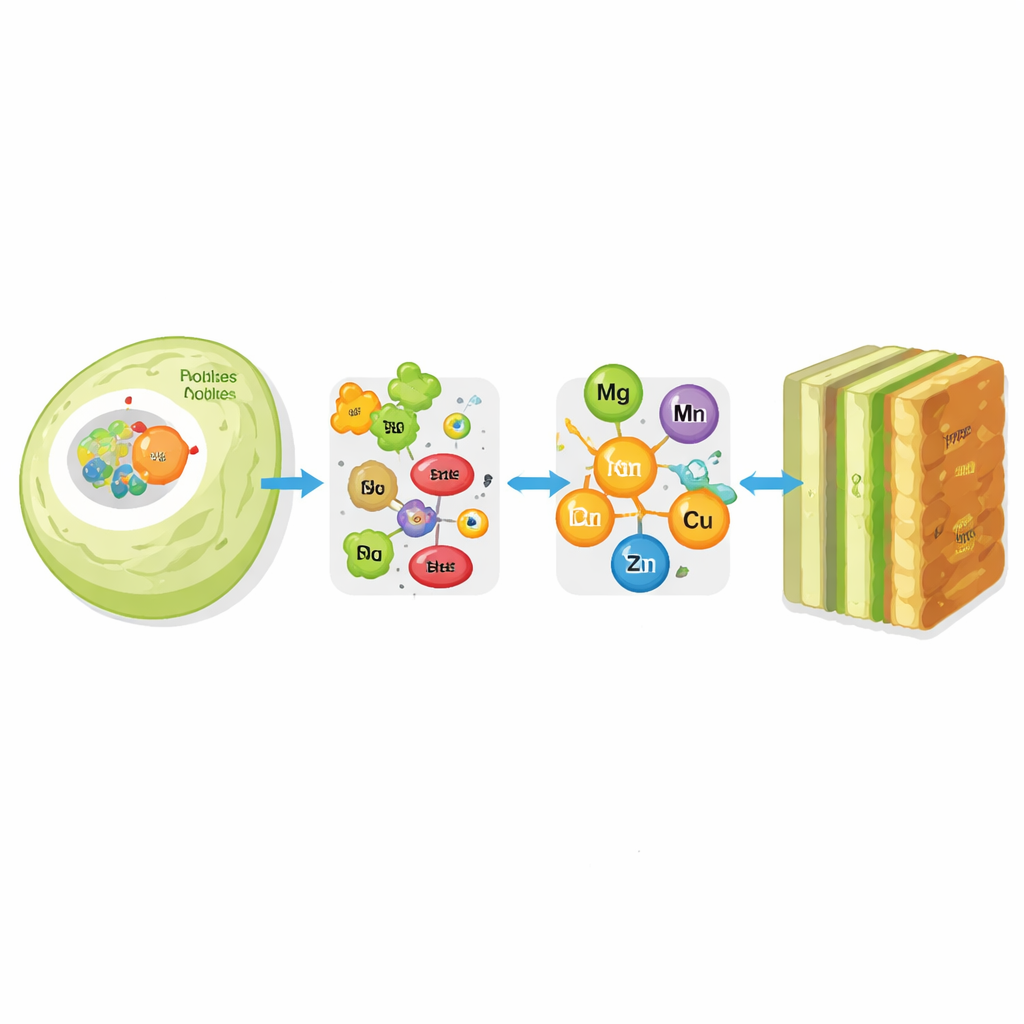
To move beyond individual molecules, the researchers used statistical and pathway analyses to see which metabolic routes were most affected. In KNAT7-overexpressing trees, pathways for starch and sucrose breakdown, and for making aromatic amino acids, were strongly reshaped, consistent with a push toward lignin and other wall components. In contrast, trees with reduced KNAT7 showed stronger changes in nitrogen-linked routes, like arginine and proline metabolism, often tied to stress and energy balance. The study also examined the ionome—the pattern of elements like magnesium, manganese, zinc, and copper within the tissues. These metals act as helpers for many enzymes involved in lignin and cell wall chemistry. KNAT7 shifts the levels of several of them, especially magnesium and manganese, indicating that it not only redirects carbon and nitrogen but also tunes mineral supplies needed for building and hardening cell walls.
From internal chemistry to wood traits and bioenergy
Previous work on the same lines showed that changing KNAT7 affects the size of the woody tissue, the detailed make-up of lignin, and how easily sugars can be released from the wood for biofuel production. By connecting those traits to the new metabolite and ion data, this study paints a more complete picture: when KNAT7 is reduced, xylem area expands and lignin composition shifts in ways that make the wood less stubborn during processing, boosting sugar release. When KNAT7 is boosted, the tree accumulates more of the chemical building blocks and minerals needed for cell wall thickening and stress tolerance, though with different trade-offs in wood structure.
What this means for future trees and fuels
To a non-specialist, the key message is that KNAT7 behaves like a master coordinator linking sugars, amino acids, minerals, and wall-building machinery in poplar. By turning this control knob up or down, scientists can influence how much wood is produced, how tough it is, how well the tree copes with stress, and how easily that wood can be converted into biofuels. The work suggests that targeting KNAT7, alone or together with other regulators, could help create poplar varieties that are both robust in the field and more efficient in the biorefinery, bringing sustainable tree-based energy a step closer.
Citation: Sharma, D., Lakra, N., Ahlawat, Y.K. et al. KNAT7 transcription factor regulates metabolite and ion profiles to control cell wall biosynthesis in Populus. Sci Rep 16, 9373 (2026). https://doi.org/10.1038/s41598-026-39190-3
Keywords: poplar, cell wall biosynthesis, lignin, bioenergy crops, transcription factors