Clear Sky Science · en
Effects of non-pharmacological interventions on sleep in patients with critical illness: a systematic review and network meta-analysis
Why Sleep in Intensive Care Matters to All of Us
Many people know how awful a bad night’s sleep feels. For patients fighting for their lives in intensive care units (ICUs), poor sleep is far more than an annoyance: it can slow healing, worsen confusion, and affect long-term recovery. This study asks a simple but important question with big implications for patients, families, and hospital staff: without relying on sleeping pills, which simple bedside measures actually help critically ill patients sleep better?
Rest Is Broken in the Intensive Care Unit
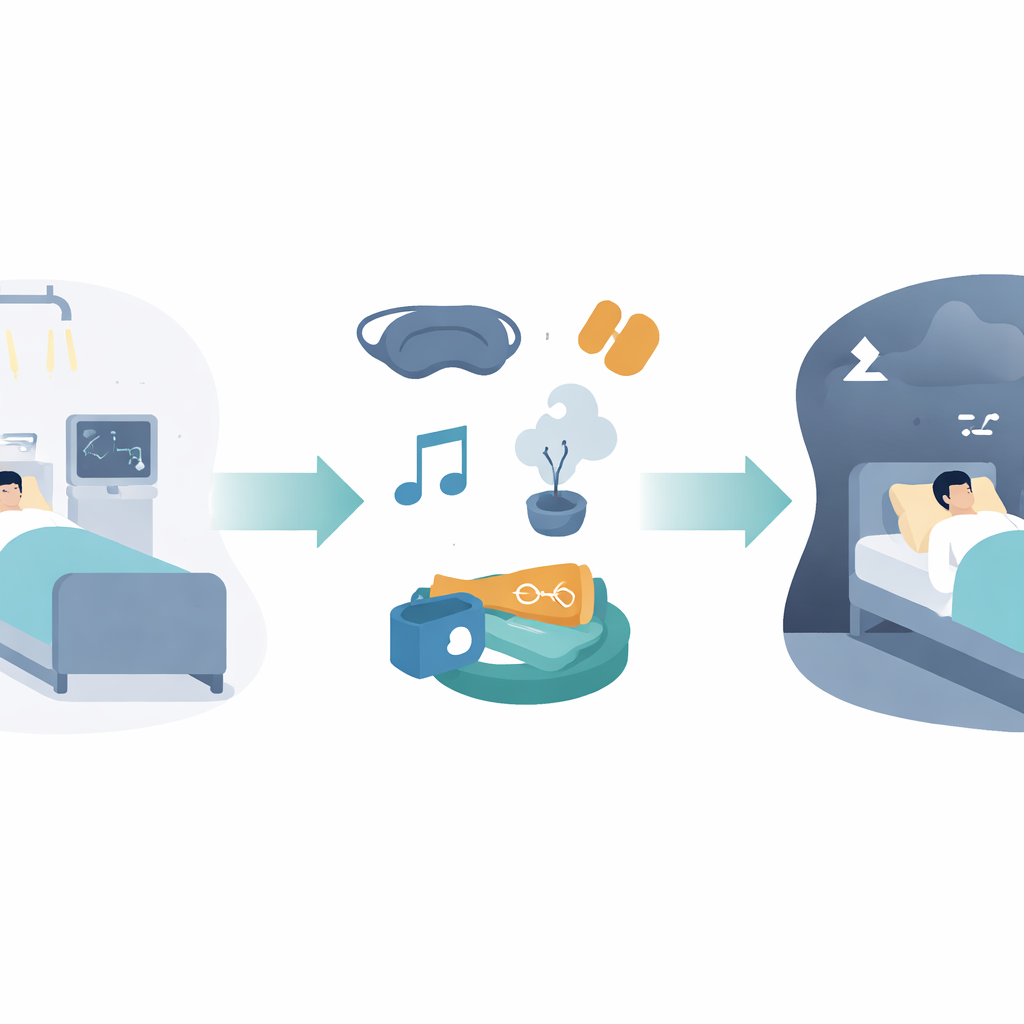
Modern ICUs are busy, noisy places filled with alarms, bright lights, and constant medical checks. Patients are often in pain, anxious, and out of sync with normal day–night rhythms. Instead of deep, continuous sleep, they drift in and out of light sleep, waking frequently. Research has linked this broken sleep to problems such as delirium (sudden confusion), more pain, and weakness that can last long after leaving the hospital. Because sleep is tied to the immune system, hormone balance, and how the brain recovers from stress, improving rest in the ICU is not a luxury—it is part of life support.
Looking Across Many Studies at Once
Hospitals have tried many non-drug approaches to help ICU patients sleep: dimming lights, reducing noise, using eye masks and earplugs, playing soothing music, offering gentle massage, and using calming scents like lavender or rose. But each study tends to test only one or two methods, often with small numbers of patients, making it difficult to know which strategy really works best. To tackle this, the authors systematically searched major medical databases for all trials since the late 1960s that tested non-drug sleep aids in adult ICU patients and used standard sleep questionnaires. They ended up with 36 studies from around the world, covering 16 different types of interventions and more than 2,600 patients.
A Network View of What Works Best
Instead of simply comparing each intervention to usual care one by one, the team used a technique called network meta-analysis. This approach combines both direct comparisons (for example, eye mask versus usual care) and indirect ones (music versus aromatherapy via their separate comparisons to usual care) to estimate how all the options stack up against one another. Overall, non-drug approaches clearly improved patients’ sleep scores compared with standard ICU care. When the various methods were ranked, five stood out as reliably helpful: aromatherapy; eye masks; eye masks combined with earplugs; music therapy; and bundled “multicomponent” programs that combine several measures such as noise reduction, light control, and structured nursing routines.
Music and Scent Rise to the Top
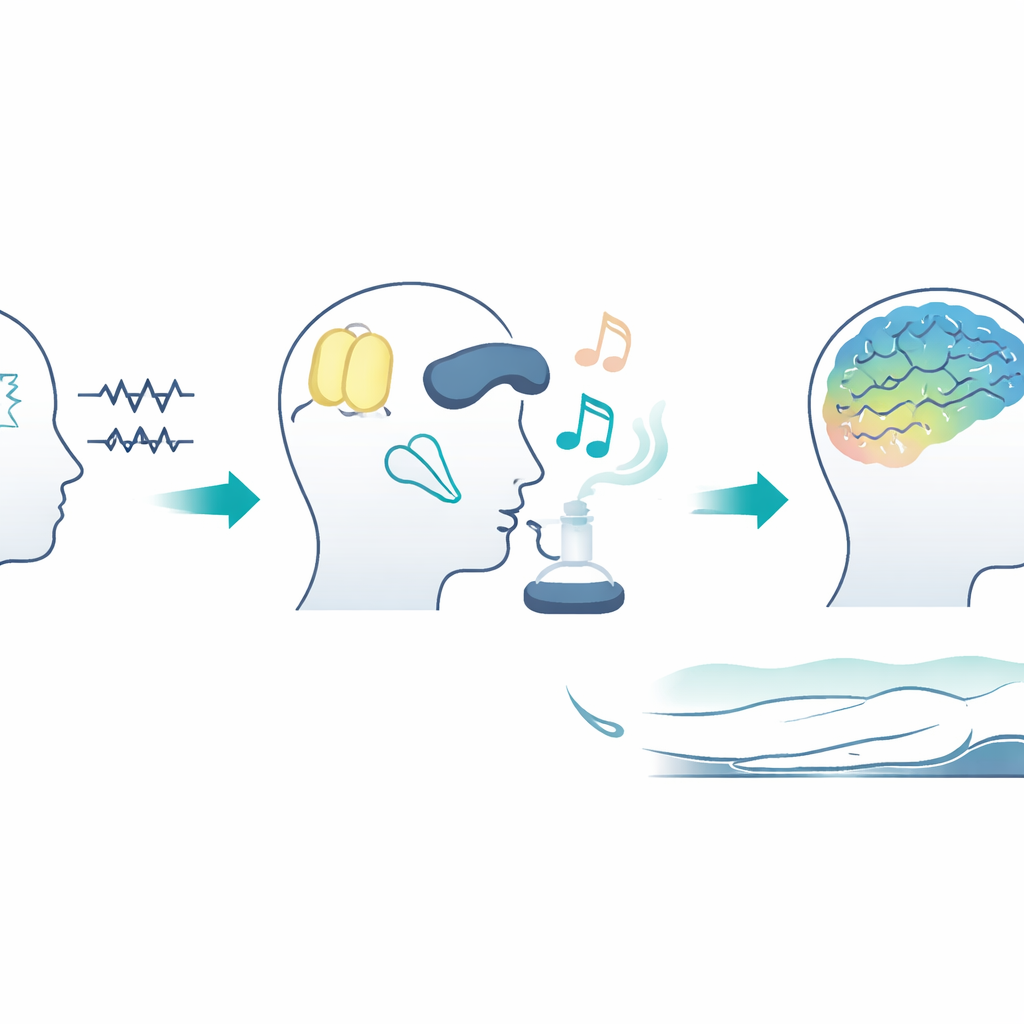
Among all the options, music therapy emerged as the front-runner, with the highest probability of being the most effective approach, followed by aromatherapy. Why might these gentle methods matter so much? Calming music and pleasant scents appear to dial down the body’s stress systems and enhance its “rest-and-digest” branch, which slows heart rate and helps the brain settle into deeper sleep. At the same time, covering the eyes and ears shields patients from harsh light and constant noise that would otherwise keep wakefulness circuits in the brain switched on and suppress the natural nightly rise in the sleep hormone melatonin. Multicomponent programs likely work well because they combine these effects—reducing external disruptions while supporting the body’s internal sleep controls.
What This Means for Patients and Hospitals
Despite promising results, most of the underlying trials were small and at high risk of bias, and they were largely conducted in Asian and Middle Eastern countries. That means the exact size of the benefit is uncertain, and more rigorous studies using objective sleep measures, such as brainwave recordings, are still needed. Even so, the overall picture is encouraging: simple, low-cost steps—playing relaxing music, using calming scents, and routinely offering eye masks and earplugs within a broader sleep-friendly care plan—can meaningfully improve rest for critically ill patients. For families and nurses at the bedside, the message is clear in everyday terms: protecting a patient’s night is not just about comfort. It is a practical, drug-free way to support healing brains and bodies when they need it most.
Citation: Matsuura, Y., Kita, E., Taneda, Y. et al. Effects of non-pharmacological interventions on sleep in patients with critical illness: a systematic review and network meta-analysis. Sci Rep 16, 7883 (2026). https://doi.org/10.1038/s41598-026-39187-y
Keywords: ICU sleep, music therapy, aromatherapy, eye mask and earplugs, non-drug interventions