Clear Sky Science · en
Green fabrication of PVA based biofilms incorporated with shrimp shell derived chitosan, plasticized with PEG or Gly and reinforced by biosynthesized ZnO nanoparticles
Why turning shrimp shells into wrapping matters
Most of the plastic that protects our food is used once and then lingers for decades in landfills, oceans, and the air we breathe. This study explores an inventive way to turn two kinds of waste—shrimp shells and mangrove leaves—into strong, flexible, and safer packaging films. By combining these natural ingredients with a common, degradable plastic and tiny particles of zinc oxide, the researchers aim to create wraps and trays that protect food as well as today’s plastics, but with far less environmental cost. 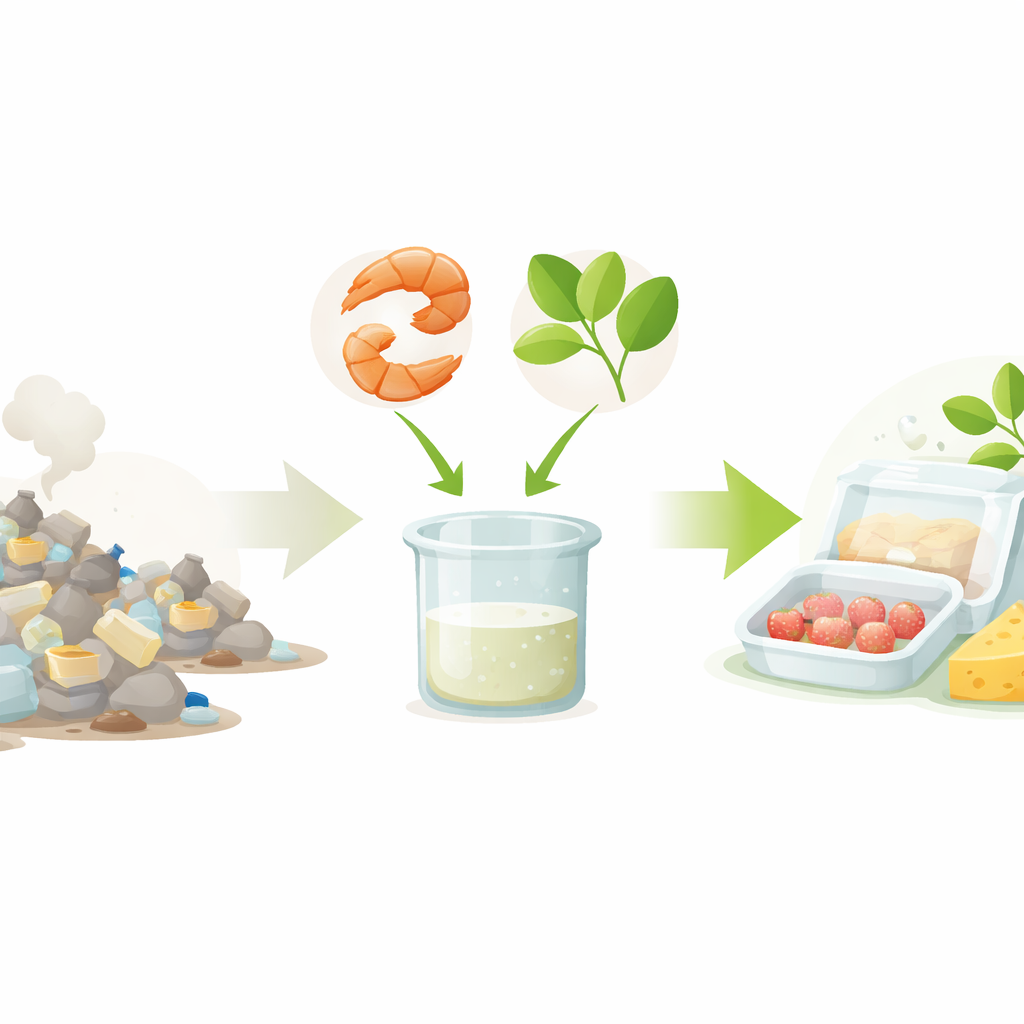
From seafood scraps to useful building blocks
Shrimp-processing plants throw away tons of shells every year. Those shells contain chitin, a natural substance that can be transformed into chitosan, a versatile material already known for being biodegradable and able to slow the growth of microbes. The team carefully cleaned, treated, and converted shrimp shells into a fine chitosan powder. At the same time, they collected leaves from the coastal mangrove tree Avicennia marina. These leaves are rich in plant compounds that can gently turn dissolved metal salts into tiny, solid particles. Using the leaf extract, the scientists "grew" zinc oxide nanoparticles without harsh chemicals, making the process more environmentally friendly.
Blending a new kind of packaging film
To turn these ingredients into flat, clear films, the researchers mixed three main components in water: polyvinyl alcohol (PVA), chitosan from shrimp shells, and the plant-made zinc oxide nanoparticles. PVA is a synthetic but degradable polymer commonly used in medical and food applications. Chitosan adds natural origin and antimicrobial potential, while the nanoparticles act as tiny reinforcements. They also added small amounts of plasticizers—polyethylene glycol (PEG) and, in some recipes, glycerol—to keep the films from becoming too stiff or brittle. The liquid mixtures were then poured into dishes and dried into thin sheets, similar to how paper is made. By systematically changing the amounts of chitosan, plasticizer, and nanoparticles, the team searched for the best-performing recipe.
How strong, flexible, and protective are these films?
The resulting biofilms were pulled, stretched, and tested in several ways. Mechanical tests showed that adding an optimal amount of zinc oxide nanoparticles—about 4 percent by weight—made the films much stronger and more stretchable than versions without nanoparticles. The best film reached a tensile strength on par with common packaging plastics like PET and PLA, and clearly outperformed everyday plastics such as high-density polyethylene and polypropylene. Films with too many nanoparticles, however, began to lose strength, likely because the particles clumped together instead of reinforcing the material evenly. Adjusting the amount of shrimp-shell chitosan also mattered: moderate levels created a good balance between strength and flexibility, while very high levels made the films tougher but also more brittle. 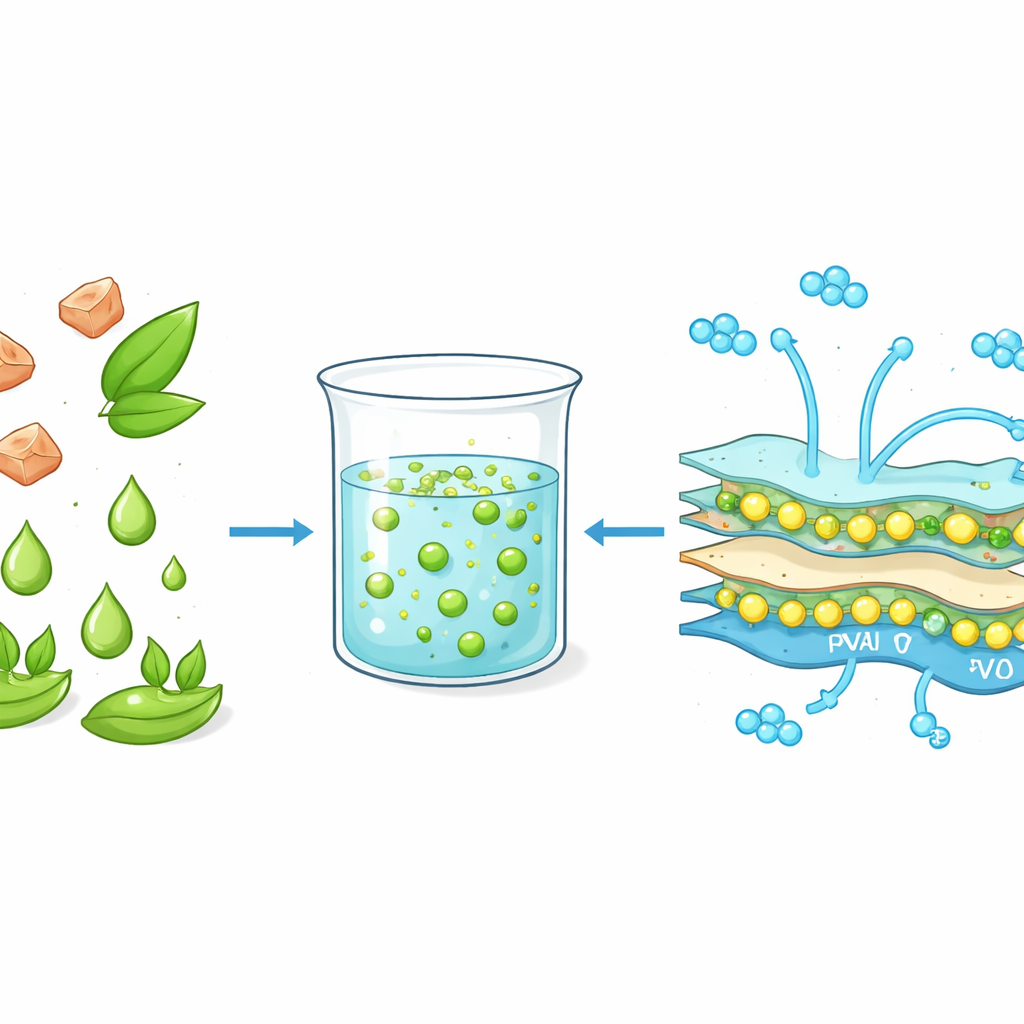
Keeping moisture and additives where they belong
Beyond strength, a good food package must keep water vapor from passing through too easily and prevent its own ingredients from leaking out. The researchers measured how much water vapor seeped through each film and how much of the plasticizer additives migrated when the films were soaked in alcohol. They found that the zinc oxide nanoparticles helped create a more winding path for water molecules, which reduced water vapor transmission at certain loadings. At the same time, films with nanoparticles showed less loss of plasticizer—an important safety and quality factor for food-contact materials. Using PEG alone as the plasticizer gave higher strength, while a mix of PEG and glycerol reduced migration even further without greatly harming the moisture barrier.
What this could mean for future packaging
In simple terms, this work shows that it is possible to turn shrimp-shell waste and mangrove leaves into a high-performance, biodegradable packaging film that rivals or beats several conventional plastics in strength and resistance to moisture. By relying on natural raw materials and green synthesis of the reinforcing particles, the approach supports a more circular use of resources and could help cut plastic pollution. Before such films show up on supermarket shelves, further research is needed on large-scale production, long-term stability, breakdown in the environment, and detailed food safety tests. Still, the study offers a promising blueprint for cleaner, smarter packaging built from what we currently throw away.
Citation: Ezzatabadipour, F., Ghasemi, Z. & Abdolrasouli, M.H. Green fabrication of PVA based biofilms incorporated with shrimp shell derived chitosan, plasticized with PEG or Gly and reinforced by biosynthesized ZnO nanoparticles. Sci Rep 16, 9315 (2026). https://doi.org/10.1038/s41598-026-39184-1
Keywords: biodegradable packaging, chitosan films, zinc oxide nanoparticles, polyvinyl alcohol, green nanocomposites