Clear Sky Science · en
Ethnobotanical importance and bioactivity of wild herbal teas from District Poonch Azad Jammu and Kashmir
Healing power in a daily cup
Many of us reach for herbal tea as a soothing drink, but in some mountain communities it is also a frontline home remedy. This study explores the wild plants that people in District Poonch, in the western Himalayas of Azad Jammu and Kashmir, regularly brew as tea to ease everyday ailments. By listening to local knowledge and then testing these teas in the laboratory, the researchers asked a simple but important question: do these traditional brews really contain ingredients that can protect health?
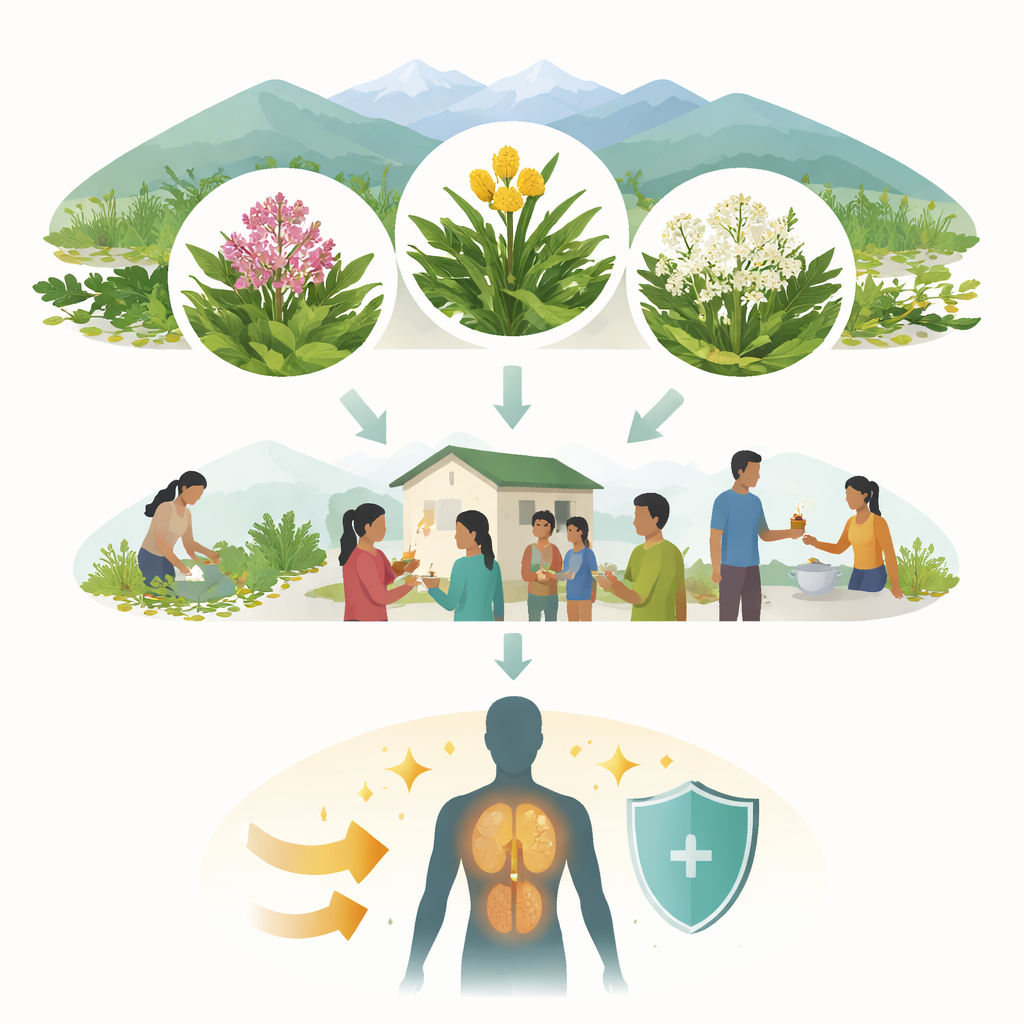
Mountain plants and local traditions
District Poonch is a rugged, biodiverse region where access to modern medical care can be limited and herbal remedies remain central to daily life. The research team visited villages across the district and interviewed 50 residents—herbalists, elders, and other community members—using structured questions in the local Pahari language. People described which wild plants they gather for tea, which parts they use, how they prepare them, and what problems they aim to treat. In total, 15 different species were documented, ranging from mints and violets to less familiar mountain herbs. Leaves were the most commonly used part, and teas were prepared mainly as powdered, pasted, or boiled decoctions to address complaints such as stomach upset, coughs, wounds, and fevers.
Measuring cultural importance
To understand which plants matter most to the community, the scientists applied simple counting tools that capture how often each species is mentioned, how many different uses it has, and how widely that knowledge is shared. One rhizome-forming herb, Bergenia ciliata, stood out, followed closely by Achillea millefolium (yarrow) and Swertia alata. These three were frequently cited by many informants and linked to several categories of illness, especially digestive troubles and throat or respiratory infections. Diagrams that grouped plants by their reported uses showed that a handful of species serve as versatile household remedies, while others are reserved for narrower, more specialized roles.
Testing what is in the cup
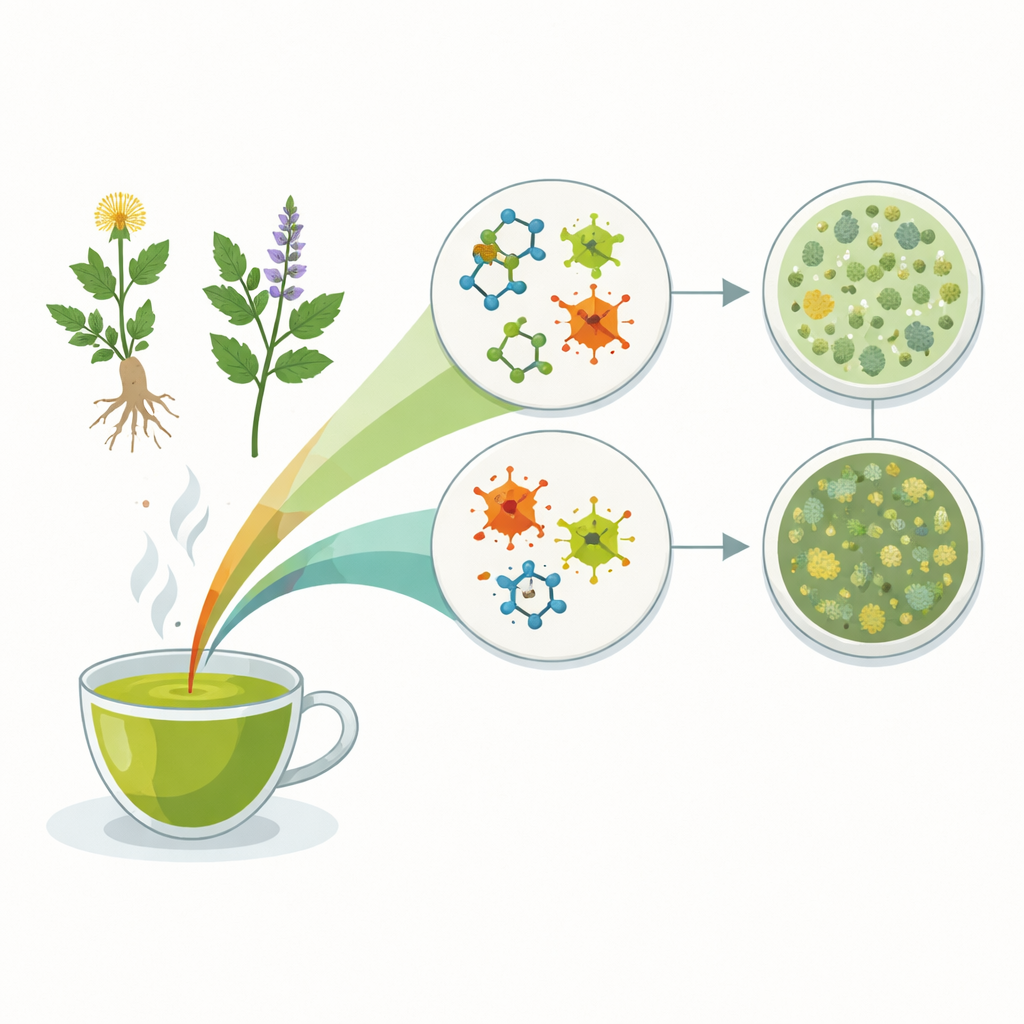
Next, the team moved from fields to lab benches. They prepared water-based decoctions that mirrored how villagers actually brew their teas, and then measured the levels of two families of plant chemicals known for health benefits: phenolics and flavonoids. Bergenia ciliata again took the lead, with the highest amounts of both types of compounds, while Achillea and Swertia contained moderate levels. The researchers then checked how well each tea could neutralize reactive molecules linked to aging and chronic disease by using standard antioxidant tests. All three teas showed dose-dependent activity, but Bergenia’s brew was nearly as effective as pure vitamin C in quenching unstable radicals, meaning a relatively small amount of the tea extract had a strong protective effect in the assay.
Fighting germs with wild brews
The scientists also examined whether these teas could slow the growth of two common bacteria: Staphylococcus aureus, a typical cause of skin and wound infections, and Escherichia coli, often associated with gut problems. Using petri dishes and discs soaked in tea decoctions, they measured the clear zones where bacteria failed to grow. All three plants showed antibacterial action, but once again Bergenia stood out, producing a larger zone against S. aureus than the standard antibiotic ampicillin under the same conditions. Statistical analyses linked higher flavonoid levels in the teas with stronger antibacterial effects, supporting the idea that these natural compounds play a key role in protecting against infections.
Bringing tradition and science together
By combining interviews, chemical measurements, and biological tests, this work shows that the plants most trusted by local people often do contain powerful bioactive ingredients. In District Poonch, wild herbal teas rich in phenolics and flavonoids, particularly those made from Bergenia ciliata, not only soothe digestive and respiratory complaints but also demonstrate strong antioxidant and antibacterial properties in the lab. For a lay reader, the bottom line is that many traditional teas are more than comforting rituals: they can be scientifically credible tools for everyday health support. The study also points toward future possibilities, suggesting that these easily accessible plants could inspire new, affordable natural products—if their active components are further isolated, studied, and used responsibly.
Citation: Khursheed, A., Mehmood, A., Hamza, M.I. et al. Ethnobotanical importance and bioactivity of wild herbal teas from District Poonch Azad Jammu and Kashmir. Sci Rep 16, 10110 (2026). https://doi.org/10.1038/s41598-026-39177-0
Keywords: herbal tea, medicinal plants, antioxidants, traditional medicine, antibacterial activity