Clear Sky Science · en
Manual pointing bias reflects spatial organization of number knowledge
Why numbers live in space in our minds
When you think of the numbers one to twelve, do you imagine them lined up in order, or wrapped around like a clock? Psychologists have long suspected that our brains store number knowledge in a kind of mental space, where “small” and “large” have spatial locations. This study asks a deceptively simple question with big implications: when we reach out to touch something after hearing a number, do our hands quietly reveal how our number knowledge is laid out in this internal space?
Numbers as a mental map
For more than a century, scientists have proposed that numbers are arranged along a mental “number line”: a spatial map where close numbers sit near each other and distant numbers are far apart. In Western cultures, this line is usually imagined left-to-right and, for some tasks, bottom-to-top. People respond faster with the left hand to small numbers and with the right hand to large numbers, as if pressing buttons along this mental line. But these classic experiments often build the spatial mapping into the task itself, for example by asking people to place numbers on a visible line. That makes it hard to know whether we are seeing the true structure of number knowledge or just the rules of the task.
A clever two-step pointing task
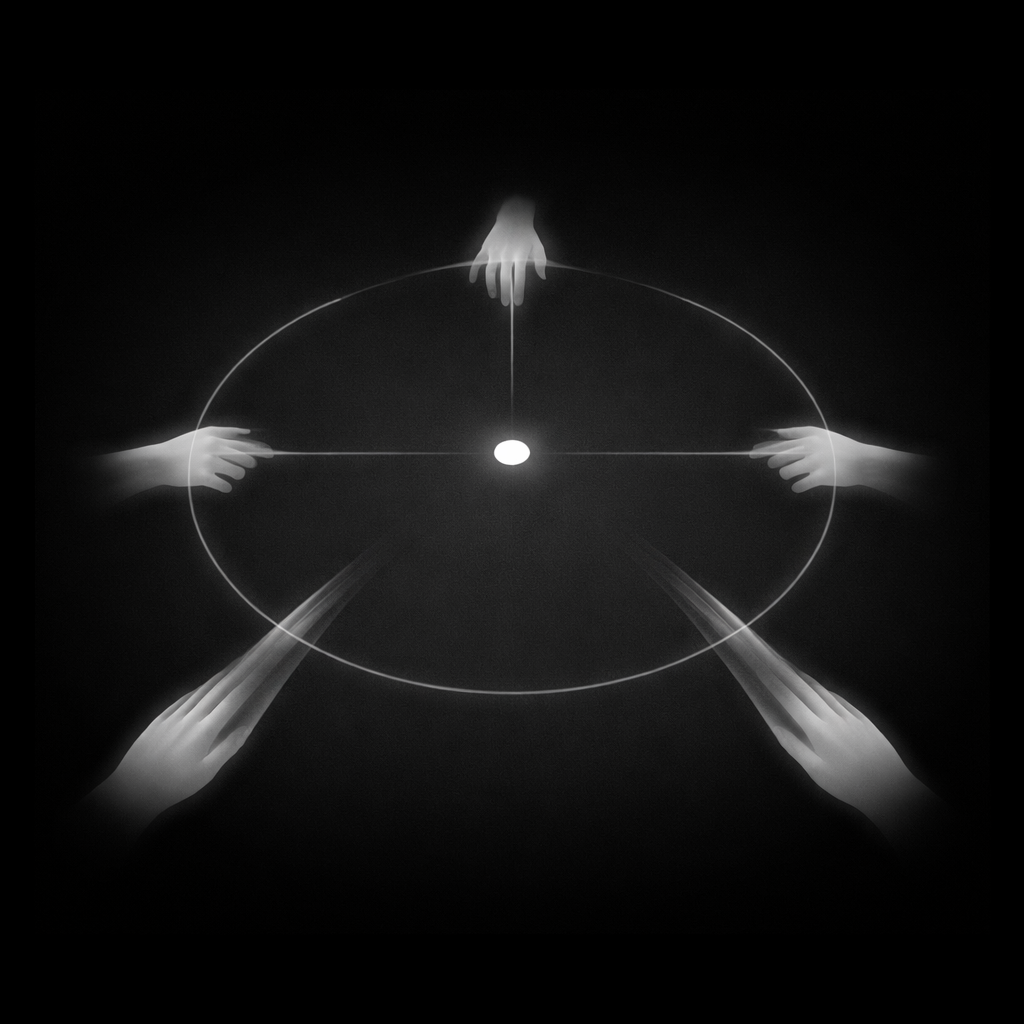
The authors designed a more subtle test that tried to remove those built-in spatial cues. Volunteers stood in front of a large touchscreen and heard a spoken number. First, they always pointed to the same central dot on the screen. Only then did they point to where that number would appear on an invisible clock face around the dot (for example, “three” at roughly where the 3 is on a clock). Crucially, the first touch should be the same no matter which number was spoken; any tiny drift of that touch to the left, right, up, or down could therefore reveal the hidden spatial organization of number concepts, not the obvious location of the final clock point.
When number distance becomes physical distance
In the first experiment, with the numbers 1 to 12, the researchers compared how far apart the average first-touch locations were for every pair of numbers. They found that the more two numbers differed (such as 1 and 12 versus 11 and 12), the farther apart the corresponding first touches landed on the screen. This held even when the numbers were equally far apart on the clock itself. In other words, the hand movements reflected the psychological “distance” between numbers, as though numerical difference were translated into physical distance in a two-dimensional mental map. However, trial-to-trial shifts—how the touch moved after hearing a larger or smaller number than on the previous trial—were only weak trends, not yet statistically reliable.
Turning up the clock and revealing direction
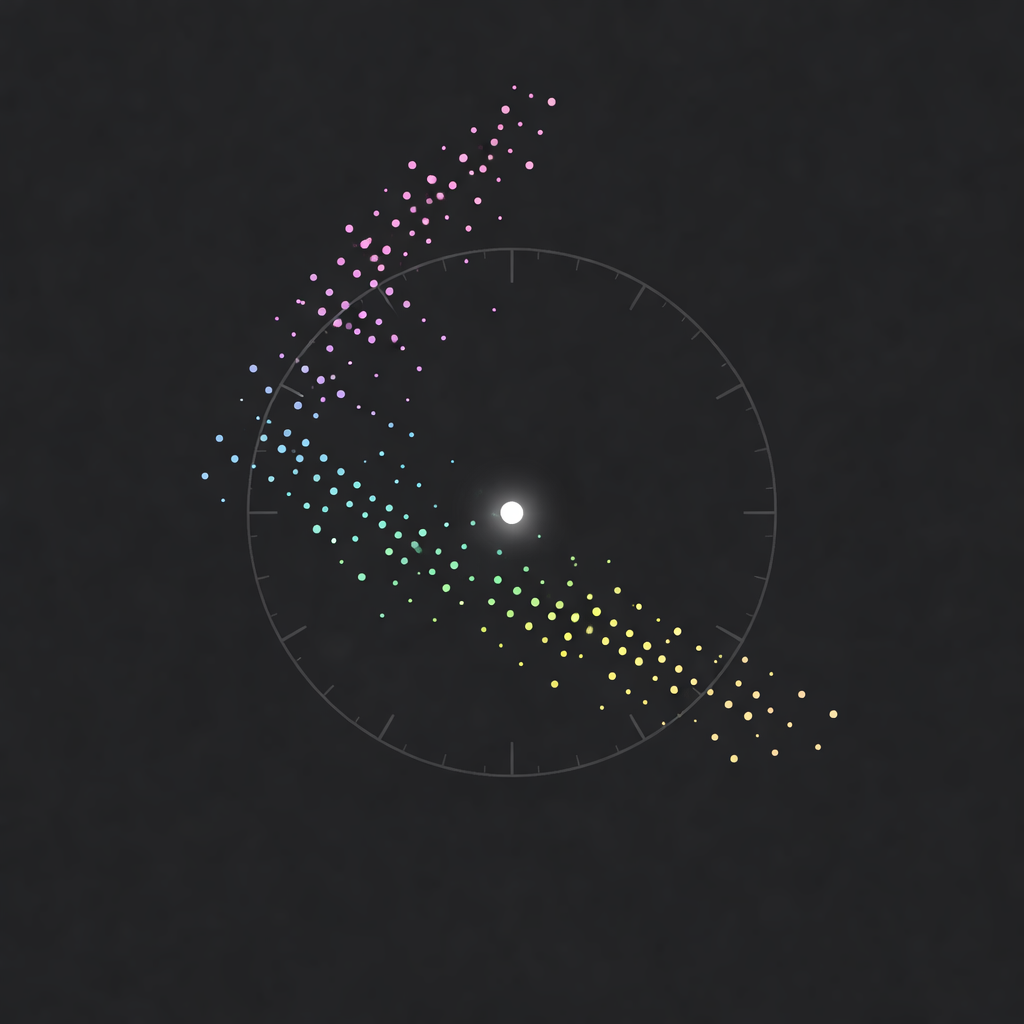
To sharpen the picture, a second experiment made the clock idea more prominent. Participants now heard 24 targets, including half steps like “three point five,” placed in finer positions around the imagined clock face. Under these conditions, the central touches not only spread apart with increasing numerical difference, they also shifted systematically. When numbers got larger from one trial to the next, the first touch moved leftward—matching the left-side positions of big numbers on a clock, even though this runs opposite to the usual left-to-right number line. At the same time, larger numbers led to upward shifts, consistent with an “up-is-more” rule seen in other studies. This shows that horizontal mapping can flexibly follow context (here, the clock), while the vertical mapping from “small at bottom” to “large at top” remains robust.
What this means for everyday thinking
Taken together, the findings suggest that our brains store number knowledge in a low-dimensional spatial format, a bit like a cognitive map. Differences between numbers are treated like distances between locations, and magnitude tends to rise upward in space. At the same time, the exact layout can be reshaped by familiar cultural tools such as clocks. Even when people are told simply to “touch the center,” their hands carry traces of these hidden maps. This supports the broader idea that the brain may use the same spatial machinery it relies on for navigating the physical world to organize abstract concepts such as number, making mental space a common currency for thinking.
Citation: Zona, C.I., Fischer, M.H. Manual pointing bias reflects spatial organization of number knowledge. Sci Rep 16, 6146 (2026). https://doi.org/10.1038/s41598-026-39170-7
Keywords: mental number line, spatial numerical associations, manual pointing, cognitive maps, numerical cognition