Clear Sky Science · en
Oral health status and its predictors among hemodialysis patients in Saudi Arabia: a cross-sectional study
Why mouth health matters in kidney disease
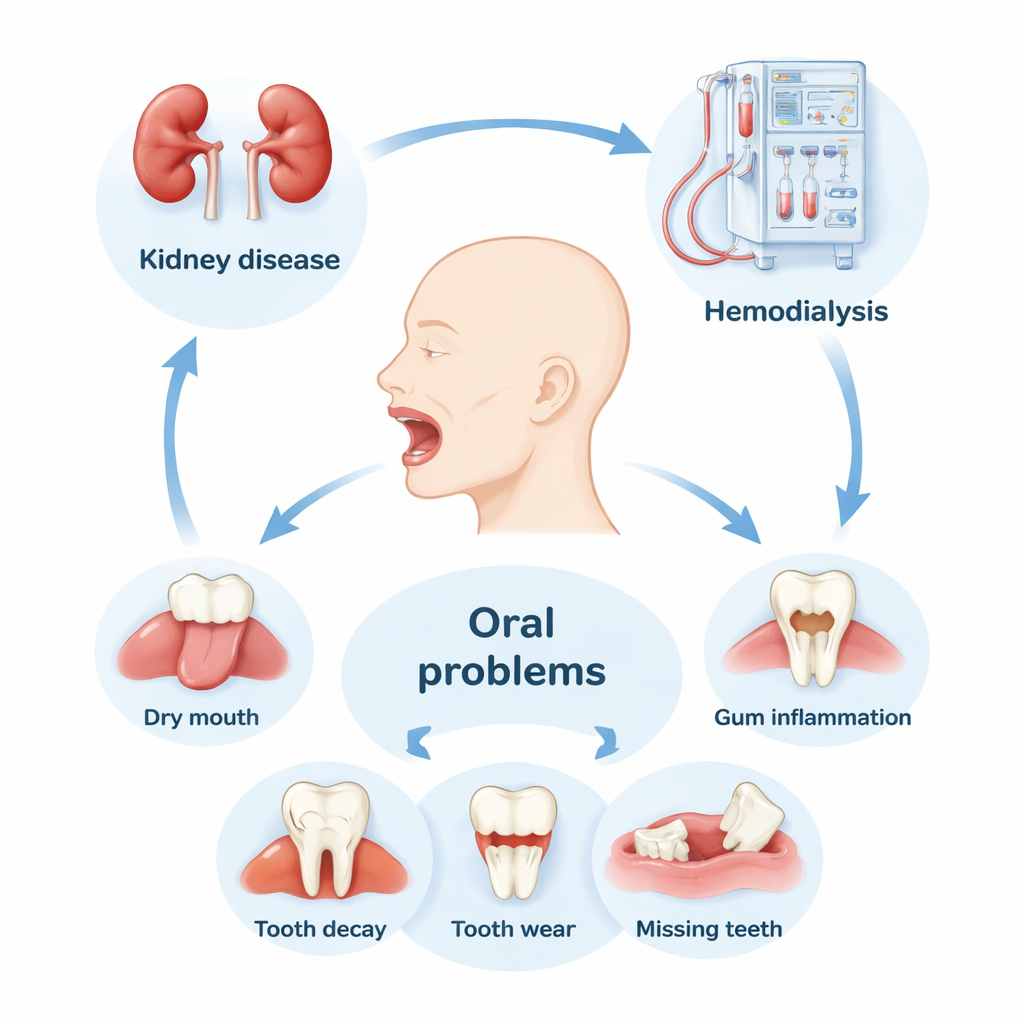
When people think about chronic kidney disease and dialysis, they often picture machines cleaning the blood, strict diets, and fatigue. Far less attention is paid to the mouth. Yet for many patients, problems like constant dryness, a metallic taste, or crumbling teeth make it hard to eat, speak, and enjoy everyday life. This study from Saudi Arabia takes a close look at how common these oral problems are in adults on long-term hemodialysis, and which everyday factors—such as age, sex, and smoking—make them more likely.
A closer look at patients on dialysis
Researchers surveyed and examined 314 adults receiving regular hemodialysis in the Ha’il region of Saudi Arabia. All participants had been on dialysis for at least one year. They answered detailed questions about their general health, smoking habits, medications, and symptoms such as mouth dryness and taste changes. Dentists then performed clinical examinations to check for tooth decay, tooth wear, gum inflammation, and missing teeth, rather than relying only on self-reports. This combination of patient experience and hands-on examination provides a more complete picture of oral health in this vulnerable group.
Dry mouths, strange tastes, and sore gums
The study found that nearly half of the patients (46%) reported xerostomia—persistent dry mouth—and about one in six (16%) noticed problems with taste, such as metallic or altered flavors. Many also described a burning feeling in the mouth. These symptoms are not just annoyances. They are linked to the way kidney failure and dialysis disturb the body’s chemistry, affect saliva production, and interact with the many medications these patients take. Dry mouth in particular leaves teeth and gums less protected, making it easier for cavities and irritation to develop and harder to chew and enjoy food, which can worsen existing problems with nutrition.
Teeth under heavy stress
Clinical examinations revealed an alarming burden of disease. About three-quarters of patients had dental caries, two-thirds had gum inflammation, more than half showed noticeable tooth wear, and more than four in five were missing at least one tooth, often because of decay or periodontal disease. Men tended to fare worse than women: they had higher rates of cavities, tooth wear, and gum problems, and often had been on dialysis longer. Older patients, especially those above 60, were far more likely to have missing teeth, reflecting the compounding effects of age, long-term illness, and years of impaired oral care.
Who is at greatest risk?
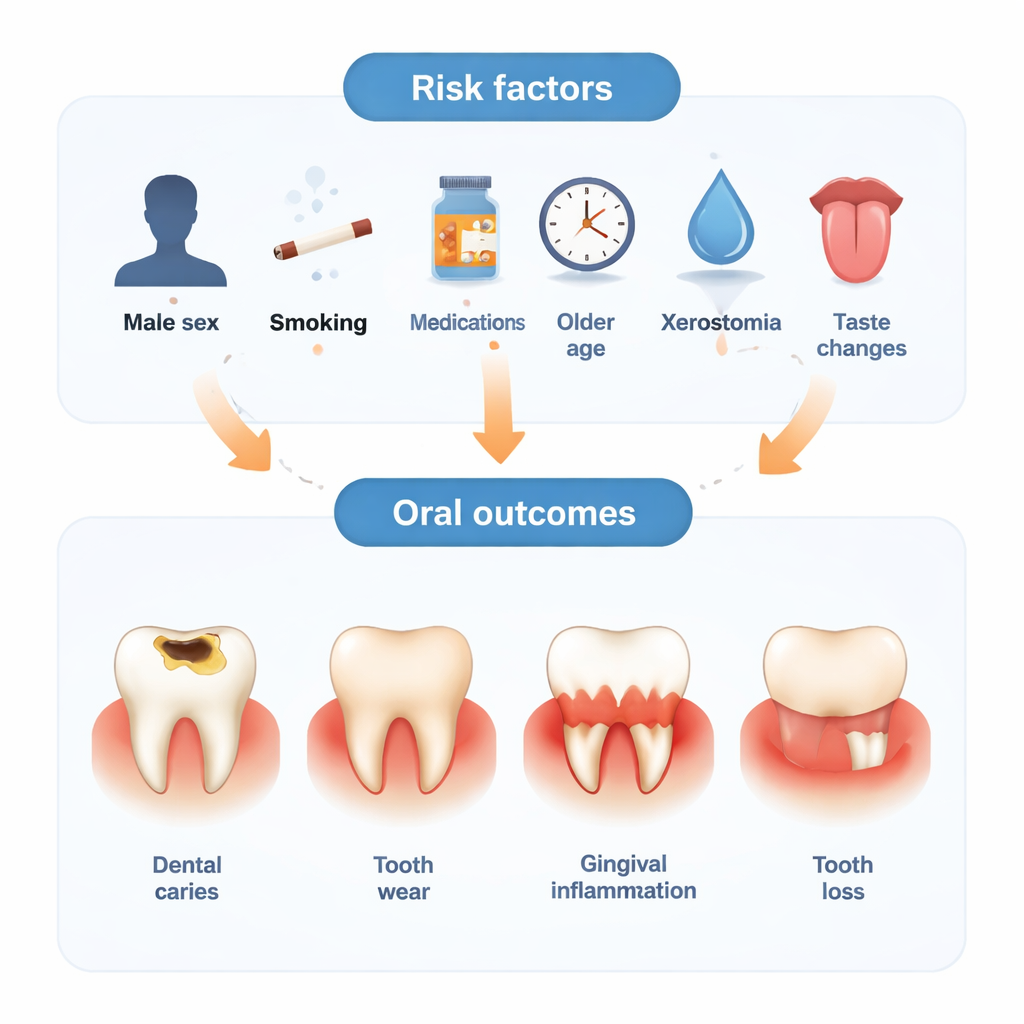
To understand which factors truly drive these oral problems, the team used statistical models that account for multiple influences at once. They found that being male, currently or formerly smoking, taking multiple medications, reporting dry mouth, and having taste disturbances at specific times were all linked with a higher chance of dental caries. Tooth wear was more likely in men and in those with dry mouth. Gum inflammation was more common among smokers and men, and people with xerostomia were less likely to have healthy, non-inflamed gums. Tooth loss was strongly tied to older age and dry mouth, while gender and smoking played less of a role once age was considered.
What this means for patients and care teams
For lay readers, the message is straightforward: people on hemodialysis face serious, often overlooked mouth problems that affect comfort, appearance, and the ability to eat well. These problems are not random; they cluster in patients who are older, male, smoke, take many medications, or suffer from persistent dry mouth and taste changes. The authors conclude that oral checkups and preventive care should be built into routine dialysis care, with kidney doctors and dentists working together. Simple steps—early screening, treatment of dry mouth, help to quit smoking, and timely dental treatment—could significantly improve quality of life for patients already coping with the heavy burden of chronic kidney disease.
Citation: Alhobeira, H.A., Madfa, A.A., Alhudayris, T.S. et al. Oral health status and its predictors among hemodialysis patients in Saudi Arabia: a cross-sectional study. Sci Rep 16, 7410 (2026). https://doi.org/10.1038/s41598-026-39169-0
Keywords: hemodialysis, oral health, chronic kidney disease, dry mouth, dental caries