Clear Sky Science · en
Longitudinal association of frailty levels with knee osteoarthritis in middle-aged and elderly chinese: a longitudinal cohort study
Why this matters for aging knees
As populations grow older, more people struggle with painful, stiff knees that make everyday tasks—like climbing stairs or carrying groceries—harder. This study followed more than fourteen thousand middle-aged and older Chinese adults for seven years to ask a simple but important question: when a person becomes generally weak and vulnerable with age, does that make knee arthritis more likely? By tracking overall health and knee problems over time, the researchers show that "frailty" is not just an abstract medical term—it may be an early warning sign that your knees are headed for trouble.
Growing older in a changing China
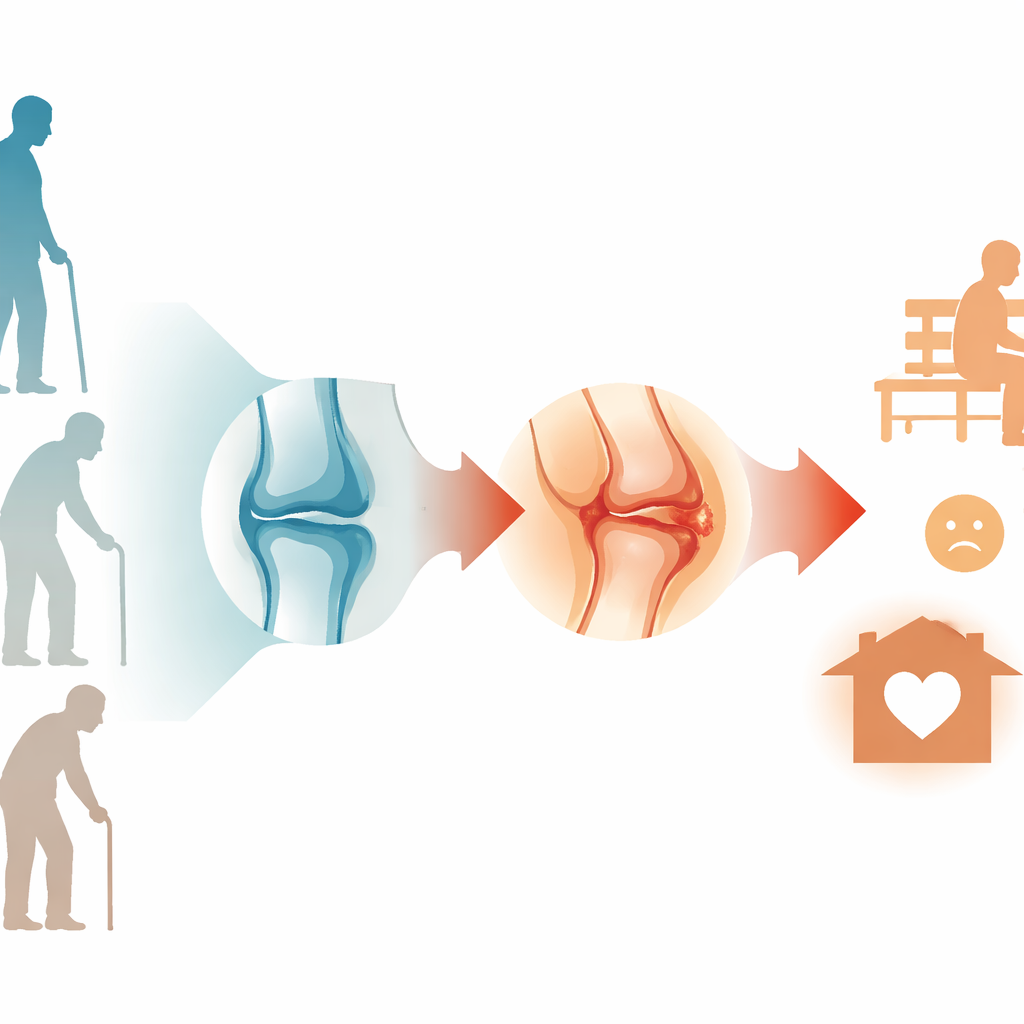
China’s population is aging rapidly, and knee osteoarthritis—long-term wear and damage in the knee joint—is a major source of pain, disability, and healthcare costs. At the same time, many older adults develop frailty, a state marked by reduced strength, slower movement, and a lower ability to bounce back from illnesses or injuries. While earlier work hinted that frailty and joint problems might go hand in hand, most of that research came from Western countries and often captured only a single moment in time. This study drew on a large, nationally representative survey of Chinese adults aged 45 and older, allowing the team to watch how changes in frailty predicted new cases of knee osteoarthritis over several years.
How the study tracked health and knee pain
The researchers used data from the China Health and Retirement Longitudinal Study, which has followed thousands of adults across urban and rural areas since 2011. Participants answered questions about their health, daily activities, mood, and memory, and took part in simple physical tests such as walking speed, balance, grip strength, and chair stands. From 32 different health indicators, the team built a “frailty index” that counts how many small problems a person has and turns that into a score between zero and one. They also grouped people as robust or frail based on overall physical performance. Over roughly seven years, they recorded who reported both doctor-diagnosed arthritis or rheumatism and knee pain—together treated as signs of knee osteoarthritis.
Frailty as an early warning for knee damage
When the scientists compared frail and non-frail participants, a clear pattern emerged. People who were frail at the start of the study were about twice as likely to develop knee osteoarthritis as those who were not, even after accounting for age, sex, body weight, smoking, drinking, physical activity, and where they lived. The frailty index told an even stronger story: moving from the least frail quarter of the population to the most frail was linked to more than a four-fold increase in the chance of developing knee problems. Interestingly, the risk did not keep climbing forever. As frailty scores rose from low to moderate, the risk of knee osteoarthritis increased sharply, but then leveled off around a middle-range score. This suggests there may be a threshold beyond which additional health deficits add little extra knee risk, perhaps because the most frail people are already moving so little that they place less mechanical stress on their joints.
Who is most affected and what drives the link
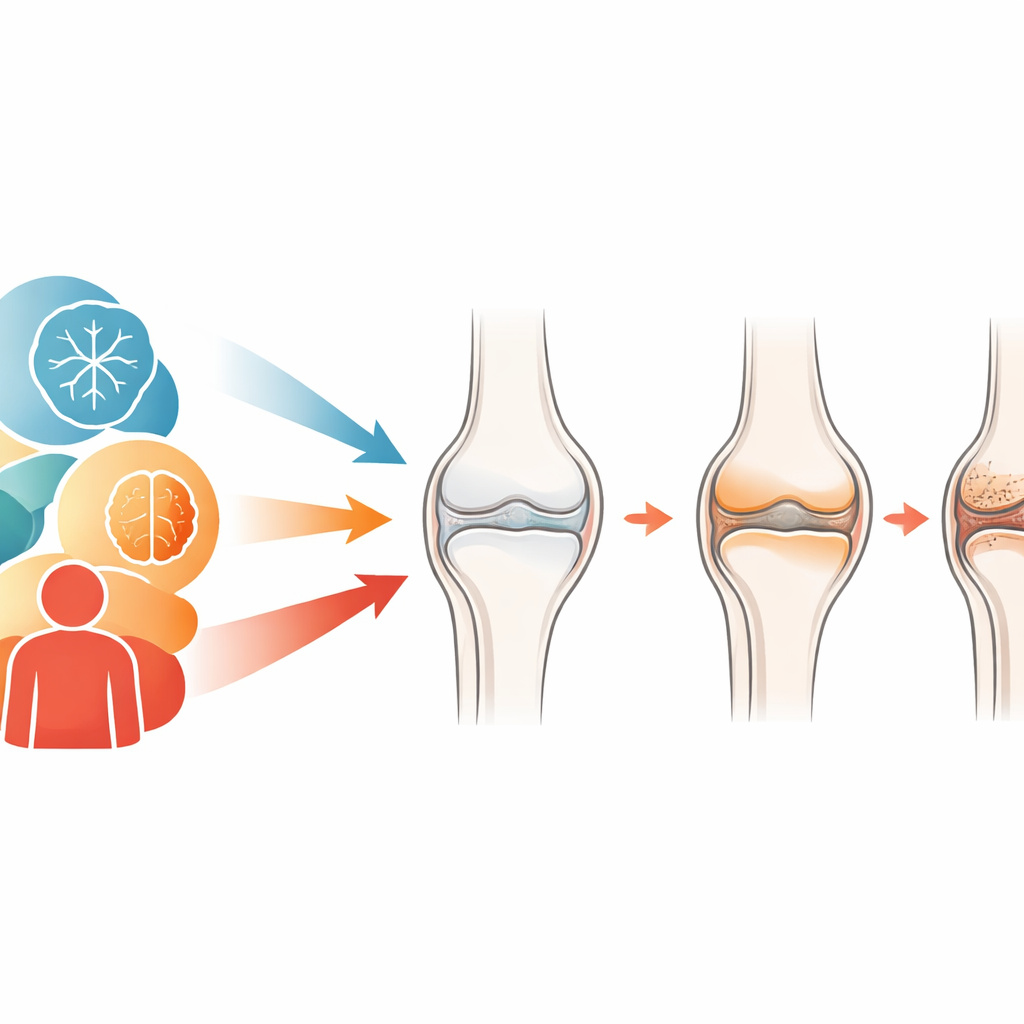
The harmful impact of frailty was especially strong in certain groups. Adults younger than 60 who were already frail, men, people who smoked, and those who were married showed higher links between frailty and later knee osteoarthritis. The authors suggest several reasons: early frailty may signal “accelerated aging,” with chronic low-level inflammation and disturbed metabolism that weaken cartilage and muscle. In rural parts of China, many men do heavy physical work, which can overload already vulnerable knees. Smoking further worsens inflammation and slows tissue repair. The team also tested whether social isolation—living alone, rare contact with family, or little social activity—explained part of the connection between frailty and knee disease. Although frail people were more likely to be socially isolated, this factor accounted for less than one percent of the overall effect, pointing instead to direct biological pathways.
What this means for everyday life
To a layperson, the core message is straightforward: general bodily decline and vulnerability strongly foreshadow future knee trouble. A higher frailty score, based on many small health issues, predicts knee osteoarthritis better than traditional risk factors alone. The study suggests that tracking frailty in midlife and early old age could help doctors identify people whose knees are at particular risk and guide early steps like strength training, balance exercises, weight management, and better control of chronic conditions. While staying socially connected remains important for overall well-being, this work indicates that protecting muscles, joints, and metabolism may matter most for keeping knees healthy as we age.
Citation: Liu, J., Zhang, H., Liu, W. et al. Longitudinal association of frailty levels with knee osteoarthritis in middle-aged and elderly chinese: a longitudinal cohort study. Sci Rep 16, 9276 (2026). https://doi.org/10.1038/s41598-026-39166-3
Keywords: frailty, knee osteoarthritis, aging, longitudinal cohort, Chinese population