Clear Sky Science · en
The cost-effectiveness of male-partner treatment to prevent recurrence of bacterial vaginosis
Why treating both partners matters
Bacterial vaginosis is a common vaginal infection that causes unpleasant discharge and odor, but its impact reaches far beyond discomfort. It is linked to a higher risk of sexually transmitted infections, pelvic inflammation, fertility problems, and complications in pregnancy. Standard medicines often bring only short-lived relief, with many women seeing the infection return within months. This study asks a deceptively simple question with big real-world consequences: if we routinely treat male partners at the same time as women, can we not only improve women’s health but also save money for health systems?

A hidden cycle of reinfection
Doctors have long noticed that bacterial vaginosis tends to come back, even when women take their medication exactly as prescribed. Mounting evidence suggests that one reason is sexual reinfection. The bacteria involved can live on and inside the penis, so an untreated male partner may act as a reservoir, reintroducing the infection each time the couple has sex without a condom. Patterns of who gets bacterial vaginosis, and when, look strikingly similar to those seen with recognized sexually transmitted infections, strengthening the case that partner treatment may be critical for breaking the cycle.
Putting partner treatment to the economic test
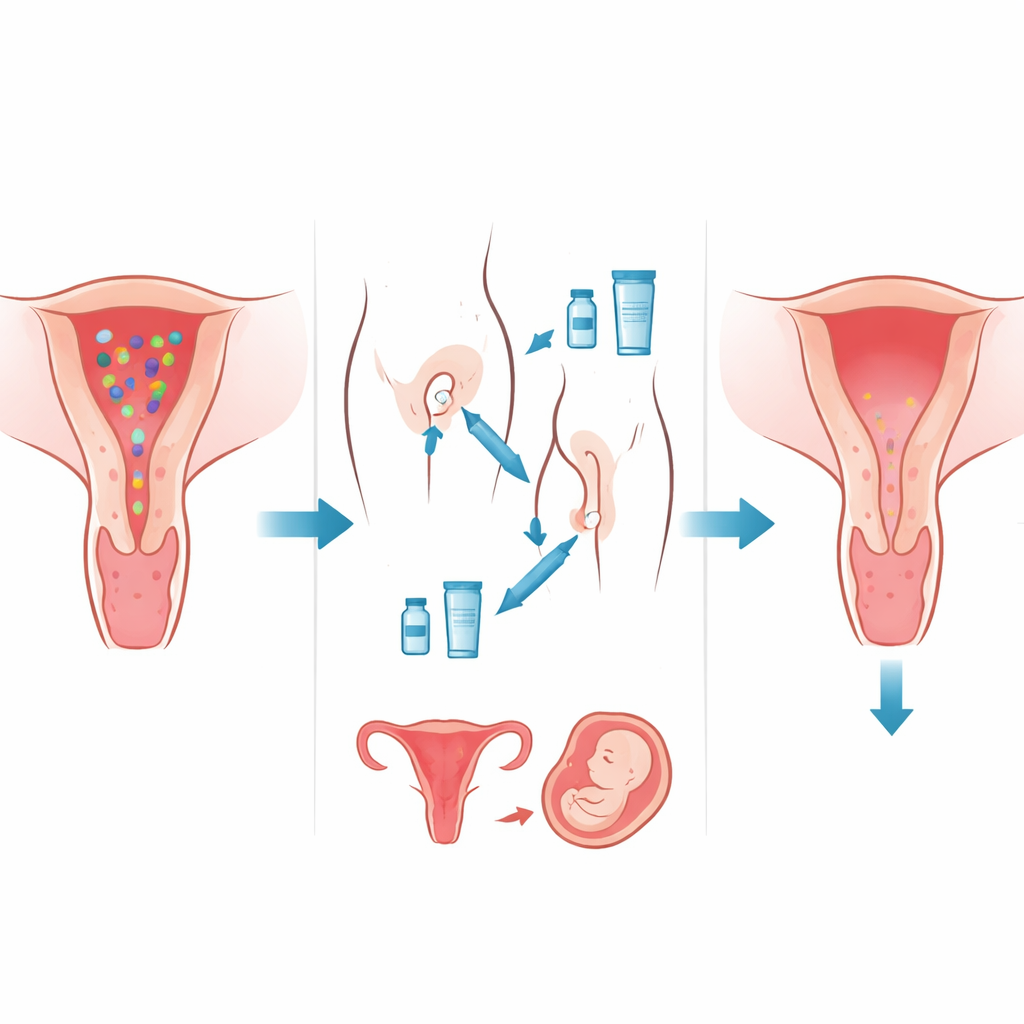
Clinical trials have already shown that when male partners are treated with antibiotics at the same time as their female partners, women are much less likely to have the infection return. But health systems must also decide whether such extra treatment is worth the cost. To answer this, the researchers built detailed computer models for two very different settings: Australia, a high-income country, and South Africa, an upper-middle-income country where both bacterial vaginosis and pregnancy complications are common. They simulated 10,000 women with symptoms of the condition, each in a steady relationship with a single male partner, and followed what happened over a year under two approaches: standard care where only women are treated, and concurrent care where both partners receive treatment.
Following the health pathways
The models went far beyond counting repeat infections. They tracked how fewer episodes of bacterial vaginosis could lead to fewer sexually transmitted infections such as chlamydia, gonorrhea, trichomoniasis, and herpes, less pelvic inflammatory disease, and fewer problems in pregnancy such as preterm birth and low birth weight. For each outcome, the team attached realistic country-specific costs: clinic visits, medicines, hospital stays, and laboratory tests. They also estimated quality-adjusted life years, a standard measure that blends how long people live with how healthy they feel, to capture improvements in day-to-day wellbeing as well as the avoidance of serious illness.
What the numbers reveal
At an assumed partner-treatment uptake of 73%—based on participation levels seen in an extension of the original clinical trial—the concurrent approach clearly outperformed women-only treatment in both countries. In Australia, it lowered the number of adverse pregnancy outcomes from 4,454 to 3,910 cases per 10,000 women and nudged average quality of life scores upward over the year, all while reducing overall healthcare spending. Results were similar, and even more striking in financial terms, in South Africa. When the researchers calculated cost-effectiveness, partner treatment emerged as a “dominant” strategy: it both improved health and saved money. Importantly, the analysis showed that partner treatment did not need to be universally adopted to pay off. In Australia it became cost-saving once about 28% of eligible men were treated; in South Africa, savings began at a remarkably low 2% uptake.
Implications for everyday care
These findings suggest that adding male partners to the treatment plan for bacterial vaginosis is not a luxury but a smart investment. By breaking the cycle of reinfection, partner treatment reduces repeat clinic visits, decreases the need for additional medicines, and helps prevent costly complications, especially during pregnancy. The study’s one-year window likely underestimates the long-term benefits for fertility, HIV prevention, and overall wellbeing, so the true value may be even higher. For patients, the message is straightforward: when a woman is treated for bacterial vaginosis, involving her regular male partner in care can improve her chances of staying healthy. For health services, the message is equally clear: updating guidelines to support partner treatment could improve outcomes for women while using limited healthcare resources more efficiently.
Citation: Zhang, Y., Bradshaw, C.S., Masson, L. et al. The cost-effectiveness of male-partner treatment to prevent recurrence of bacterial vaginosis. Sci Rep 16, 9493 (2026). https://doi.org/10.1038/s41598-026-39160-9
Keywords: bacterial vaginosis, partner treatment, sexual health, pregnancy outcomes, health economics