Clear Sky Science · en
Engineered biosynthesis of hyaluronic acid in Corynebacterium glutamicum and green synthesis of HA-silver nanocomposites for advanced antimicrobial wound dressings
Why New Bandages Matter
Open wounds, especially large burns and surgical cuts, are gateways for dangerous germs. Many of these germs no longer respond to common antibiotics, making infections harder and more expensive to treat. This study explores a new kind of smart bandage made from ultra-thin fibers. It combines natural ingredients already used in medicine with tiny particles of silver to create a dressing that can both help the skin repair itself and fight off certain harmful bacteria.
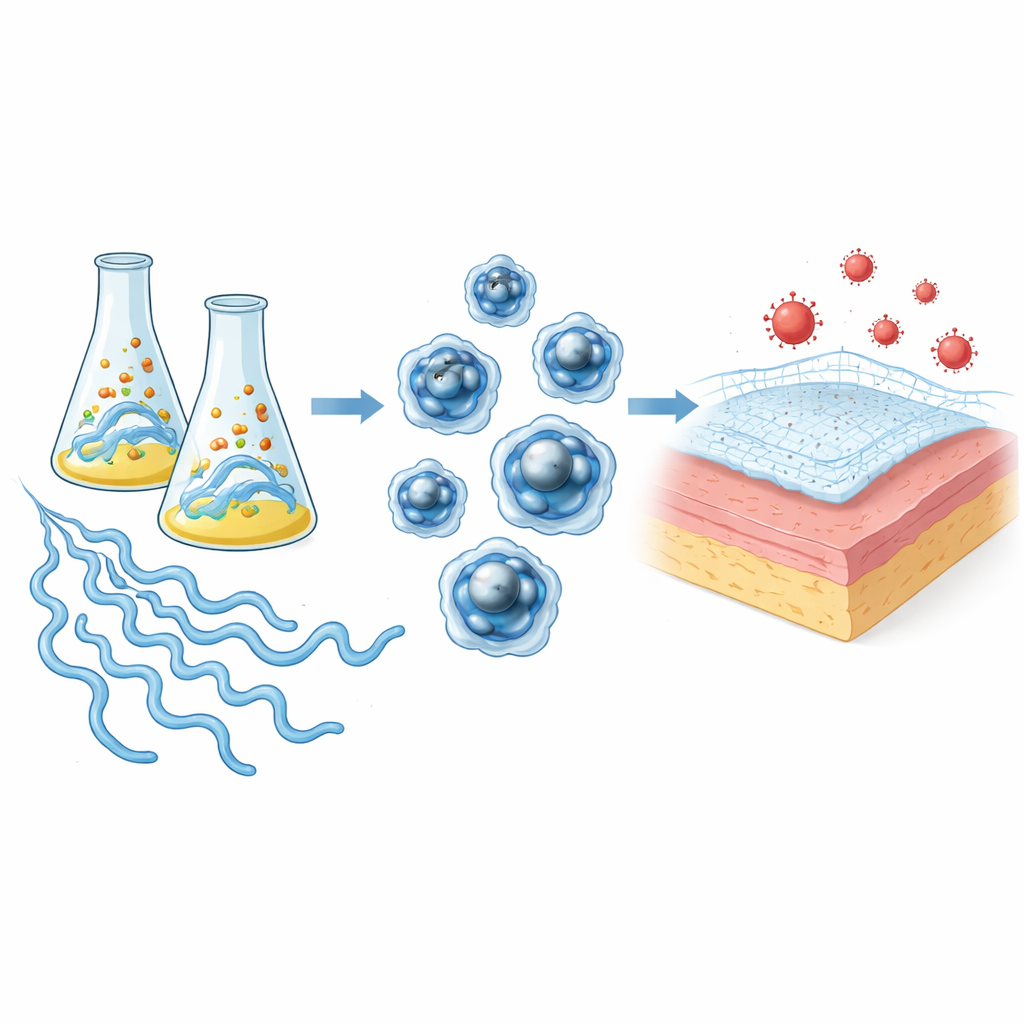
Turning Friendly Microbes into Tiny Factories
One of the key ingredients in these bandages is hyaluronic acid, a sugar-like substance naturally found in our skin and joints, where it helps keep tissues moist and flexible. Traditionally, industry gets this material from bacteria that can also cause disease. The researchers instead used a safe, well-known microbe called Corynebacterium glutamicum and engineered it to produce hyaluronic acid. By carefully adjusting the nutrients in the growth medium—especially different nitrogen sources and mineral salts—they boosted the microbe’s output by about one quarter. Tests confirmed that the resulting hyaluronic acid had the right size and chemical features for medical applications.
Green Route to Tiny Silver Helpers
Silver has long been known for its ability to stop bacteria from growing, but making silver nanoparticles often involves harsh chemicals. In this work, the team used their microbe-made hyaluronic acid itself as a gentle, plant-like “reducing” agent to turn dissolved silver salt into tiny silver particles. They tried several silver concentrations and watched how particles formed over time using light-based measurements. The best condition created particles averaging just under 100 nanometers in size—small enough to interact closely with bacteria, but with a relatively uniform size that is important for predictable performance.
Spinning a Smart Wound Dressing
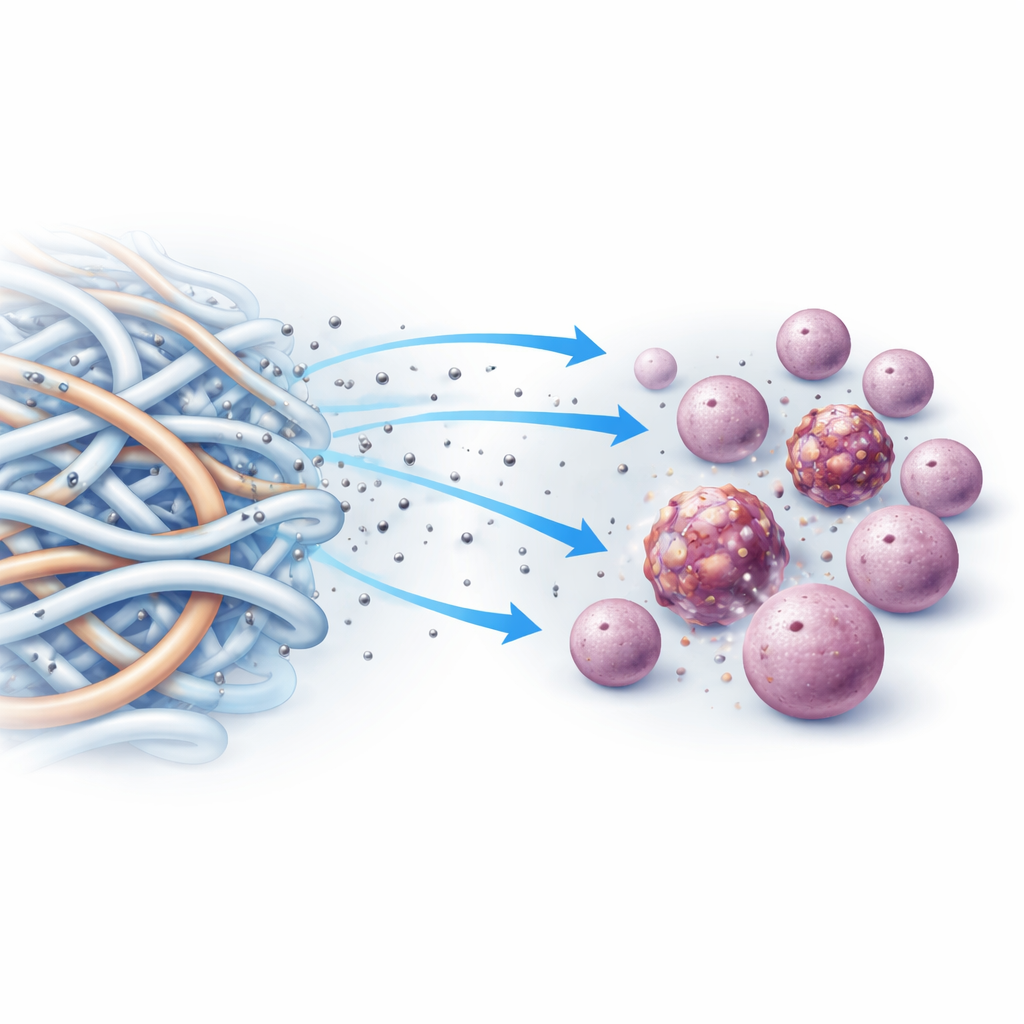
To turn these building blocks into a real dressing, the scientists used electrospinning, a technique that pulls a liquid mixture into hair-thin solid fibers using a strong electric field. They blended the hyaluronic acid–silver particles with a water-soluble support polymer, plus collagen and chitosan—two natural materials already known to support healing and offer some protection against germs. Under optimized spinning conditions, the process produced mats of intertwined fibers resembling the body’s own tissue framework. Microscopy images showed that the fibers were generally smooth and continuous, though changing the mixing ratios affected their thickness and the appearance of small beads in the network.
How Well It Fights Germs and Protects Cells
The team tested the fiber mats against two common wound bacteria: Staphylococcus aureus, a Gram-positive germ often found on the skin, and Escherichia coli, a Gram-negative germ better protected by an extra outer barrier. Discs of the new material clearly slowed the growth of S. aureus, especially when the silver composite, collagen, and chitosan were present in either equal parts or with a slightly lower amount of silver composite. However, the same formulations did not noticeably affect E. coli, highlighting how tough some bacteria are to reach. Safety tests with mouse skin cells showed that, after a day of direct contact with the dressings, most cells were still alive—about 85% for one recipe and around 70% for another—levels generally considered acceptable for early-stage biomaterials.
What This Could Mean for Future Bandages
To a layperson, the takeaway is that the researchers built a proof-of-concept bandage that uses safe microbes to make a key ingredient and then relies on that ingredient to create tiny silver particles in an eco-friendly way. When woven into a fine fiber mat with collagen and chitosan, this material can both support skin repair and curb the growth of a major wound germ, Staphylococcus aureus, without being overly harmful to human cells in initial tests. The bandage does not yet stop tougher bacteria like E. coli, and more animal and long-term studies are needed. Still, this approach points toward greener, more targeted wound dressings that could help reduce reliance on traditional antibiotics in treating infected skin injuries.
Citation: Nadali Hazaveh, M., Salehi, S., Talebi, M. et al. Engineered biosynthesis of hyaluronic acid in Corynebacterium glutamicum and green synthesis of HA-silver nanocomposites for advanced antimicrobial wound dressings. Sci Rep 16, 7910 (2026). https://doi.org/10.1038/s41598-026-39148-5
Keywords: antimicrobial wound dressing, hyaluronic acid, silver nanoparticles, electrospun nanofibers, antibiotic resistance