Clear Sky Science · en
Exogenous benzyladenine reinforces the antioxidant activity, phytochemical content, and macronutrients of Tagetes erecta plants
Why this flower study matters
African marigolds are more than bright border plants. Their petals are packed with natural pigments and antioxidant compounds used in eye‑health supplements, animal feed, cosmetics, and traditional remedies. This study explores whether a common plant growth regulator, benzyladenine, can be used as a gentle “tune‑up” that makes marigold plants grow better and produce more of these valuable natural substances under real field conditions.
A closer look at a hard‑working garden plant
Tagetes erecta, often sold simply as African marigold, is popular in gardens around the world because it flowers for a long time and tolerates a wide range of climates. Beneath that familiar appearance lies a tiny factory of useful molecules. Its flowers and leaves are rich in carotenoids such as lutein and zeaxanthin, as well as flavonoids and other phenolic compounds. These help protect human cells from damage caused by reactive oxygen molecules and also shield the plant itself from harsh sunlight, pollution, and shifting weather. Farmers and industry are therefore interested in simple ways to coax marigold plants into making more of these protective compounds without resorting to heavy fertilizer or pesticide use.
The growth helper put to the test
The researchers focused on benzyladenine, a synthetic version of natural plant hormones called cytokinins. These hormones are known to stimulate cell division, slow the yellowing and aging of leaves, and keep chlorophyll, the green pigment essential for photosynthesis, from breaking down too quickly. In an open‑field experiment in Egypt, 60 uniform marigold plants were grown in pots under typical summer conditions. The plants were sprayed on their leaves once a week for three weeks with either plain water or benzyladenine solutions at three strengths: 50, 75, or 100 parts per million. After a month, the team measured how tall and heavy the plants were, how much green and orange pigment they contained, how much nitrogen, phosphorus, and potassium they stored, and how strong their antioxidant and phytochemical contents had become.
What happened to growth, color, and nutrients
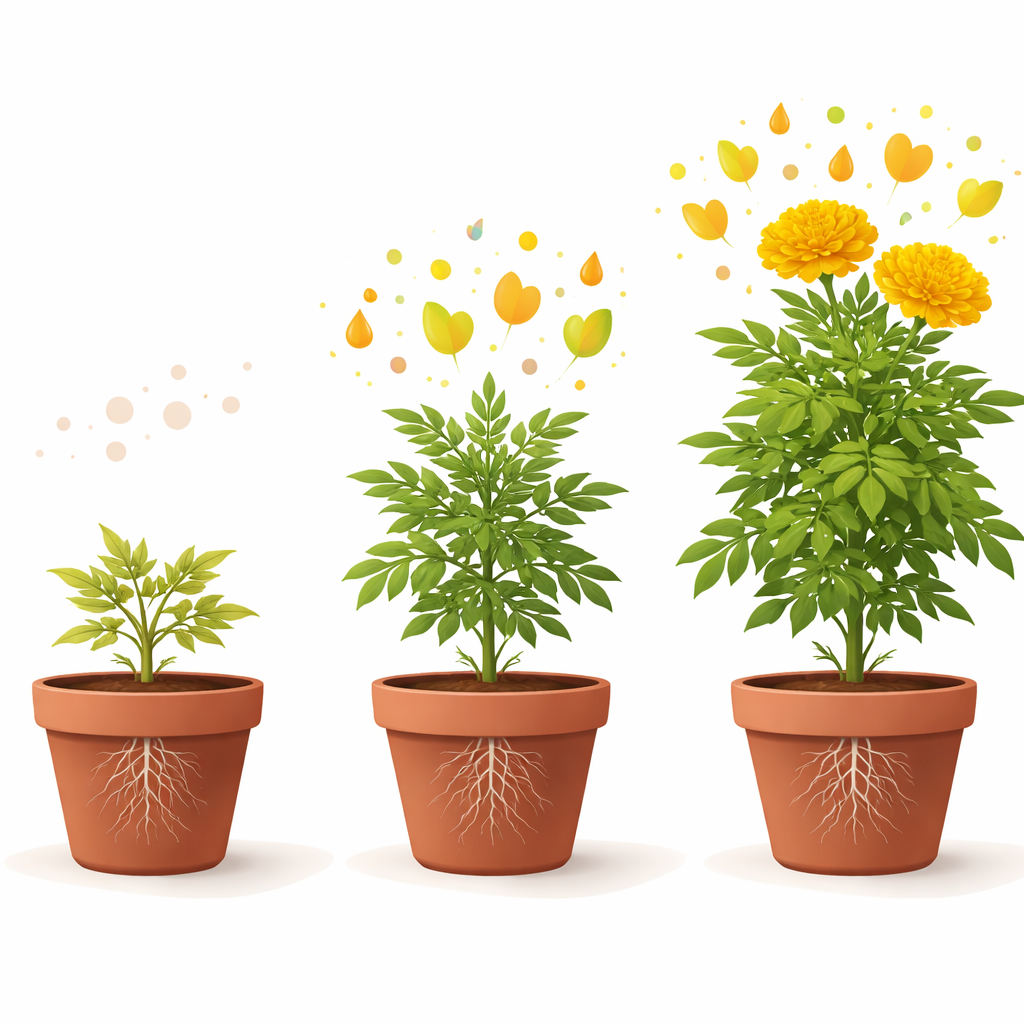
All benzyladenine treatments made the marigolds perform better than the untreated control, and the improvements generally increased with dose. Plants receiving the highest dose, 100 parts per million, were the tallest and heaviest, with roughly half again as much fresh and dry weight as untreated plants. Their leaves held more chlorophyll a and chlorophyll b, which power photosynthesis, as well as much higher levels of yellow‑orange carotenoids. At the same time, their tissues stored more of the key nutrients nitrogen, phosphorus, and potassium, suggesting that the hormone spray helped the plants take up and use fertilizer more efficiently. A heatmap comparing all traits at once showed that the benzyladenine‑treated groups clustered together and apart from the controls, underlining a broad, coordinated boost to plant performance.

Hidden chemical defenses made stronger
The spray did not just change how the marigolds looked; it also altered their internal chemistry in useful ways. The highest benzyladenine dose led to the greatest buildup of total phenolic compounds and flavonoids, the families of molecules strongly linked to antioxidant and antimicrobial activity. In laboratory tests that measure how well plant extracts can neutralize a stable free radical, leaves from treated plants showed significantly higher antioxidant power. Interestingly, this rise in protective chemicals occurred even though nitrogen levels in the leaves also increased, bucking a common pattern in which heavy nitrogen fertilization can dilute or suppress such compounds. The authors suggest that benzyladenine directly encourages pathways that make these beneficial molecules while also helping leaves stay greener and photosynthetically active for longer.
What this means for growers and consumers
Seen from a practical standpoint, the study shows that carefully calibrated sprays of benzyladenine, especially around 100 parts per million, can serve as a simple field tool to produce fuller, greener African marigold plants that are richer in nutrients, pigments, and natural antioxidants. For growers, this could translate into more attractive flower crops and higher yields of valuable extracts for nutraceutical and pharmaceutical uses, without relying solely on higher fertilizer inputs. For consumers, it points toward more efficient production of plant‑based pigments and protective compounds used in foods and health products. The authors also caution that excessive hormone use in other species can cause side effects such as weak roots or deformed leaves, so fine‑tuning dose and timing will be essential as growers move from experimental plots to large‑scale cultivation.
Citation: Hassan, K.M., Mohamed, N.N.I., Emam, T.M. et al. Exogenous benzyladenine reinforces the antioxidant activity, phytochemical content, and macronutrients of Tagetes erecta plants. Sci Rep 16, 8616 (2026). https://doi.org/10.1038/s41598-026-39146-7
Keywords: African marigold, benzyladenine, plant hormones, antioxidant compounds, medicinal ornamentals