Clear Sky Science · en
Seasonal groundwater quality assessment and irrigation suitability in coastal aquifers of Puri District, Odisha, India
Why This Matters for Everyday Life
For millions of people in coastal India, the water that comes out of a hand pump or village well is the only source for drinking, cooking, and watering crops. Yet this hidden water reserve is under pressure from rising seas, heavy use, and pollution. This study focuses on the coastal aquifers of Puri district in Odisha, India, asking a simple but crucial question: across the changing seasons, is the groundwater safe to drink and reliable for farming, and where are the weak spots that demand attention?
A Coastal Region Living Off Its Wells
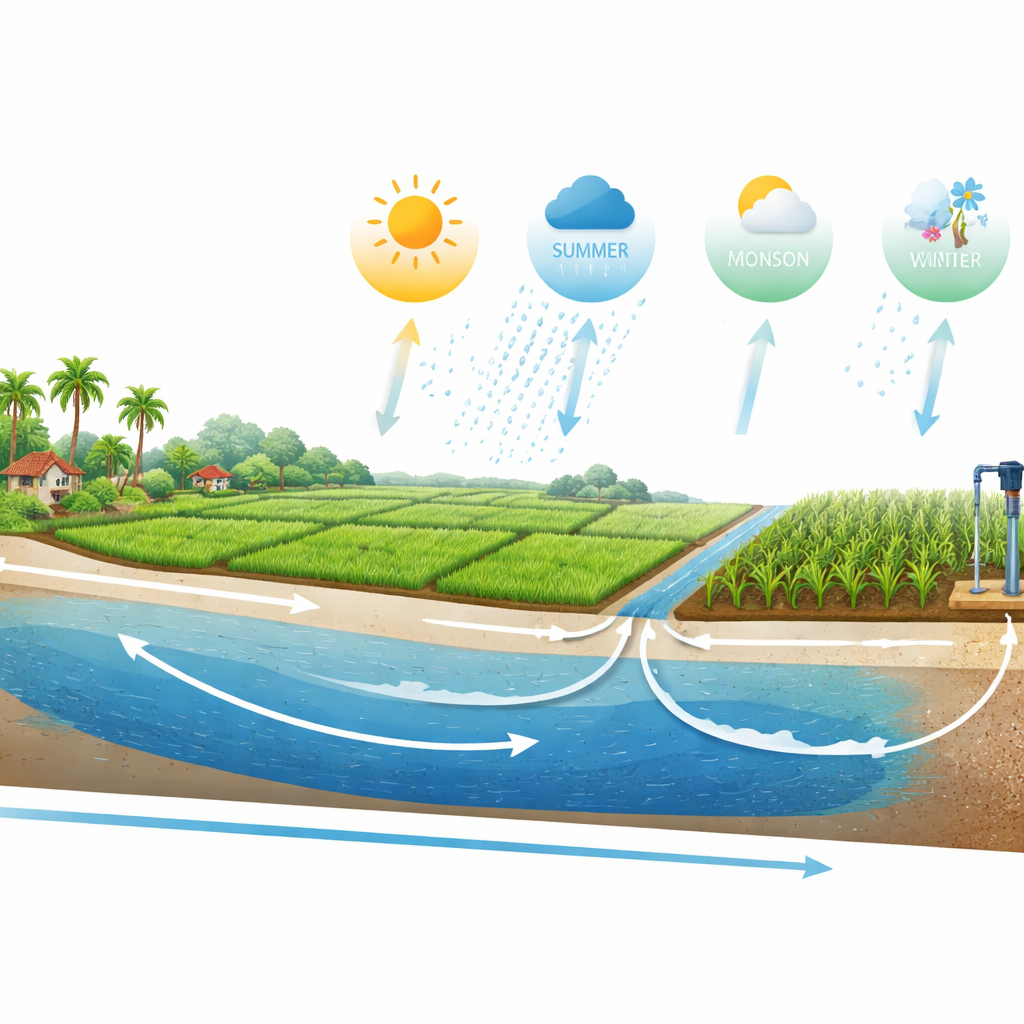
Puri district sits along the Bay of Bengal and is largely rural, with farming and tourism as major activities. Most homes and fields depend on groundwater rather than rivers or reservoirs. That makes the area especially vulnerable: salty seawater can creep inland underground, while fertilizers, sewage, and other wastes can seep down from the surface. The region also swings between heavy monsoon rains and dry months, which can either dilute pollutants or concentrate them. To capture this full picture, the researchers monitored twelve wells spread across the coastal plain through four key seasons: winter, pre-monsoon, monsoon, and post-monsoon during 2021–2022.
Taking the Pulse of Underground Water
The team collected groundwater samples in each season and measured a suite of basic properties and dissolved substances. These included how acidic or alkaline the water is (pH), how well it conducts electricity (a stand-in for overall salt content), and the amount of total dissolved solids and hardness-causing minerals. They also tracked common dissolved ingredients such as calcium, magnesium, sodium, potassium, chloride, sulphate, bicarbonate, nitrate, and fluoride. These measurements were then compared against Indian and World Health Organization guidelines for safe drinking water. To simplify the many numbers into a single score, the researchers used a Water Quality Index, which blends the most important parameters into categories ranging from “excellent” to “unfit for drinking.”
Seasonal Highs, Lows, and Local Trouble Spots
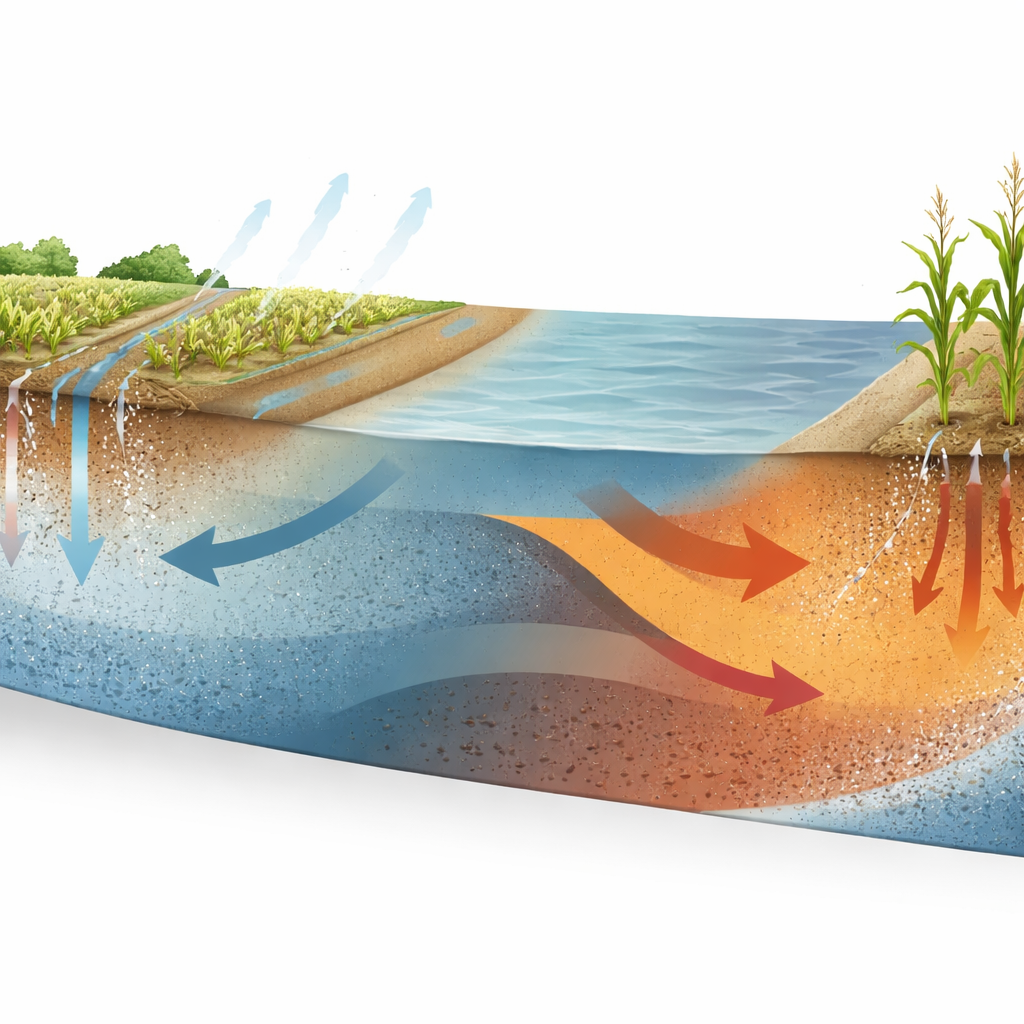
Overall, the news is reassuring: in most places and seasons, Puri’s groundwater is rated good to excellent for drinking, and well within acceptable limits for most of the tested substances. However, the study also reveals important seasonal swings. Before the monsoon, when rains are scarce and wells are heavily used, salt levels and related indicators tend to rise. During the monsoon, fresh rainwater recharges the aquifer and can dilute some pollutants, but runoff can also carry contaminants from farms and settlements into the subsurface. In some locations—particularly near the coast—electrical conductivity and dissolved solids spike, signaling patches of saltier water likely influenced by seawater intrusion or concentrated salts. Water quality index maps produced with geographic information systems show that these problem zones are localized rather than district-wide, but they do appear consistently in certain areas.
Can Farmers Safely Use This Water?
For agriculture, the key question is whether groundwater will harm soils or crops over time. The researchers examined salinity and sodium-related measures that affect how easily water moves through soil and how plants take it up. Using indices such as the Sodium Adsorption Ratio, Kelly’s Ratio, and standard salinity classes, they found that most samples pose low to moderate risk. Across seasons, the majority of wells fall into the “excellent” or “good” ranges for irrigation water, meaning they are unlikely to cause serious build-up of salts or soil structure problems under typical management. Even so, some wells—especially closer to the coast and in the drier pre-monsoon period—show higher salinity and sodium hazards, suggesting that continued use without care could slowly degrade soil or reduce yields in those pockets.
What This Means for People and Policy
Put simply, this study shows that groundwater in coastal Puri is mostly safe to drink and use on fields today, but it is not risk-free. Seasonal shifts and small but persistent salty zones point to the need for regular monitoring rather than assuming wells will always remain clean. The authors recommend tracking key water-quality indicators throughout the year, enhancing recharge with rainwater harvesting, and encouraging smarter irrigation methods that reduce salt build-up. By mapping where and when problems arise, local agencies and communities can act early—protecting health, safeguarding crops, and strengthening the region’s resilience to climate change and rising seas, while supporting global goals for clean water and climate action.
Citation: Barik, Y., Dalai, A., Mohanty, S. et al. Seasonal groundwater quality assessment and irrigation suitability in coastal aquifers of Puri District, Odisha, India. Sci Rep 16, 7895 (2026). https://doi.org/10.1038/s41598-026-39145-8
Keywords: groundwater quality, coastal aquifer, irrigation water, salinity, Puri district Odisha