Clear Sky Science · en
The early impact of bariatric surgery on metabolic dysfunction-associated steatotic liver disease (MASLD) as assessed by fibroscan at 6 months postoperatively
Why Weight-Loss Surgery Matters for Liver Health
Many people know that severe obesity can strain the heart and joints, but fewer realize it can also slowly damage the liver. A common condition now called metabolic dysfunction–associated steatotic liver disease, or MASLD, happens when fat builds up in the liver alongside problems like obesity or diabetes. This study asked a simple but important question: when people with severe obesity have weight-loss (bariatric) surgery, how quickly does their fatty, stiffened liver start to recover, and can a simple scan, rather than a biopsy, reliably track that change?
A Silent Liver Problem in People with Obesity
MASLD has become one of the most widespread liver problems worldwide, especially among people living with obesity, type 2 diabetes, high blood pressure, or sleep apnea. In its milder form, the liver fills with excess fat. Over time, in some people, this can progress to scarring (fibrosis), advanced scarring that borders on cirrhosis, and even liver cancer. Beyond the liver, MASLD is tied to higher risks of heart disease, kidney disease, and certain cancers, making it a whole-body health issue. Because early stages are usually silent, many people do not know they have it until significant damage has occurred.
A Study of Surgery and a Simple Liver Scan
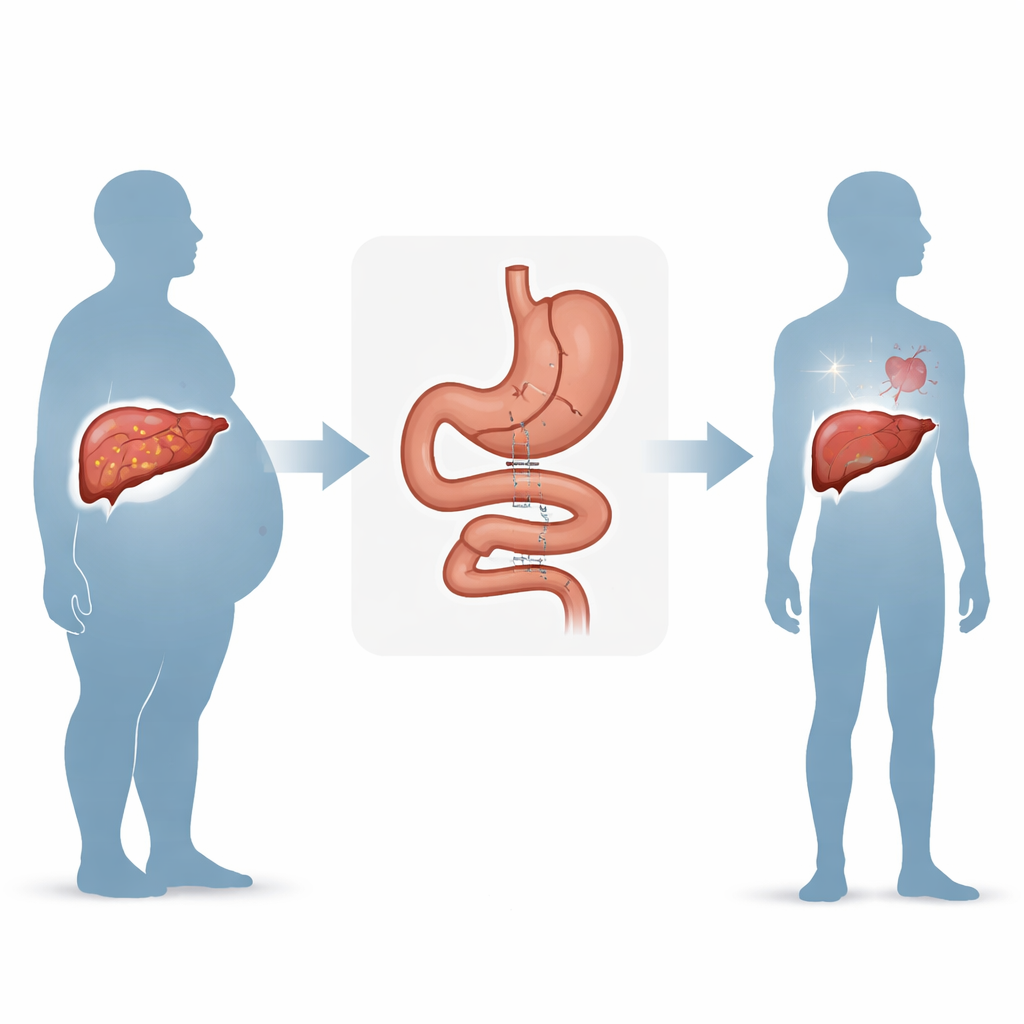
Weight loss is the cornerstone treatment for MASLD, and bariatric surgery is one of the most effective ways to achieve large, lasting weight reduction in people with severe obesity. To see how quickly the liver responds, the researchers followed 111 adults with MASLD who underwent a type of weight-loss surgery called Roux-en-Y gastric bypass. All had clear signs of fatty liver beforehand on both ultrasound and a noninvasive test called Fibroscan, which uses painless vibrations to measure how fatty and how stiff the liver is. The team compared Fibroscan readings taken before surgery and again about seven months afterward, focusing on two numbers: one reflecting fat in the liver and the other reflecting stiffness from scarring.
Striking Early Improvements in Liver Fat and Scarring
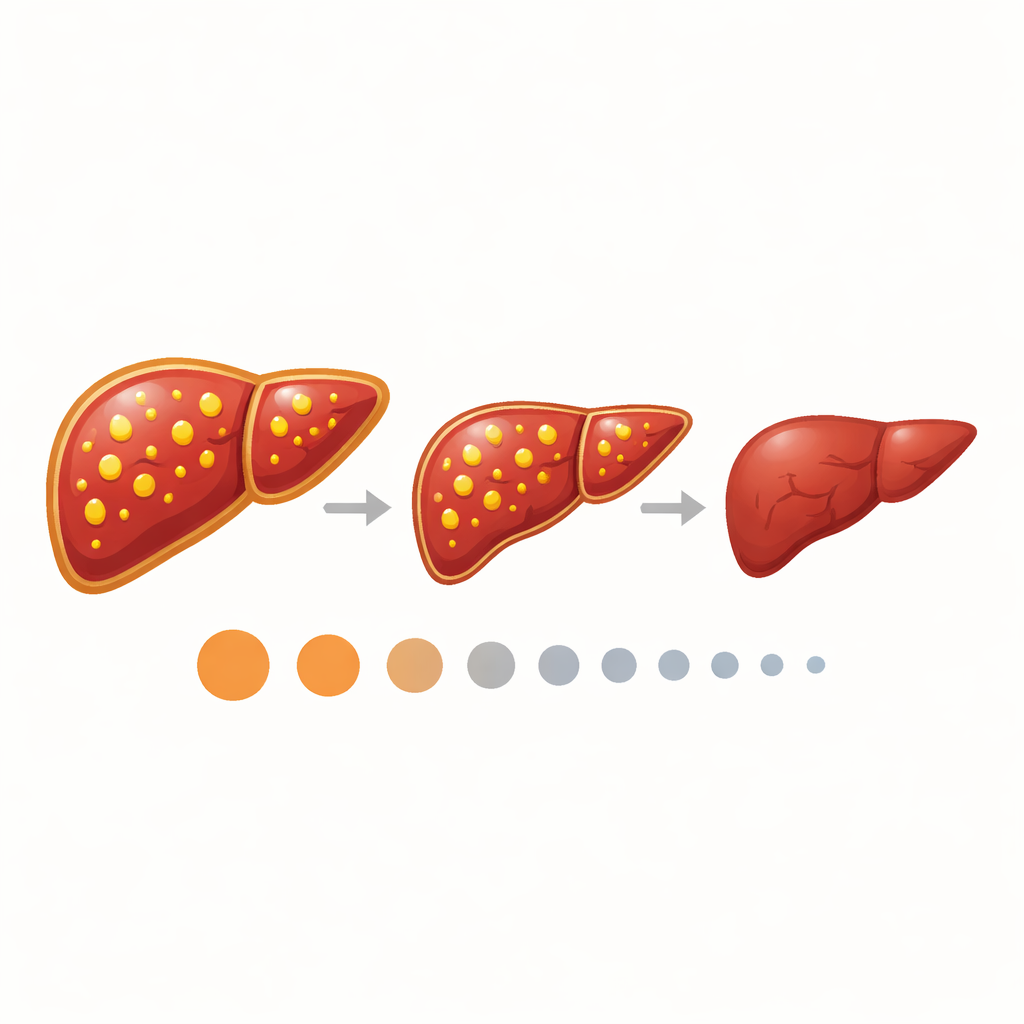
By around seven months after surgery, patients had lost an average of about 28% of their body weight, and their livers showed marked recovery. The proportion of patients with fatty liver dropped from 100% to 61%. In other words, nearly four in ten no longer met the scan-based definition of MASLD. Liver scarring improved even more impressively: the share of patients with fibrosis fell from 41% to 8%, and in those who had more advanced stiffness suggestive of serious scarring, nearly three out of four no longer met that threshold. Overall, the fat-related Fibroscan measure fell by about a quarter, and the stiffness measure by about a third in just a few months.
More Weight Lost, More Liver Healing
The researchers also looked at why some people’s livers recovered more fully than others. They found that the percentage of total weight lost was a key driver of improvement in liver fat: those who lost more weight tended to show larger drops in the fat-related scan measure. Other factors, such as age, sex, diabetes, high blood pressure, or sleep apnea, were less important in predicting short-term liver changes. This suggests that, at least in the first months after surgery, how much weight someone loses may matter more for their liver than which specific risk factors they carry.
A Role for Scans in Guiding Ongoing Care
Because Fibroscan is quick, noninvasive, and less risky and costly than liver biopsy, the authors argue that it can be used to track recovery after bariatric surgery and to flag people whose livers are not improving as expected. Those “poor responders” might benefit from extra help—such as newer weight-loss medications on top of surgery—once the initial weight loss begins to level off. The study has limits, including its modest size, short follow-up, and reliance on scans rather than tissue samples, but it adds to growing evidence that liver damage from obesity is at least partly reversible. For patients and clinicians, the message is hopeful: significant liver healing can begin within months of substantial weight loss, and a simple scan can help ensure that no one with a struggling liver is left behind.
Citation: Sivakumar, W., O’Connor, D., Shabana, H. et al. The early impact of bariatric surgery on metabolic dysfunction-associated steatotic liver disease (MASLD) as assessed by fibroscan at 6 months postoperatively. Sci Rep 16, 8002 (2026). https://doi.org/10.1038/s41598-026-39142-x
Keywords: bariatric surgery, fatty liver disease, MASLD, Fibroscan, weight loss