Clear Sky Science · en
International survey on the management of colorectal trauma and alignment with current guidelines
Why this matters for people who might need emergency surgery
Serious injuries to the large intestine and rectum are rare but can happen after car crashes, gunshot wounds, or stabbings. How surgeons handle these emergencies can shape a patient’s recovery, quality of life, and whether they wake up with a temporary bag on their abdomen to collect stool. This study looks at how surgeons around the world currently treat these injuries and how closely their choices follow modern recommendations meant to spare patients unnecessary procedures.

Asking surgeons worldwide how they treat gut injuries
The researchers created an online survey with realistic case scenarios of colon and rectal injuries. They shared it widely through professional surgical groups and social media, gathering answers from 280 surgeons in 59 countries. Most were fully trained surgeons, including trauma, general, and colorectal specialists, working in a mix of large academic centers, trauma hospitals, and general public hospitals. The survey asked which operations they would choose in different situations, whether they would create a stoma (a bowel opening on the skin), and when they would later reverse it.
When patients are stable, fewer surgeons are using bowel bags
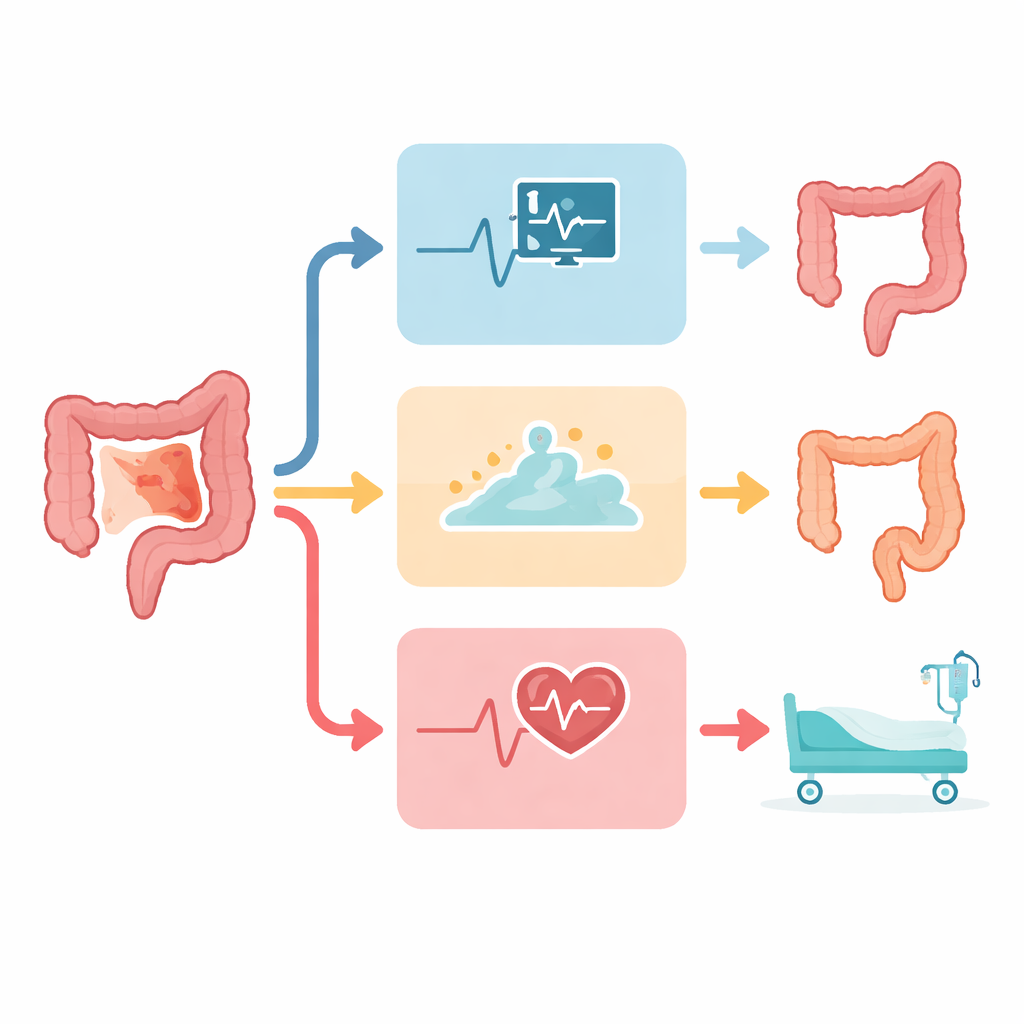
For injuries inside the abdominal cavity to the colon or rectum in patients whose blood pressure was stable, most surgeons favored repairing or removing the damaged segment and reconnecting the bowel, often with drainage of the abdominal cavity. Around four out of five said they would not routinely create a colostomy in these stable cases. This pattern fits well with modern research and guidelines, which show that, for many of these patients, keeping the bowel connected is safe and can reduce infections, complications, and length of hospital stay. Surgeons with formal trauma or colorectal training were especially likely to avoid routine diversion.
When patients are unstable, choices vary much more
In patients who were hemodynamically unstable—meaning their blood pressure and circulation were in danger—surgeons almost always chose a damage-control approach: quickly removing the injured bowel without reconnecting it right away. But they were almost evenly split on whether to routinely add a colostomy. Just over half said they would create one, while the rest would not. Younger general surgery residents reported using colostomies more often than trauma-trained or colorectal surgeons, and surgeons in some hospital types, such as non-academic public hospitals, reported higher diversion rates. These differences suggest that local training, experience, and resources strongly shape decisions when there is no single obvious best answer.
The biggest gray zone: injuries behind the abdominal cavity
The most disagreement appeared in how surgeons managed injuries to the part of the rectum that lies deep in the pelvis, outside the main abdominal cavity. Doctors used different tools to inspect these injuries, and treatment plans ranged widely. Many favored creating a stoma when the hole could not be repaired through the anus, but a notable number were willing to observe small stab wounds without surgery or diversion. Traditional add-on procedures, such as putting drains behind the rectum or flushing it from below, were used only sometimes and often not at all, reflecting growing doubt about their benefit. Overall, responses painted this area as a true “gray zone,” where habits and local culture often fill in for hard data.
Living with and later reversing a stoma
For patients who did receive a stoma, most surgeons aimed to reverse it between three and six months after the initial operation, assuming the patient had recovered enough. This timing was remarkably similar across surgeon types and hospital settings. Respondents estimated that a majority of their trauma patients ultimately had their stomas closed, though not all; complex injuries, long recoveries, or other health issues sometimes prevented reversal.
What this means for patients and future care
Overall, the survey suggests that for many colon and rectal injuries inside the abdomen, especially in stable patients, real-world practice now matches modern evidence: surgeons often repair and reconnect the bowel instead of defaulting to a colostomy. But for deeper rectal injuries and very unstable patients, practice still varies widely, revealing gaps in clear proof and guidance. For patients, this means that the care they receive can depend on where they are treated and who is on call. The authors argue that better studies, especially focused on these gray zones, are needed so that emergency bowel surgery decisions are driven less by tradition and more by solid evidence, improving both survival and long-term quality of life.
Citation: Junior, M.A.F.R., Wetoska, N., Possiedi, R.D. et al. International survey on the management of colorectal trauma and alignment with current guidelines. Sci Rep 16, 8199 (2026). https://doi.org/10.1038/s41598-026-39140-z
Keywords: colorectal trauma, emergency surgery, colostomy, rectal injury, trauma guidelines