Clear Sky Science · en
Age related alteration in EEG evoked responses to balance perturbations on an inclined surface
Why Slopes Can Be So Dangerous
For many older adults, a simple walk down a ramp or sloped driveway can turn unexpectedly hazardous. Slopes subtly shift the body’s center of gravity and demand rapid, precise reactions to keep us upright. This study asks a key question: how does the aging brain respond when balance is suddenly lost on an inclined surface, and could these brain responses help explain why older adults fall more often—and perhaps guide better prevention?
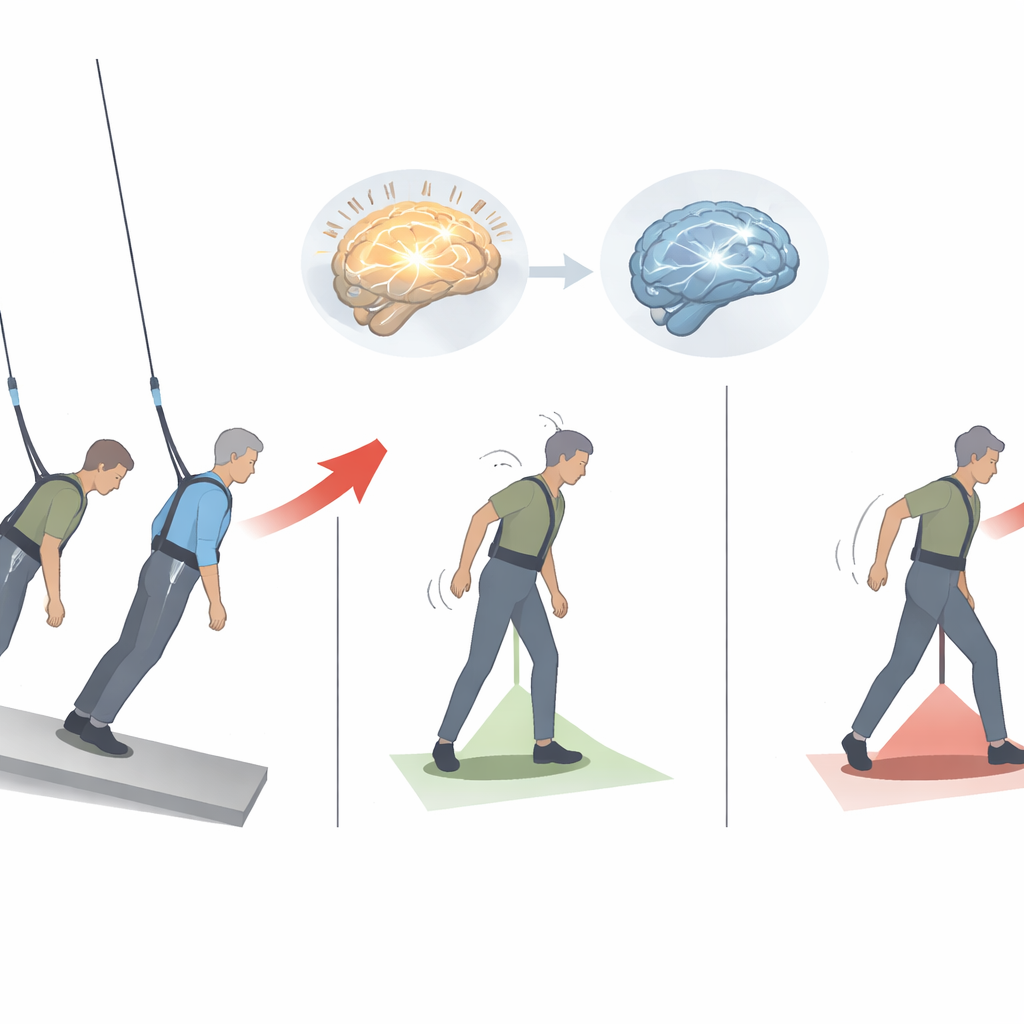
Simulating a Sudden Slip on a Ramp
The researchers brought ten younger and ten older adults into the lab and placed them on a steep, carpeted platform tilted forward like a downhill ramp. Each person leaned into a harness until they were on the verge of tipping forward. At an unpredictable moment, a hidden release let the body pitch forward, mimicking a real-life slip on a slope. Sometimes participants were told to recover with a quick step; other times they had to stay relaxed and let a secondary harness catch them. Throughout, a cap of sensors recorded the brain’s electrical activity millisecond by millisecond.
What the Brain Reveals in the First Split Second
When the platform released, the brain produced a brief electrical “spike” known as the N100—an early signal that something has gone wrong with balance. Compared with younger adults, older adults showed this signal later in time and with smaller strength, suggesting that the brain’s initial “uh-oh, I’m falling” response was slower and weaker. Importantly, this early response looked almost the same whether people were allowed to step or not. That means the signal is more about detecting the loss of balance than about planning the corrective movement, highlighting a specific early warning stage that seems dulled with age.
Rhythms and Waves: How Strongly the Brain Engages
Beyond these brief spikes, the team examined how rhythmic brain activity changed after the perturbation. In younger adults, certain frequency bands—especially slower theta waves and faster beta waves—showed a clear surge in power within the first half-second and often stayed elevated for several hundred milliseconds. This pattern points to a robust, coordinated response that likely supports attention, error monitoring, and motor control. Older adults, in contrast, showed much smaller changes in these rhythms, indicating a blunted engagement of the brain’s balance-control systems when the body starts to fall.
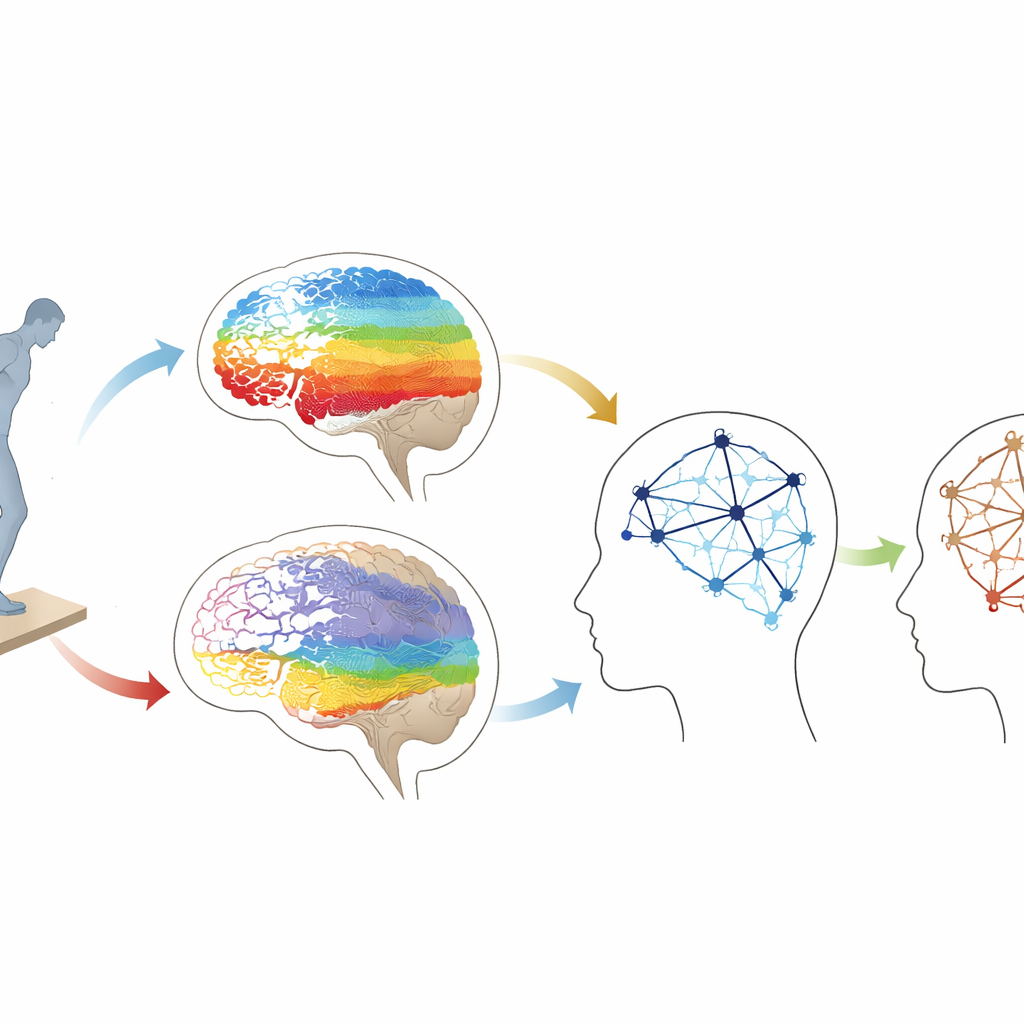
Brain Networks Working Harder, Not Smarter
The researchers also treated the brain as a network of interconnected regions and asked how this network reorganized around the moment of imbalance. Surprisingly, older adults showed higher “clustering” and overall connectivity shortly after the perturbation, especially in theta frequencies, meaning more brain regions were tightly linked and exchanging signals. This might sound beneficial, but in the context of aging, it is often interpreted as over-recruitment: the brain has to engage more areas and bind them more strongly to handle the same challenge. Later in time, when stepping responses came into play, both age groups showed more connected networks, but the pattern in older adults still suggested heavier, possibly less efficient, reliance on cortical control.
What This Means for Falls and Prevention
Taken together, the findings paint a picture of an aging brain that detects loss of balance on a slope more slowly and less sharply, then compensates by recruiting a more heavily wired network to try to regain stability. For a layperson, this means that older adults may have a smaller safety margin in those critical first hundred milliseconds when a fall can still be averted. Because these brain signals can be measured noninvasively, they could serve as early markers of balance problems and targets for training or rehabilitation. In the future, exercises or therapies that sharpen this rapid detection response and streamline brain network use might help older adults stay steadier—especially when life’s paths get a little too steep.
Citation: Lim, Y.C., Sidarta, A., Gonzalez, P.C. et al. Age related alteration in EEG evoked responses to balance perturbations on an inclined surface. Sci Rep 16, 8078 (2026). https://doi.org/10.1038/s41598-026-39139-6
Keywords: falls in older adults, balance control, sloped walking, brain activity, aging and posture