Clear Sky Science · en
Comparative evaluation of a multi-functional dust suppressant synthesized from Sapindus mukorossi extract and bentonite clay
Cleaner Air from Dusty Roads
Dust from mines, construction sites, and unpaved roads is more than a nuisance—it carries fine particles that can damage lungs, cloud the air, and travel far from their source. This study explores a greener way to keep that dust on the ground using a simple blend of a common clay and an extract from the soapnut tree, offering an alternative to conventional chemical treatments that can linger in the environment.
Why Dust Is Hard to Tame
Fine dust particles, small enough to stay suspended in air as PM10 and PM2.5, come from everyday activities like traffic on dirt roads, mining, farming, and construction. Water sprays and salt solutions have long been used to keep dust down, but they dry out quickly or wash away, and salt runoff can damage plants and contaminate water. Newer chemical suppressants can bind dust more effectively, yet many are made from petroleum or synthetic polymers that are not readily broken down in nature. An ideal solution would be long-lasting, inexpensive, and biodegradable, while still forming a strong crust that keeps dust in place.
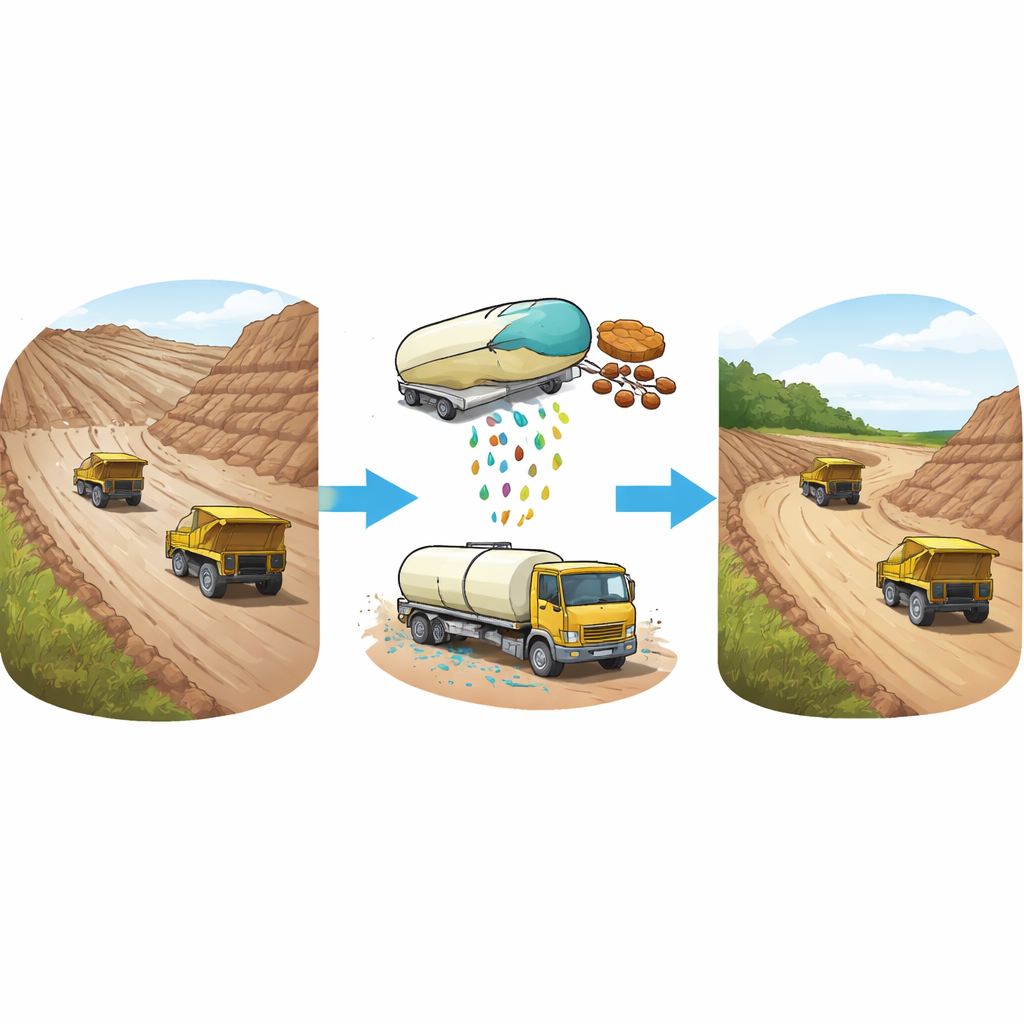
Turning Clay and Soapnut into a Dust Shield
The researchers focused on bentonite clay and Sapindus mukorossi, better known as soapnut or soapberry. Bentonite is a naturally swelling clay already used in industry because it soaks up water and forms layers that can stick particles together. Soapnut shells contain saponins—natural soap-like molecules with a water-loving end and an oil-loving end—that lower the surface tension of water and help it spread over oily or dusty surfaces. The team prepared several candidate dust suppressants: lignin-based formulations recovered from paper-mill waste, bentonite in water, soapnut extract in water, and a combined mixture of bentonite clay plus soapnut extract. All were sprayed onto fine coal dust, chosen because its particle size matches harmful airborne dust and its surface is difficult to wet.
Putting the New Mixture to the Test
To see which option worked best, the scientists ran a series of practical tests that mimic real-world conditions. In a wind tunnel, treated dust beds were blown with air at a speed typical of outdoor breezes, and the mass of dust lost over time was measured. They also tracked how long each treated sample held onto moisture, how easily a needle could penetrate the dried surface (a sign of crust strength), and how quickly a small amount of dust sank into a tube of the liquid (a measure of wetting ability). Finally, they gauged environmental friendliness by comparing how much oxygen microbes consumed when breaking each material down, a standard way to estimate biodegradability.
Stronger Crust, Slower Drying, Gentler on Nature
The blend of bentonite clay with soapnut extract outperformed all other formulations across most tests. Under steady airflow, dust treated with the combined mixture lost only about 11% of its mass, less than either clay alone or soapnut alone, showing that the two ingredients work better together than separately. The combined treatment also held water slightly longer than pure bentonite, helping maintain a damp surface that resists dust release. Its surface crust was the hardest to penetrate, meaning the dried layer was firm and more resistant to traffic and wind. While pure soapnut gave the fastest wetting of dry coal dust, the clay–soapnut blend still wetted quickly and added crucial binding strength. Measures of biological and chemical oxygen demand showed that the clay–soapnut formulation was readily biodegradable, in sharp contrast to a synthetic lignin-based polymer that persisted much longer.
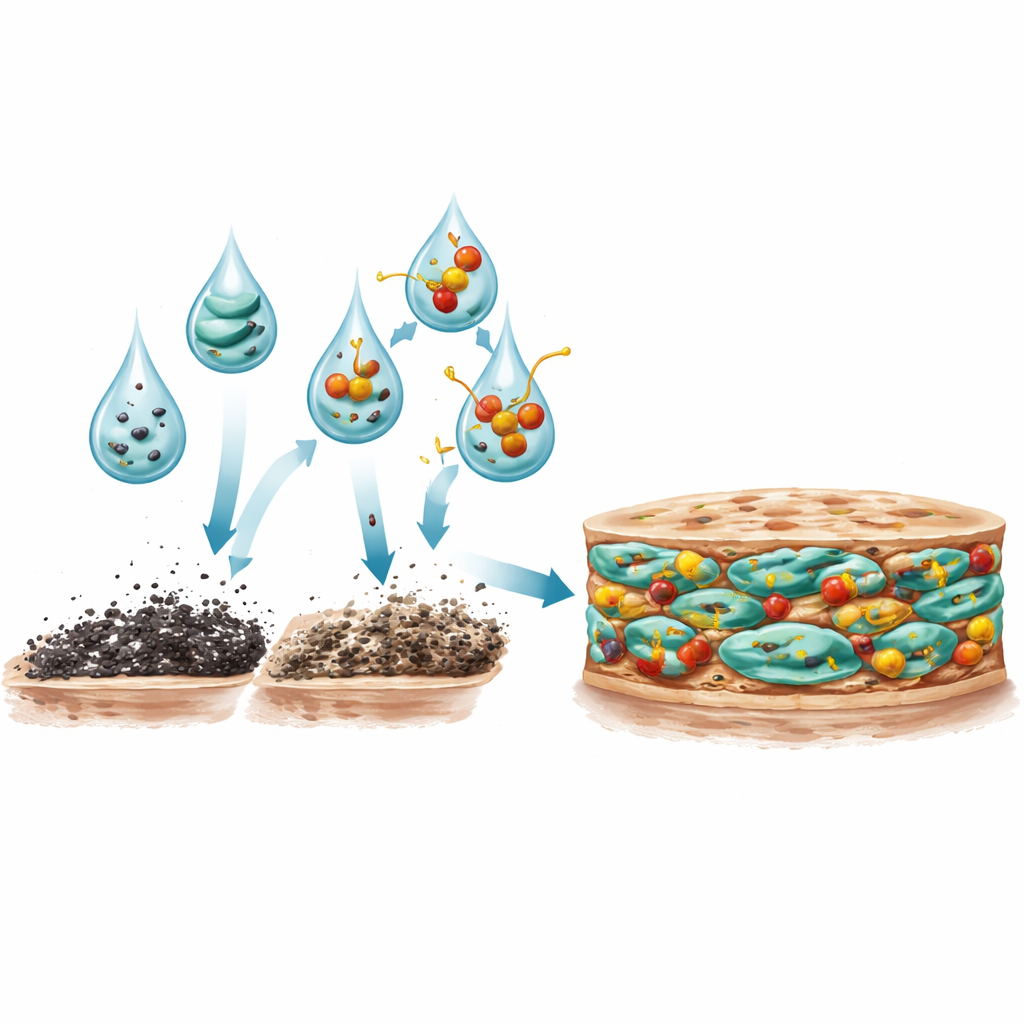
How the Mixture Works at the Tiny Scale
Microscope images and structural analyses help explain why this simple blend is so effective. Soapnut’s saponin molecules latch onto the oily, hydrophobic surfaces of coal dust while also interacting with water, allowing droplets to spread and pull dust particles into the liquid. At the same time, bentonite’s layered sheets swell with water and trap both dust and saponin within a flexible, plate-like framework. Together, they form a composite crust: a network of clay sheets, water, saponin, and dust grains locked together. This network both anchors particles against wind and slows down drying, giving longer-lasting protection between sprayings.
A Natural Path to Cleaner, Safer Air
In plain terms, the study shows that a mixture of ordinary clay and a plant-based soap can create a tough, breathable skin over dusty surfaces like mine haul roads. This skin keeps more dust from becoming airborne, stays effective for longer, and can be broken down by microbes after use, leaving fewer long-term residues in soil and water. Because both ingredients are abundant and relatively inexpensive—bentonite as a common mineral and soapnut as a renewable plant product—the approach holds promise as a practical, eco-friendly replacement for many conventional chemical dust suppressants.
Citation: Kumar, P., Diddi, S., Ramachandra, S. et al. Comparative evaluation of a multi-functional dust suppressant synthesized from Sapindus mukorossi extract and bentonite clay. Sci Rep 16, 7998 (2026). https://doi.org/10.1038/s41598-026-39133-y
Keywords: dust suppression, bentonite clay, soapnut extract, air quality, eco-friendly materials