Clear Sky Science · en
Bioactivity screening of endophytic fungi from Sterculia urens and GC–MS metabolites profiling of the potent isolate Chaetomium meridiolense
Hidden Helpers Inside Healing Trees
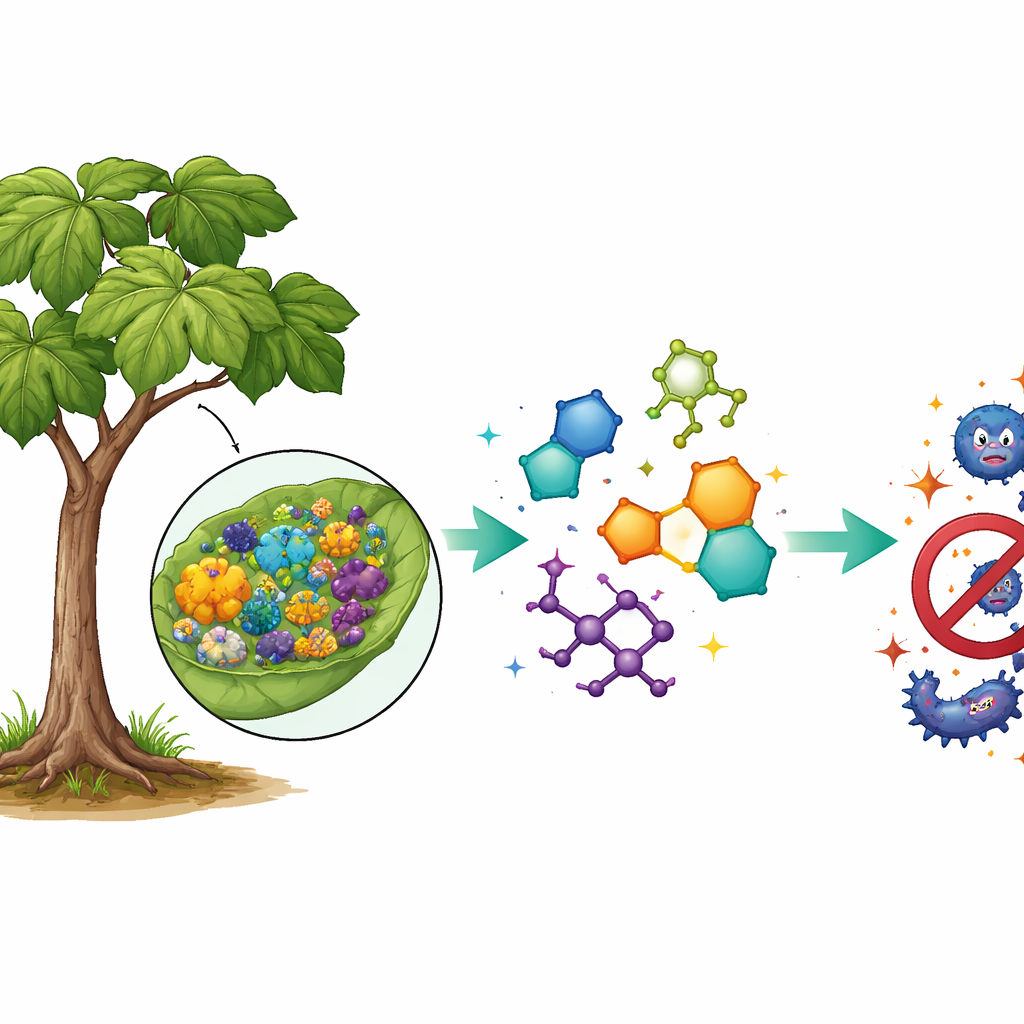
Many traditional medicines come from plants, but the tiny partners living inside those plants often go unnoticed. This study explores fungi that quietly inhabit the tissues of Sterculia urens, an Indian tree valued in folk medicine, to see whether these microscopic tenants can supply powerful natural compounds that fight germs and harmful molecules in our bodies. Understanding these hidden helpers could lead to new drugs while easing pressure on vulnerable medicinal plants.
Friendly Fungi Beneath the Bark
The researchers focused on “endophytic” fungi—species that live peacefully inside healthy plant tissues without causing disease. From the leaves of Sterculia urens, they isolated nine different fungal strains and confirmed their identities using microscopic features and DNA sequencing. Rather than studying the tree itself, the team treated these fungi as miniature chemical factories, asking which ones produce mixtures most likely to benefit human health.
Testing Natural Shields Against Damage
To find promising candidates, the scientists first screened crude extracts from each fungus for their ability to neutralize damaging free radicals, unstable molecules linked to aging, inflammation, and many chronic diseases. Using two color-based laboratory tests, they measured how effectively each extract quenched these reactive particles. One species, Chaetomium meridiolense, clearly stood out: its extract consistently showed the strongest radical-neutralizing power, closely tied to high levels of natural plant-like compounds called phenolics and flavonoids, which are known for their protective roles in foods such as berries and tea.
Natural Defenses Against Harmful Germs
The same fungal extracts were then tested against three disease-causing bacteria: Staphylococcus aureus, commonly linked with skin and wound infections; Escherichia coli; and Salmonella typhi, associated with serious gut illness. Again, Chaetomium meridiolense was the star performer, producing the largest clear zones where bacterial growth was stopped and requiring the lowest amounts of extract to halt or kill bacteria in liquid culture. The extract was especially effective against Staphylococcus aureus, hinting that some of its natural chemicals may be particularly suited to breaching the simpler cell walls of this type of microbe.
Peeking Into the Chemical Toolbox
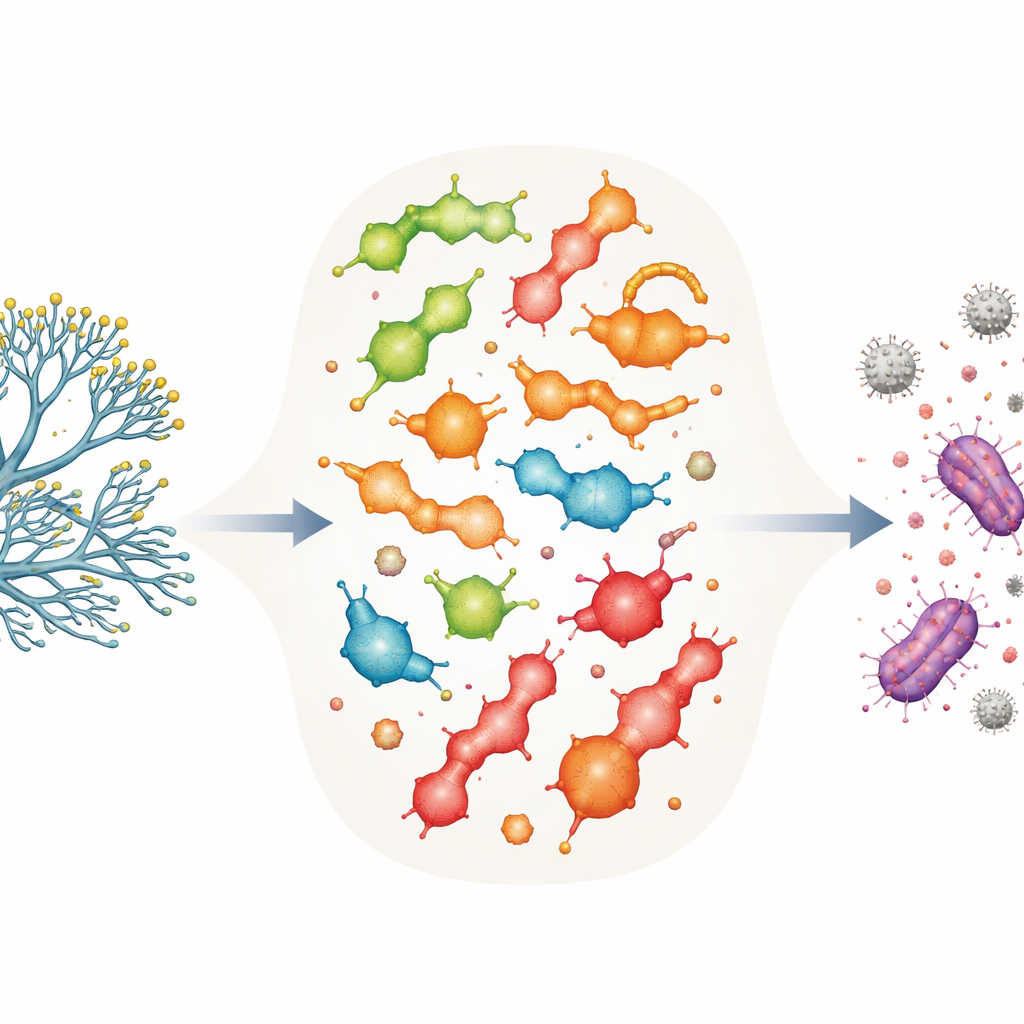
To understand what Chaetomium meridiolense was making, the team used gas chromatography–mass spectrometry, a technique that separates and detects many different small molecules at once. They found more than one hundred distinct compounds, with two families dominating: terpenoid-related substances and phenolic derivatives. Several of these, including certain phenols and lactones, have been reported elsewhere to possess strong antioxidant and antimicrobial activity. Statistical analyses linked higher amounts of phenolic compounds to stronger radical-scavenging and germ-fighting effects, suggesting that no single “magic bullet” is responsible; instead, a coordinated mix of related molecules appears to work together.
Why These Tiny Partners Matter
Overall, the study shows that a fungus living quietly inside an important medicinal tree can generate a rich cocktail of compounds that both soak up harmful reactive molecules and suppress dangerous bacteria, especially Staphylococcus aureus. For a non-specialist, the key message is that valuable drug-like substances do not always come directly from plants themselves—sometimes, their microscopic partners are just as important. By cultivating these fungi in the laboratory, scientists can explore new sources of antibiotics and antioxidants without overharvesting threatened species such as Sterculia urens, opening a sustainable path toward future medicines.
Citation: Yadav, G., Meena, M. & Sonigra, P. Bioactivity screening of endophytic fungi from Sterculia urens and GC–MS metabolites profiling of the potent isolate Chaetomium meridiolense. Sci Rep 16, 8752 (2026). https://doi.org/10.1038/s41598-026-39125-y
Keywords: endophytic fungi, natural antibiotics, antioxidant compounds, medicinal plants, fungal metabolites