Clear Sky Science · en
Surgical delays between indication and operating room access in patients undergoing glaucoma filtration surgery
Why the wait for eye surgery matters
For people living with glaucoma, a common eye disease that can quietly steal vision, surgery is often the last and most powerful option to prevent blindness. But once a doctor decides that glaucoma filtration surgery is needed, patients rarely go straight to the operating room. They enter a queue, and during that wait the disease can continue to damage the optic nerve. This study asked a simple but crucial question: how long are patients actually waiting for glaucoma surgery in real life, and which factors make that wait longer?
The journey from decision to operating room
The researchers looked back at medical records from 633 adults treated in four highly specialized glaucoma centers in Italy between 2017 and 2022. All had open-angle glaucoma that was no longer safely controlled with eye drops or laser treatments, and all were formally listed for glaucoma filtration surgery, a group that included traditional trabeculectomy, minimally invasive bleb-forming procedures, and tube implants. For each patient, the team measured three time gaps: from the surgical decision to the pre-surgical workup visit, from that workup to the actual surgery date, and the overall delay from decision to operation.

How long do patients actually wait?
On average, patients waited about a month and a half—44 days—between the decision for surgery and stepping into the operating room. The slowest part of the journey was not the final scheduling of the operation, but getting to the pre-surgical workup in the first place, which took a median of 32 days. By contrast, the time from workup to surgery was much shorter, about one week. These patterns were surprisingly stable over the five-year span studied, despite a rise in newer, faster surgical techniques; total waiting times in 2017, 2019, and 2022 were very similar.
Who waits longer and who is fast-tracked
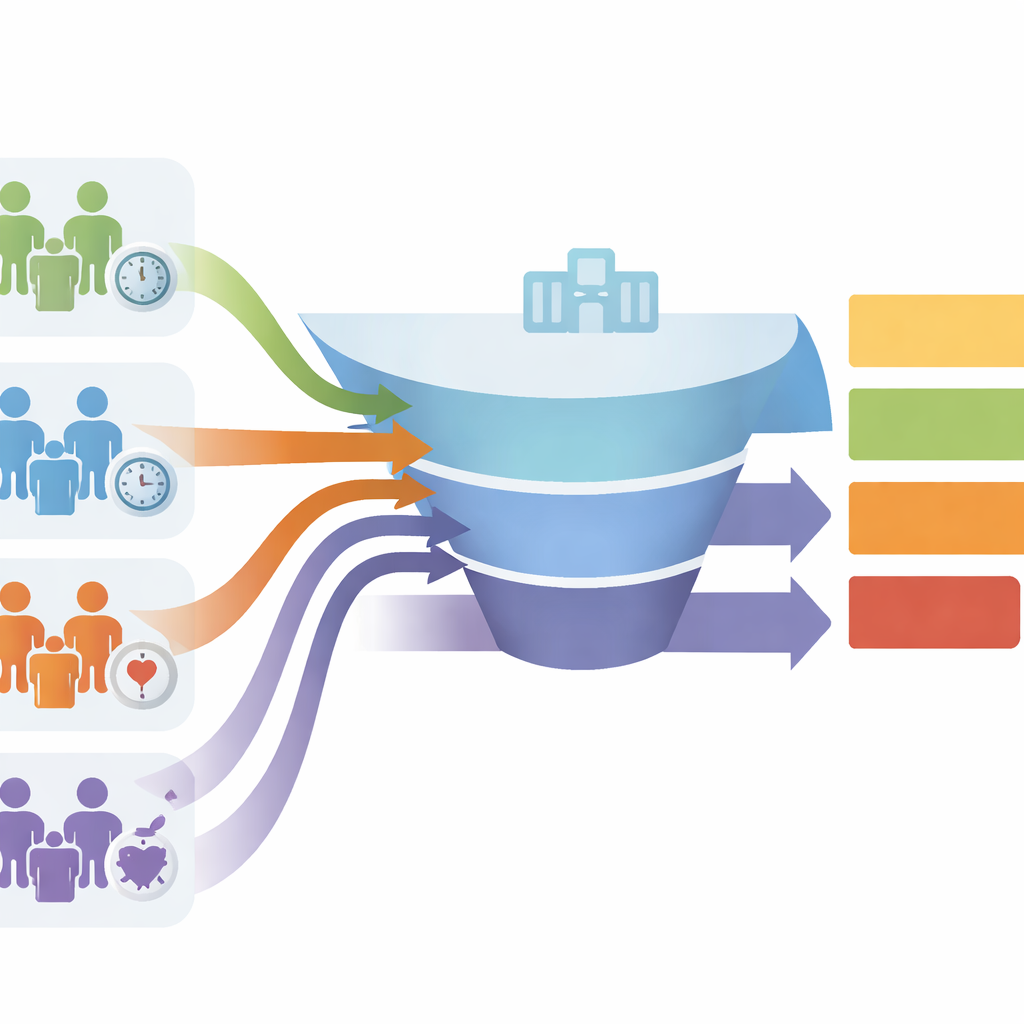
The study uncovered clear differences in how quickly certain groups reached surgery. People treated in southern Italy had waits roughly half again as long as those in the north, suggesting regional differences in resources and capacity. Patients having their very first surgery tended to wait longer than those undergoing a second procedure, likely because repeat operations are reserved for more unstable or urgent situations. Those scheduled for a combined cataract-and-glaucoma operation waited substantially more than patients receiving glaucoma surgery alone, possibly because these more complex procedures need more specialized surgeons and tighter coordination. Individuals with additional medical illnesses needed extra consultations and therefore often spent more days between workup and surgery.
Pressure, type of glaucoma, and the surprising role of disease stage
Eye pressure, a key driver of glaucoma damage, strongly influenced timing. Patients with very high pressure (above 30 mmHg) reached surgery roughly twice as fast as those with lower readings, suggesting that clinicians use pressure as a main trigger for urgency. People with primary glaucoma, those who still had useful vision in both eyes, and those with relatively lower pressure tended to wait longer—perhaps reflecting a sense of lower immediate danger. Surprisingly, the formal stage of vision loss on visual field tests did not clearly change waiting times, even though more than half of the patients were already in an advanced stage of disease by the time surgery was chosen. Vision sharpness, as measured by standard eye charts, did not show meaningful decline during the waiting period, but the study did not include repeat visual field scans or imaging to track subtle nerve damage.
What this means for patients and health systems
This work shows that, even in top-level public centers, people with uncontrolled glaucoma commonly wait more than forty days for filtration surgery, with the biggest bottleneck occurring before the pre-surgical workup. Faster, less invasive surgical options did not shorten these waits over five years, likely because they also increased the number of patients referred for surgery. Since glaucoma damage is irreversible and can silently worsen while patients are in line, the authors argue that health systems should focus on streamlining the pre-surgical pathway and refining how urgency is judged—taking into account not only eye pressure, but also how far the disease has already progressed, the patient’s remaining useful eye, and where they live. Smarter prioritization and better organization, they suggest, could help more people protect their sight before it is too late.
Citation: Agnifili, L., Sacchi, M., Figus, M. et al. Surgical delays between indication and operating room access in patients undergoing glaucoma filtration surgery. Sci Rep 16, 7884 (2026). https://doi.org/10.1038/s41598-026-39121-2
Keywords: glaucoma surgery waiting time, glaucoma filtration surgery, surgical access delays, ophthalmology health services, visual field progression