Clear Sky Science · en
Synthesis, microstructural analysis, and wear optimization of Al6061–Si3N4 composites via stir casting for automotive and aerospace applications
Stronger Metals for Lighter Machines
From cars that sip less fuel to airplanes that carry more payload, engineers are hungry for metals that are both light and tough. This study explores a promising recipe: blending a common aluminum alloy with tiny ceramic particles to create a metal that can better resist wear and tear. By carefully making and testing this new material, the authors show how a modest change in composition and processing can extend the life of parts that slide, spin, and rub in service.
Building a Better Aluminum
The backbone of this work is Al6061, a widely used aluminum alloy prized for its low weight, good strength, and resistance to corrosion. On its own, however, Al6061 can suffer significant wear when it rubs against harder surfaces, as happens in brake components, bearings, and engine parts. To toughen it, the researchers mixed in 6 percent by weight of silicon nitride, a ceramic known for its extreme hardness, low density, and high temperature stability. They used a liquid processing route called stir casting, in which ceramic powder is stirred into molten metal and then cast into molds, a relatively simple and scalable method suitable for large industrial parts. 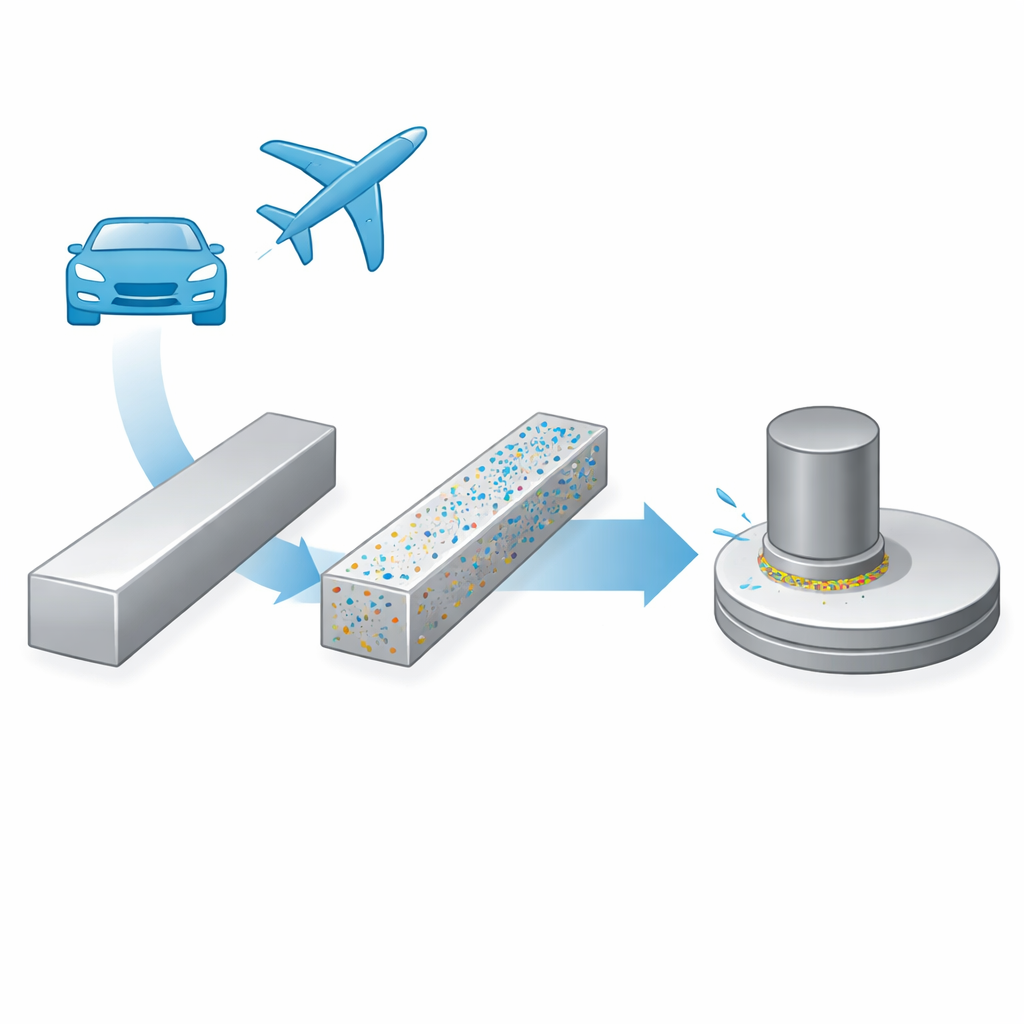
Peering Inside the New Metal
Once the composite castings were made, the team examined their internal structure. X-ray diffraction confirmed that the key phases in the alloy remained intact and that silicon nitride survived the high-temperature process without forming harmful reaction products. Scanning electron microscopy showed that the ceramic particles were largely well distributed throughout the aluminum, with only minor clustering. Image analysis revealed that the grain size of the aluminum matrix was refined and that porosity stayed low, both of which are favorable for strength and reliability. In short, the microstructure suggested that the processing route achieved good bonding between metal and ceramic and avoided the common pitfalls of particle clumping and excessive voids.
How the Surface Wears Away
The real test, however, was how the material behaved when it slid against steel. Using a standard pin-on-disc setup, cylindrical samples of both plain Al6061 and the composite were pressed against a hardened steel disc under different loads, speeds, and sliding distances. Microscopic images of worn surfaces told two distinct stories. The base alloy showed deep grooves, severe plastic deformation, and smearing, all signs of strong sticking and tearing as the soft aluminum adhered to the steel and was ripped away. In contrast, the composite developed shallower grooves and exhibited fewer signs of heavy sticking. Broken fragments of the hard ceramic became embedded in the sliding track and helped carry the load, while also contributing to a thin, protective layer of compacted debris that stabilized the contact.
Finding the Sweet Spot in Operating Conditions
Because wear does not depend on a single factor, the researchers used a statistical approach known as the Taguchi method to systematically vary load, sliding speed, and sliding distance in 27 carefully designed experiments. They found that load had by far the strongest influence on wear, followed by speed, while distance played a minor role within the tested range. Under optimized conditions—a relatively low load, higher sliding speed, and moderate distance—the composite lost about 21 percent less material than the base alloy. The statistical analysis showed that their regression model captured nearly 95 percent of the variation in wear, and separate confirmation tests matched the predictions within a small error margin, giving confidence that the identified settings truly minimize wear. 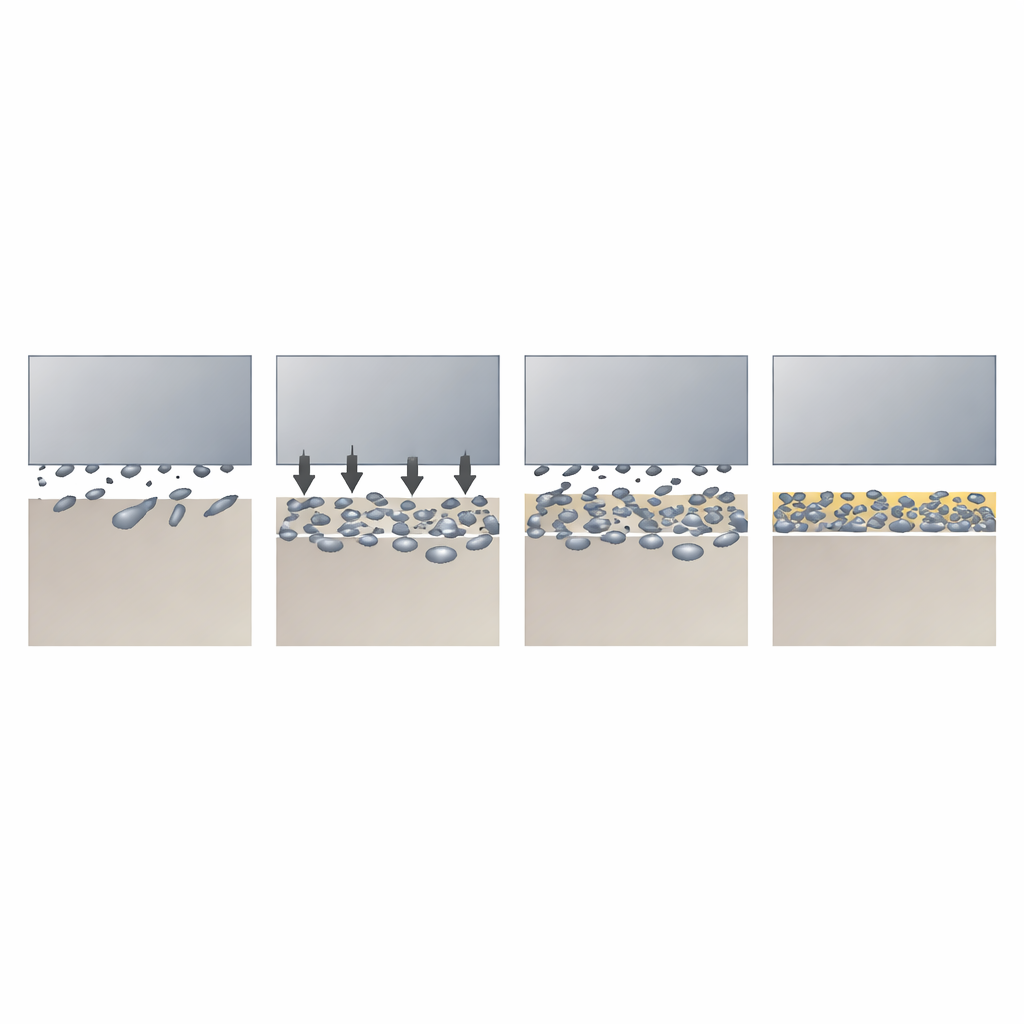
What This Means for Everyday Technology
For non-specialists, the takeaway is straightforward: by sprinkling a carefully chosen ceramic into a common aluminum alloy, and by tuning how that material is used, engineers can build lighter parts that last longer under friction. The silicon nitride particles refine the internal structure, share the mechanical load at the surface, and help form a self-protecting layer during sliding. Combined with a structured way of choosing operating conditions, this approach points toward more durable components in cars, aircraft, and other machines where every gram counts and every extra hour of service life matters.
Citation: M M, V., P, R., Koti, V. et al. Synthesis, microstructural analysis, and wear optimization of Al6061–Si3N4 composites via stir casting for automotive and aerospace applications. Sci Rep 16, 8697 (2026). https://doi.org/10.1038/s41598-026-39120-3
Keywords: aluminum composites, wear resistance, silicon nitride, stir casting, automotive aerospace materials