Clear Sky Science · en
Machine learning model provides stress biomarkers for the classification of abiotic stress in Micro-Tom
Why Plant Stress Matters to Our Food
Tomato plants, like all crops, constantly battle tough conditions such as drought, salty soils, and heavy metal pollution. These invisible pressures not only stunt plant growth but also threaten global food production in a warming world. This study uses a compact tomato variety called Micro-Tom and modern machine learning tools to turn the plant’s own internal chemistry into an “early warning system” that can tell how stressed it really is. Such tools could one day help farmers see problems before plants visibly wilt or die.
Tomatoes Under Pressure
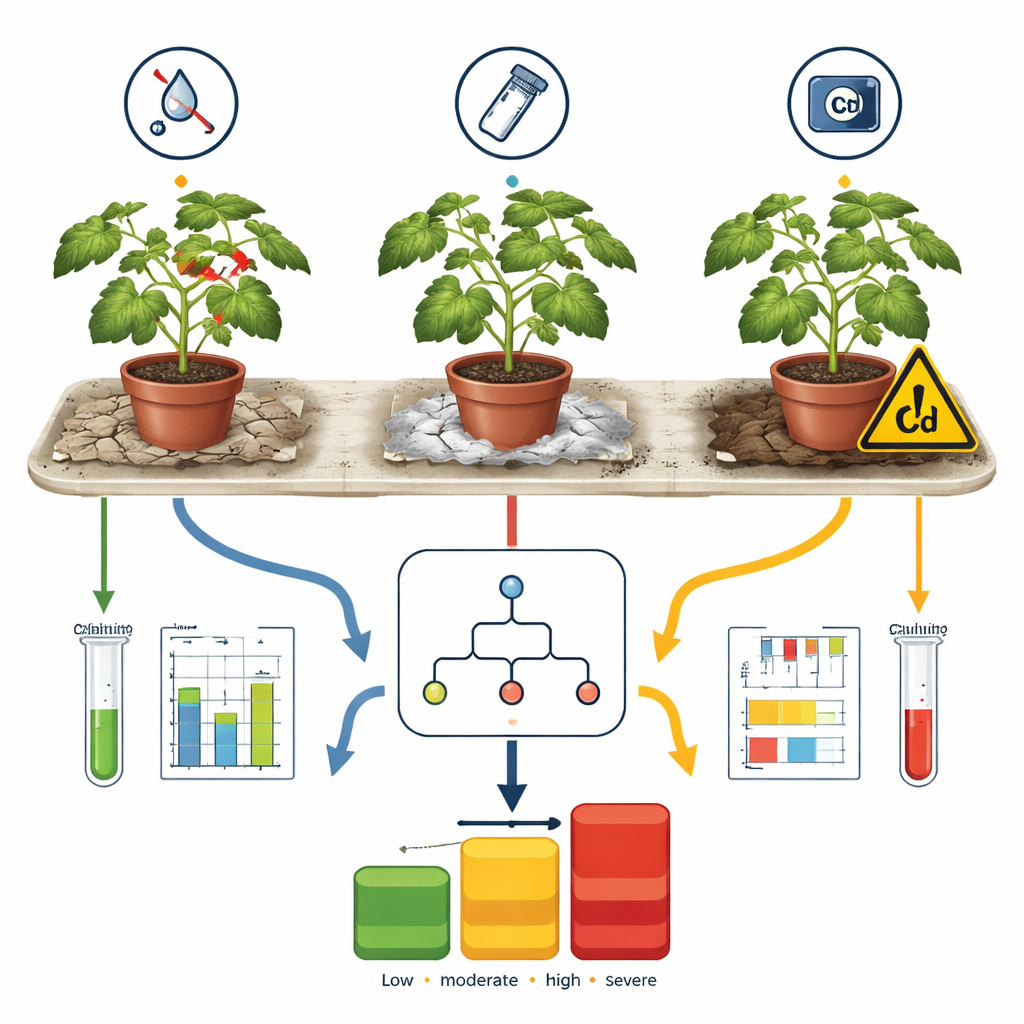
The researchers focused on three common threats: lack of water, excess salt, and contamination with cadmium, a toxic heavy metal. Micro-Tom tomato plants were grown under controlled conditions and then exposed for ten days to either moderate or severe levels of each stress, plus an unstressed control group. Instead of looking only at leaves turning yellow or plants shrinking, the team measured what was happening inside the leaves, including small molecules and protective enzymes that respond when cells are under attack.
Reading the Plant’s Chemical Signals
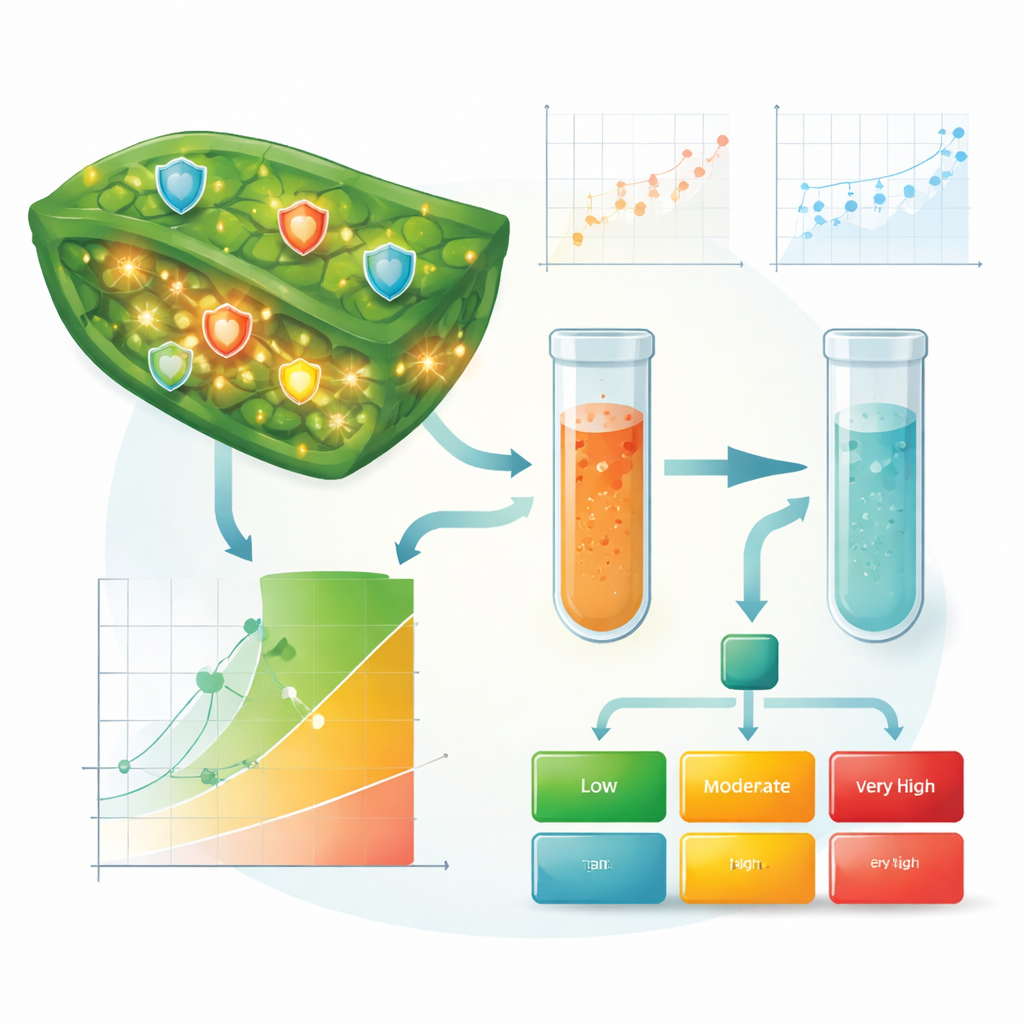
When plants are stressed, they produce unstable oxygen-containing molecules that can damage fats in cell membranes, proteins, and DNA. The study tracked two key damage signals related to this process: malondialdehyde, a byproduct of “rusting” of fats, and hydrogen peroxide, a reactive form of oxygen. At the same time, the team measured a suite of natural defenses—both enzymes and small compounds—that help keep this damage in check. Among them, the amino acid proline and the enzyme superoxide dismutase stood out as central players, rising sharply under stress and closely tracking changes in damage markers.
Different Stresses, Different Fingerprints
Each type of stress left a distinct chemical fingerprint in the leaves. Cadmium exposure caused the strongest increase in damage signals, indicating that the plants struggled to detoxify this metal. Salinity and water shortage also boosted oxidative damage, but in different patterns and to different degrees, with severe salt stress strongly activating several protective enzymes. Even when damage levels looked similar, the balance among the various defenses shifted, revealing that plants use more than one strategy to cope depending on the kind and intensity of the stress.
Teaching a Machine to Judge Stress Levels
To turn these complex measurements into something usable, the researchers trained a decision tree model—a simple, rule-based form of artificial intelligence. They divided the overall stress into four levels from low to high, based on the damage markers. The model then learned which combinations of internal signals best predicted each level. Proline emerged as the top “decision point,” with superoxide dismutase providing the next most informative split. For the least and most stressed plants, the model’s classifications were highly reliable. It struggled somewhat with intermediate cases, where the chemical profiles of “low-average” and “high-average” stress overlapped.
From Lab Bench to Smart Fields
This work shows that a tomato’s own chemistry can be translated into clear, automated assessments of how severely it is being stressed. While more data and additional signals—such as root measurements or later growth stages—will be needed to refine the approach, the study demonstrates that simple machine learning models can make sense of the tangled web of plant defenses. In the future, similar tools could underpin rapid tests or sensor-based systems that warn growers when crops are slipping from mild discomfort into damaging stress, allowing earlier and more precise interventions to protect yields.
Citation: Ribera, L.M., da Silveira Sousa Junior, G., Meneses, M.D. et al. Machine learning model provides stress biomarkers for the classification of abiotic stress in Micro-Tom. Sci Rep 16, 7545 (2026). https://doi.org/10.1038/s41598-026-39117-y
Keywords: plant stress, tomato, machine learning, antioxidants, precision agriculture