Clear Sky Science · en
Impact of EMS call timing on bystander CPR and survival after cardiac arrest in care facilities
Why the Timing of an Emergency Call Matters
When an older adult collapses in a nursing home or similar care facility, every second counts. Many people assume that calling an ambulance as early as possible is always the best thing you can do. This study from Japan challenges that simple idea, showing that calling too early—before a collapse is clearly recognized—and then waiting for help may actually reduce the chances that residents receive life‑saving chest compressions and survive.
Heart Emergencies in an Aging Society
Japan is one of the world’s oldest societies, and a growing share of older adults live in long‑term care facilities. These settings rarely have doctors on site, especially at night, and night shifts are often staffed by only a few workers. When the heart suddenly stops beating outside a hospital, survival depends heavily on someone nearby quickly starting chest compressions and on an ambulance arriving soon after. Yet past research has paid little attention to how staffing patterns and the timing of the emergency call from care facilities shape what actually happens in those critical minutes.
Looking at Millions of Emergency Calls
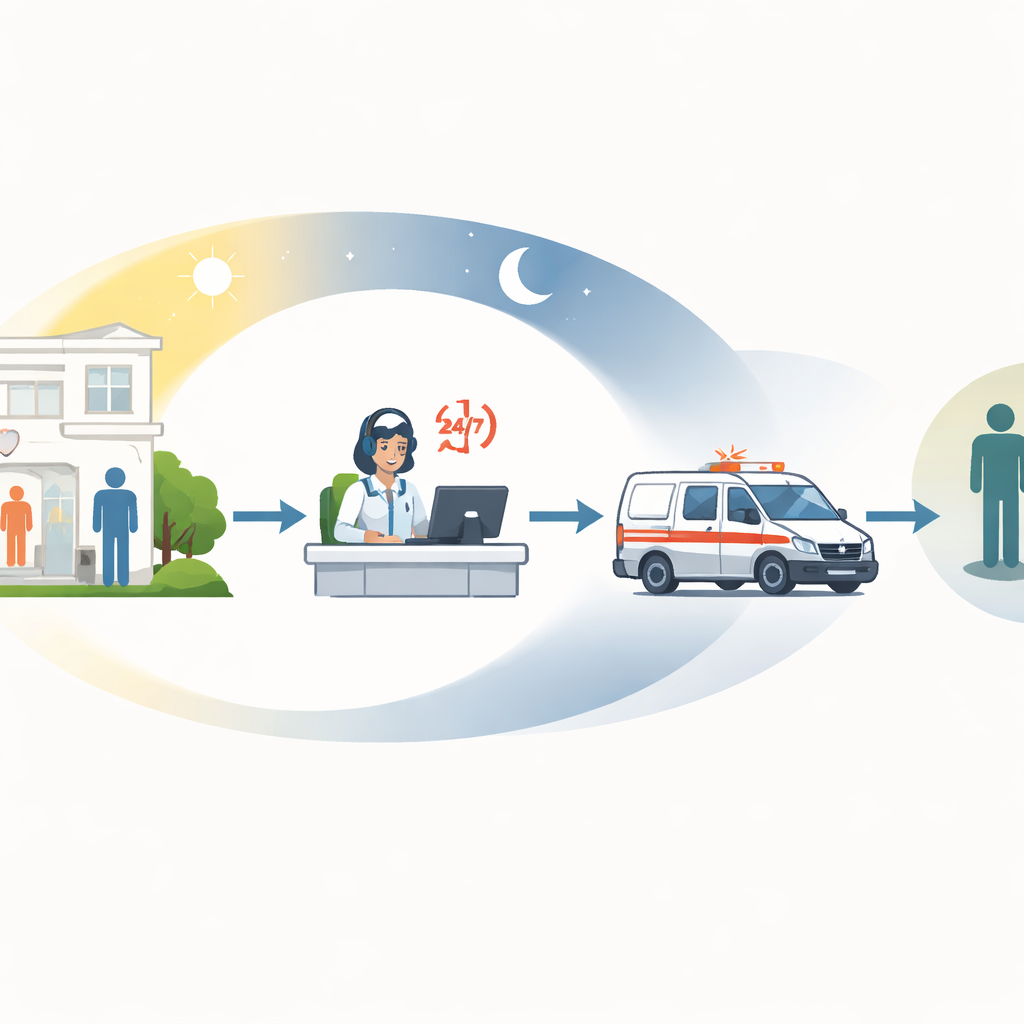
The researchers used a nationwide emergency medical services database covering Japan from 2017 to 2022. From more than 34 million ambulance transports, they focused on 27,222 older adults (aged 65 and over) who had a witnessed cardiac arrest of suspected heart origin in a care facility. They divided cases into two groups: "pre‑arrest" calls, where staff phoned for help before the collapse was formally recognized, and "post‑arrest" calls, where the call came at or after the moment of collapse. They also grouped calls by time of day: daytime hours, evening, and the late‑night/early‑morning period, which typically has the lowest staffing.
When Early Calls Backfire
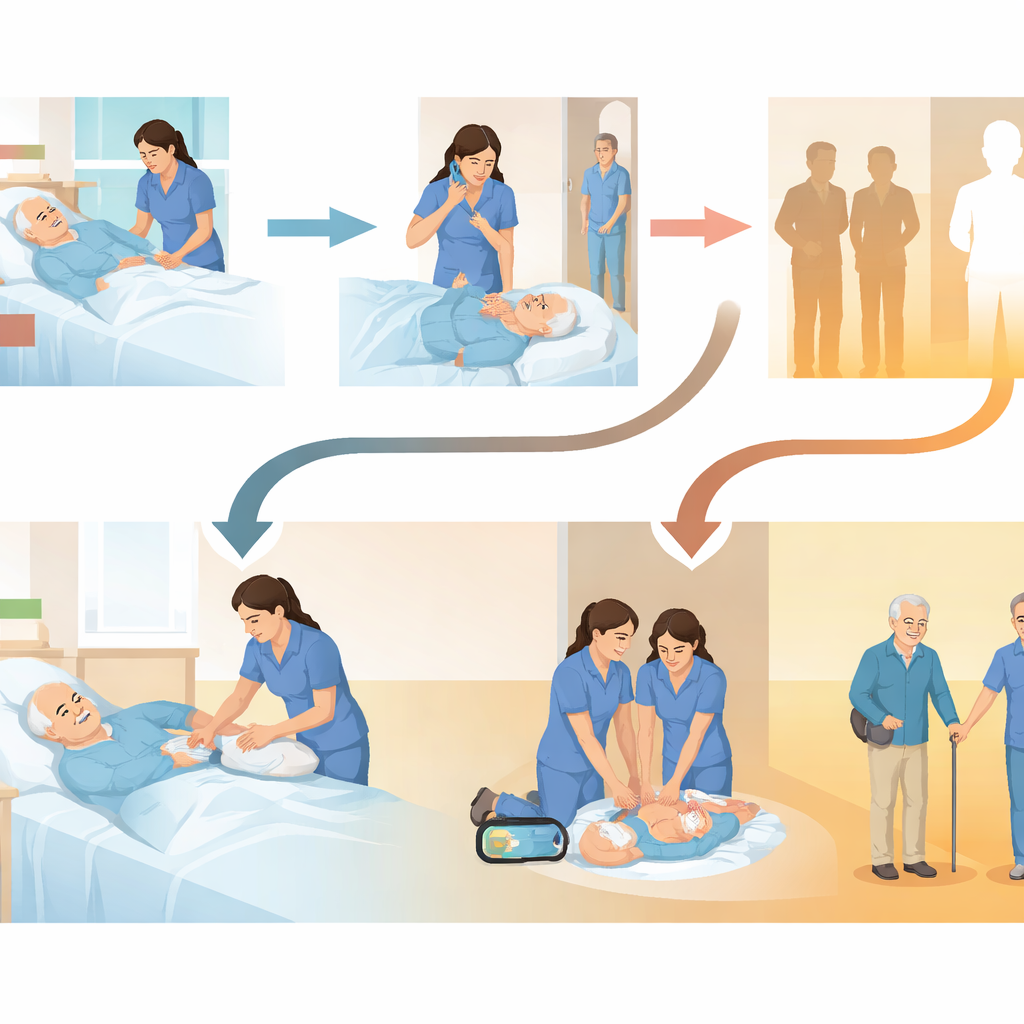
One of the most striking findings was that about 40% of all cases began with a pre‑arrest call. Staff noticed that something was wrong and called an ambulance, but the actual cardiac arrest occurred later, often before the ambulance arrived. In these pre‑arrest cases, chest compressions by staff before the ambulance arrived were far less common than in post‑arrest calls—about 43% versus 84%. Even when dispatchers tried to coach staff over the phone, chest compressions still happened less often after pre‑arrest calls. Survival told a similar story. Overall, survival at one month was already low, but it was highest during daytime (about 8%) and roughly cut in half at night. After adjusting for age, sex, and other factors, two patterns clearly predicted worse survival: arrests happening at night and emergencies that began with a pre‑arrest call.
The "Call‑and‑Wait" Problem
Why might calling early be linked to inaction? The authors suggest that once staff have phoned for an ambulance, they may feel their job is done and then simply wait, especially if the resident’s condition is still changing and a full collapse is not obvious. This "call‑and‑wait" mindset can delay recognition of cardiac arrest and slow the start of chest compressions. Nighttime makes things worse: fewer workers are on duty, procedures may require checking with a supervisor, and people may hesitate if they are unsure whether the resident really wants resuscitation. The study’s analyses showed that the combination of a pre‑arrest call and nighttime timing was particularly harmful, with the lowest rates of bystander action.
What Needs to Change in Care Facilities
For families and policymakers, the message is sobering but actionable. Simply encouraging staff to call an ambulance early is not enough. The study suggests that care facilities need clearer routines and training that prepare workers to monitor residents closely after an emergency call and to start chest compressions the moment a collapse is suspected, without waiting passively for professionals to arrive. Continuous guidance from dispatchers—staying on the line and repeatedly checking for changes—may help overcome hesitation, especially on thinly staffed night shifts. In plain terms, survival depends not only on dialing the emergency number quickly, but also on what staff do in the minutes after they hang up.
Citation: Toyama, G., Takei, Y., Omatsu, K. et al. Impact of EMS call timing on bystander CPR and survival after cardiac arrest in care facilities. Sci Rep 16, 7849 (2026). https://doi.org/10.1038/s41598-026-39110-5
Keywords: cardiac arrest, nursing homes, bystander CPR, emergency medical services, night shift care