Clear Sky Science · en
Identification of key hub genes in spinal cord ischemia-reperfusion injury via integrated bioinformatics analysis and in vivo validation
Why protecting the spinal cord matters
Paralysis after major aortic or spine surgery is one of the most feared complications in modern medicine. Even when blood flow to the spinal cord is restored in time, the tissue can paradoxically be injured by the very act of reperfusion, leaving patients with lasting weakness or loss of sensation. This study asks a practical question with far-reaching impact: which specific genes switch on or off during this type of spinal cord damage, and could they point the way to better prediction and treatment of paralysis?
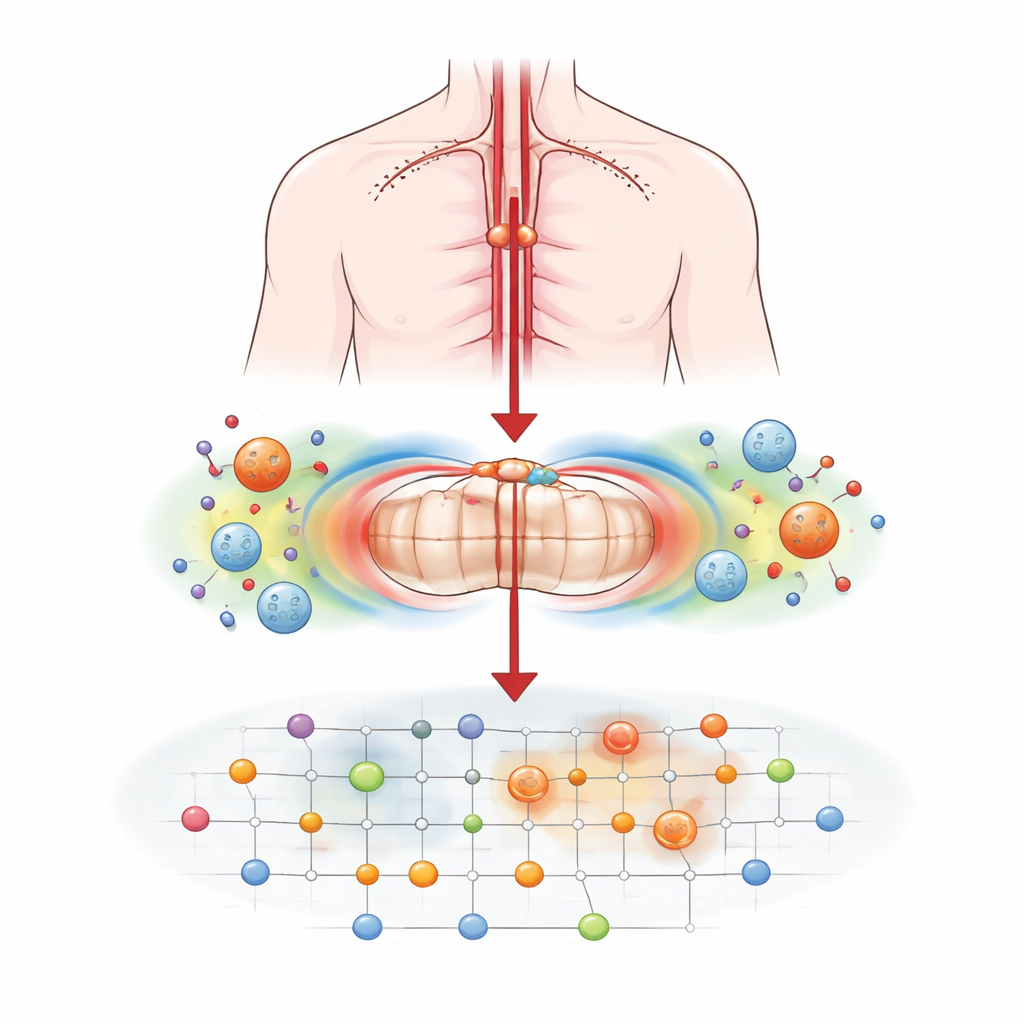
Looking for clues in gene activity maps
The researchers turned to powerful gene expression datasets from rats and mice that had undergone spinal cord ischemia-reperfusion, a controlled interruption and restoration of blood flow to the cord. By comparing injured tissue with healthy controls across several time points, they created detailed maps of which genes were more active and which were suppressed after injury. This approach, known as bioinformatics analysis, allowed them to sift through thousands of genes and focus on those whose activity changed strongly and consistently after damage.
Finding the core distress signals
From this large pool of candidates, the team narrowed down 99 “hub” genes that stood out as central players in the response to spinal cord injury. Many of these genes clustered into well-known biological signaling routes that control inflammation, cell death, and repair. In particular, three communication pathways inside cells—the MAPK, cAMP, and Rap1 pathways—appeared repeatedly and at multiple time points. These pathways help govern how cells react to stress, how immune cells are summoned, and whether damaged nerve cells die or attempt to recover, making them prime suspects in driving long-term harm after blood flow returns.
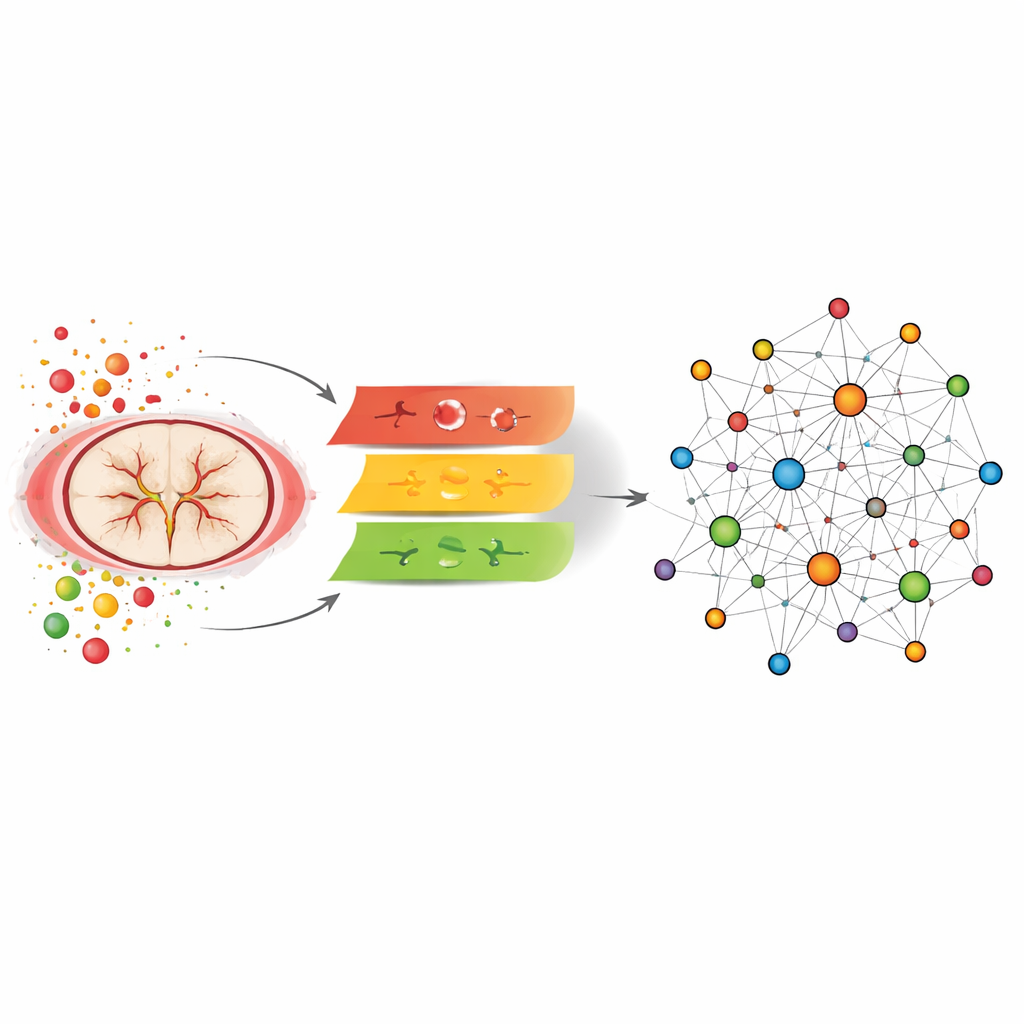
Building a network of key connectors
To understand how these genes interact, the researchers constructed protein–protein interaction networks, essentially wiring diagrams that show which gene products talk to each other. Several genes emerged as heavily connected hubs, including Ccl2, Mmp9, Itgb1, Timp1, Myd88, and Lgals3. These molecules are already known to influence inflammation, the integrity of the blood–spinal cord barrier, and tissue remodeling. Their prominent positions in the network suggest that they coordinate the wave of inflammatory and structural changes that follow ischemia-reperfusion, and that dialing down their activity might soften the secondary blow to spinal cord tissue.
Timing the genes that may guide recovery
Crucially, the study did not stop at computer predictions. The team created a rat model of spinal cord ischemia-reperfusion and directly measured the activity of eight especially promising, but previously underappreciated, genes at several early time points. They found that some genes, such as Tnc, Thbs2, and S100a10, were steadily elevated from one hour through two days after injury, suggesting a sustained role in inflammation and tissue remodeling. Others—Msn, Lcp1, Lcn2, and Akap12—spiked briefly soon after blood flow returned, hinting at an early emergency response. A final gene, Itga5, rose later, around 48 hours, aligning it with delayed processes such as immune cell infiltration and scar formation.
What this means for future treatment
For people at risk of paralysis after aortic repair or spinal surgery, this work offers a clearer picture of what is happening in the spinal cord at the molecular level. By identifying not only which genes are involved but also when they are most active, the study outlines a timetable of the injury process. The authors propose that the newly highlighted genes—especially those with persistent or precisely timed surges—could serve as early warning markers in blood or spinal fluid, or as targets for drugs that calm harmful inflammation while preserving repair. Although further laboratory and clinical studies are needed, this gene-level map provides a more precise starting point for designing therapies that protect the spinal cord during and after life-saving vascular and spinal procedures.
Citation: Gao, M., Liu, H., Sun, C. et al. Identification of key hub genes in spinal cord ischemia-reperfusion injury via integrated bioinformatics analysis and in vivo validation. Sci Rep 16, 8074 (2026). https://doi.org/10.1038/s41598-026-39101-6
Keywords: spinal cord ischemia, reperfusion injury, gene expression, neuroinflammation, bioinformatics