Clear Sky Science · en
Esculin improves wound healing in diabetic rats by modulating extracellular matrix remodeling and molecular pathways
Why stubborn wounds matter in diabetes
For many people with diabetes, a small cut on the foot or leg can quietly turn into a serious, long‑lasting wound. These chronic sores are slow to close, easily infected, and can even lead to amputation. Doctors have few truly effective treatments, so researchers are searching for medicines that can nudge the body’s repair systems back on track. This study tests a plant‑derived compound called esculin, used here as a skin ointment, to see whether it can help stubborn diabetic wounds in rats heal faster and more completely.
A plant compound under the microscope
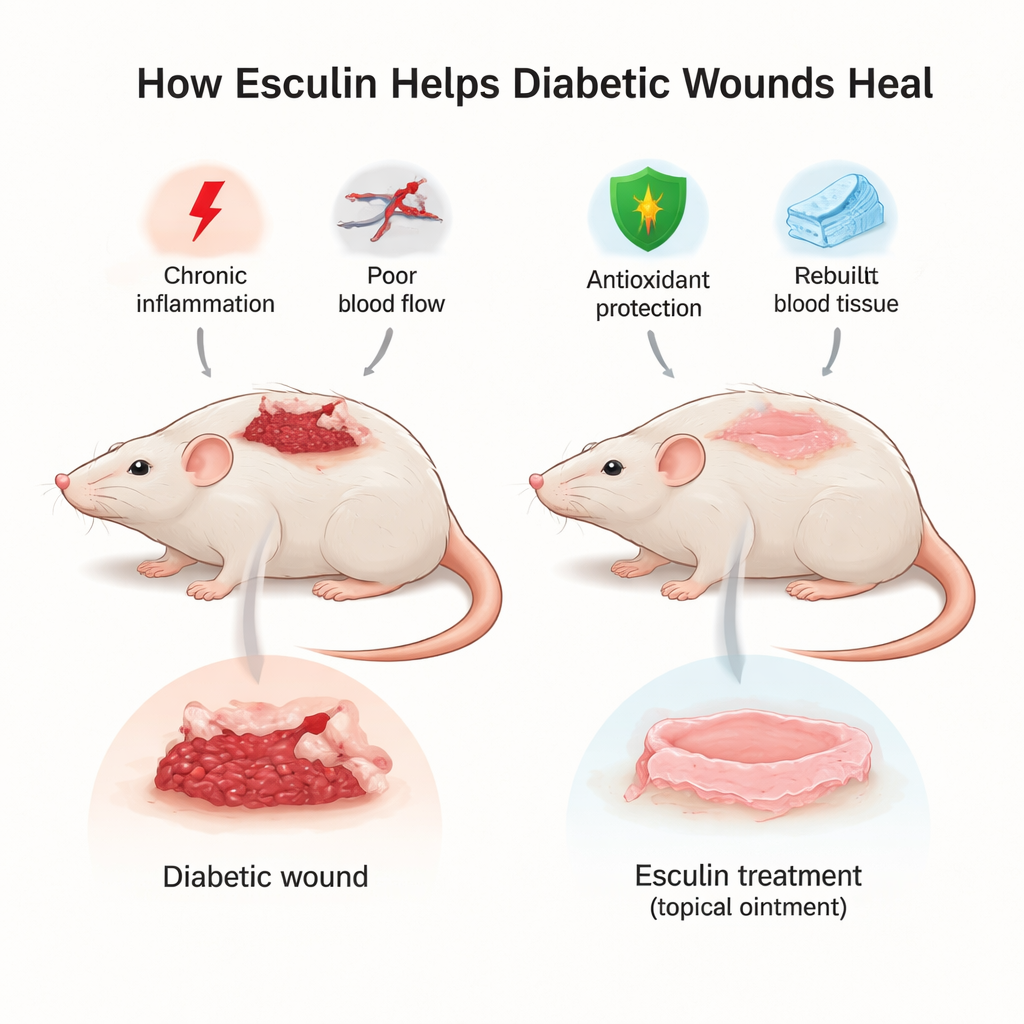
Esculin is a natural substance found in the horse‑chestnut tree. Earlier work showed that it can calm inflammation, mop up harmful “oxygen sparks” inside cells, and even improve some diabetes‑related problems in organs like the kidney and heart. The authors reasoned that these same traits might be useful in treating diabetic skin wounds, which are marked by chronic inflammation, high levels of damaging reactive oxygen molecules, and poor rebuilding of tissue. To explore this, they created identical round skin wounds on the backs of rats, some healthy and others made diabetic with a standard drug. Diabetic animals either received no treatment or were treated daily with a cream containing 5% or 10% esculin.
Watching wounds close over time
The team followed the wounds for three weeks, photographing them and examining tissue samples under the microscope on days 7, 14, and 21. In untreated diabetic rats, wounds closed slowly and stayed thick, inflamed, and disorganized. In contrast, wounds treated with esculin—especially the 10% cream—shrank more quickly and formed a smoother new surface layer of skin. Early on, treated wounds showed fewer invading white blood cells, more active fibroblasts (the cells that build new connective tissue), and a richer network of tiny new blood vessels. Later, there were more mature fibrocytes and thicker, better‑aligned collagen fibers, the “rebar” that gives healed skin its strength.
Calming damage and turning up repair signals
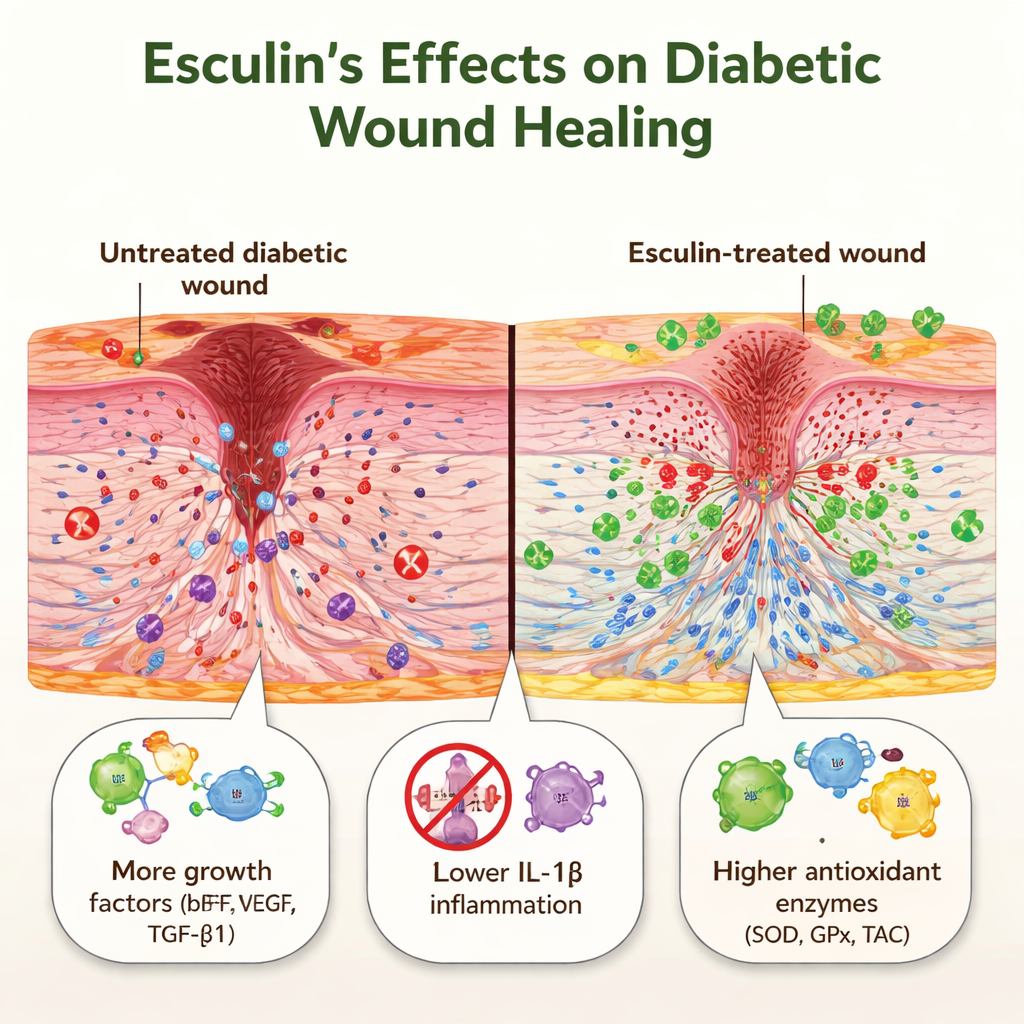
To understand what was happening inside the tissue, the researchers measured chemical markers of damage and defense. Diabetic wounds without treatment showed high levels of oxidative stress and enzymes linked to aggressive inflammation, along with weak antioxidant defenses. Esculin shifted this balance: antioxidant enzymes became more active, overall antioxidant capacity rose, and markers of fat damage and inflammatory enzyme activity fell, particularly in the 10% group. At the genetic level, esculin turned down IL‑1β, a key inflammatory signal, while boosting growth factors that drive repair—bFGF for fibroblast activity, VEGF for new blood vessel formation, and TGF‑β1 for remodeling of the wound’s supporting matrix.
Rebuilding the wound’s inner scaffolding
Healthy healing depends on rebuilding the extracellular matrix, the internal scaffold that supports cells. Here, the scientists measured hydroxyproline, a marker of collagen content, and glycosaminoglycans, sticky molecules that help hold water and growth factors in the tissue. Diabetic wounds lagged behind healthy ones on both counts. While esculin did not fully restore these levels to normal, treated wounds consistently showed more of these building blocks than untreated diabetic wounds, again with stronger effects at 10%. Under the microscope, this translated into a gradual shift from a loose, chaotic mesh of fibers toward a denser, more orderly structure that resembles healthy scar tissue.
What this could mean for future care
In simple terms, esculin helped diabetic wounds in rats heal faster and better by tackling several problems at once: it eased harmful inflammation, reduced chemical damage, encouraged the growth of new blood vessels, and supported the rebuilding and reshaping of the wound’s inner scaffold. The higher‑dose cream worked best and caused no obvious harm in this animal model. While this research is still far from the clinic—and was done in rats, not people—it suggests that plant‑based compounds like esculin could one day be blended into advanced dressings or ointments to give hard‑to‑heal diabetic wounds a much‑needed push toward recovery.
Citation: Almasifard, M., Hashemnia, M., Cheraghi, H. et al. Esculin improves wound healing in diabetic rats by modulating extracellular matrix remodeling and molecular pathways. Sci Rep 16, 7298 (2026). https://doi.org/10.1038/s41598-026-39098-y
Keywords: diabetic wound healing, esculin, oxidative stress, angiogenesis, extracellular matrix