Clear Sky Science · en
Optimizing augmented reality for visual communication design and user experience in public Art to support sustainable engagement
Why Digital Layers on Public Art Matter
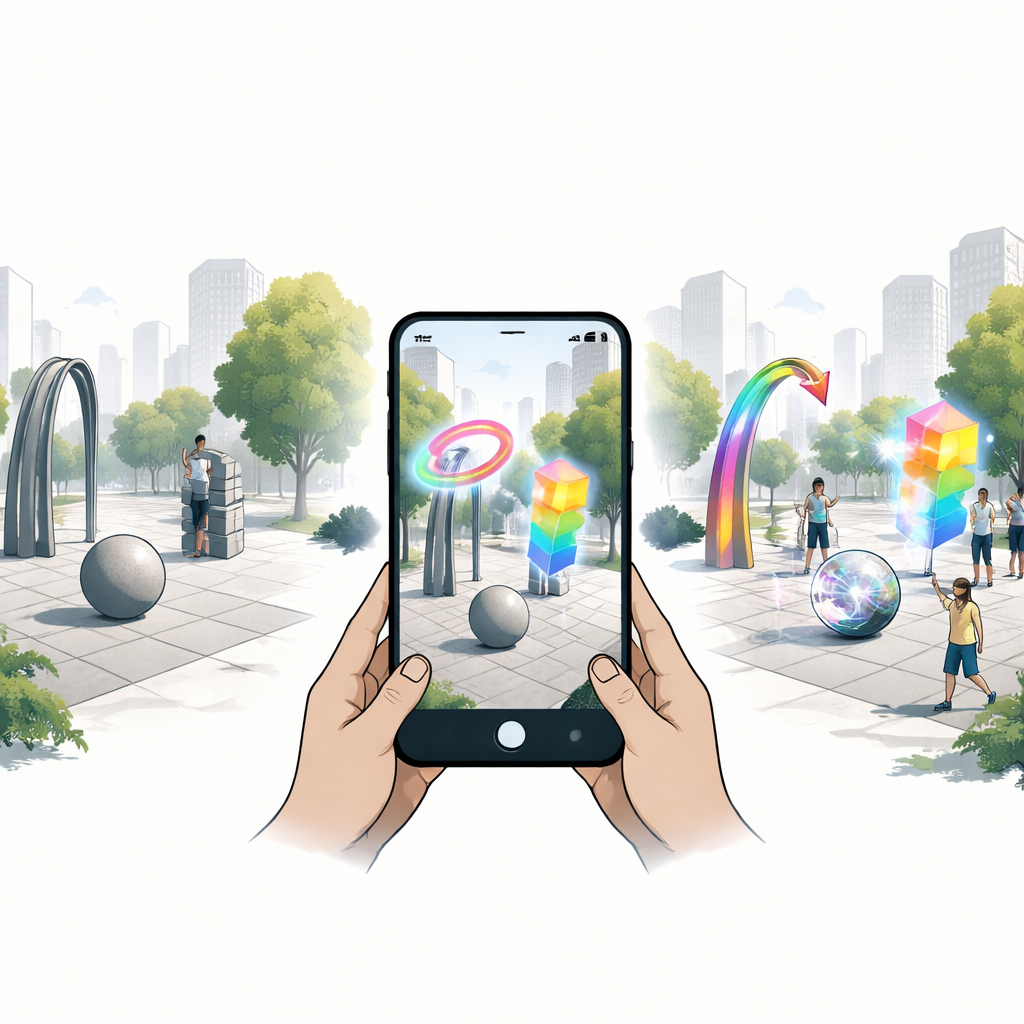
Imagine walking through a city plaza where sculptures don’t just sit quietly on their pedestals, but bloom into moving, glowing forms when you point your phone at them. This study explores how such augmented reality (AR) art can turn everyday public spaces into living storybooks. The authors wanted to know what makes these digital layers feel meaningful rather than gimmicky, and how to design them so people of different ages and tech comfort levels can enjoy rich, lasting experiences rather than brief “wow” moments.
Turning Streets and Parks into Story Spaces
Public art has always helped cities tell stories about who they are, from statues in plazas to murals on walls. AR adds a new twist by placing digital images and animations directly onto those real-world settings through a phone or tablet. Instead of visiting a museum, passersby can stumble upon an interactive narrative as part of their daily routine. The study describes how AR can layer historical scenes, personal memories, or imaginative worlds onto ordinary streets, allowing people to walk through stories that are tightly tied to the places around them.
Two Kinds of Digital Sculptures
The researchers compared two broad approaches to AR public art. In one, they “digitized” real sculptures: physical artworks were scanned and turned into 3D models, then extended with virtual elements that remain anchored to the original piece. In the other, they created “digital-native” sculptures that exist only in the virtual layer, without a physical object underneath. Sixty participants explored ten AR artworks in real outdoor settings using their phones. The team recorded how long people stayed, how often they came back, how they moved around the pieces, and how deeply they felt engaged and immersed.
What Makes an AR Artwork Feel Real and Inviting
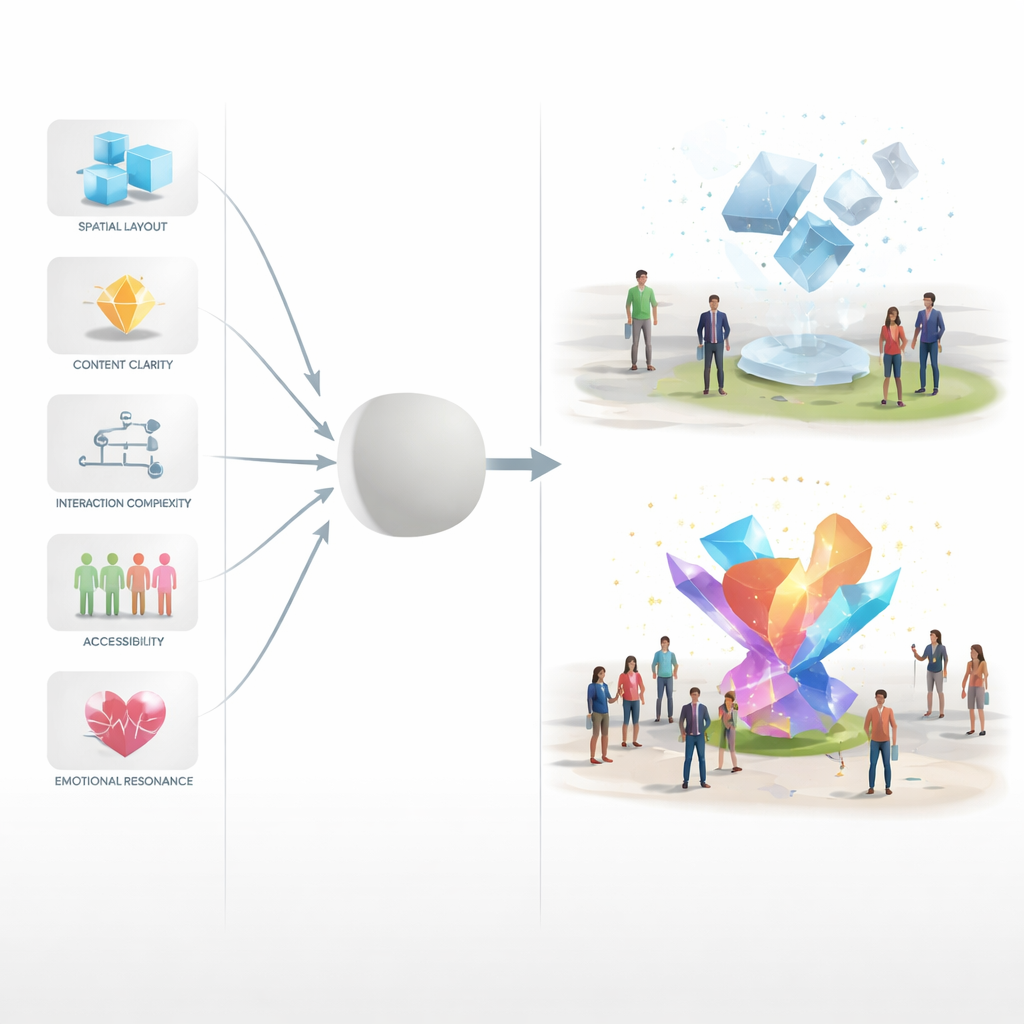
To make sense of people’s reactions, the authors built a simple design model centered on “friction” in the experience—anything that makes the interaction confusing, tiring, or emotionally flat. They focused on five ingredients: how well the digital piece fits its surroundings (spatial layout), how easy it is to use (interaction complexity), how understandable the visuals and story are (content clarity), how accessible it feels across ages and tech skills (accessibility), and how strongly it connects emotionally (emotional resonance). Using surveys and detailed interaction logs, they found that clear stories and strong emotional cues were the best predictors of deep immersion, while overly complicated interactions pushed people away. Crucially, AR works that were firmly tied to real, existing sculptures felt more “grounded” and drew people in for longer.
Digital Layers, Real Behavior
The numbers backed up what people said in interviews. Digitized AR sculptures scored higher on engagement, absorption, and sense of presence than purely digital ones. Participants often described these pieces as belonging naturally to the site, rather than floating on top of it. People spent more time moving around them, revisiting them, and paying attention to how the digital and physical forms related. When AR pieces were hard to control, slow to load, or visually confusing, users—especially those less comfortable with technology—lost interest more quickly. The study also noted that delivering these experiences through the mobile web, without special apps or physical markers, made them easier to access and less intrusive for the city environment.
Designing AR Art That Lasts
In the end, the paper concludes that the most successful AR public artworks are not the flashiest, but the ones that quietly respect both place and people. Grounding virtual content in recognizable physical forms, keeping interactions simple, and telling clear, context-aware stories all help visitors feel that the artwork truly lives in the space rather than on their screens. Because AR can add meaning without adding permanent structures, it can refresh public spaces in a lighter, more sustainable way. For artists, designers, and city planners, the message is straightforward: treat AR not as a tech showpiece, but as a careful craft of space, story, and emotion that invites the public to return again and again.
Citation: Al Qwaid, M., Sarker, M.T. & Karim, H.A. Optimizing augmented reality for visual communication design and user experience in public Art to support sustainable engagement. Sci Rep 16, 8126 (2026). https://doi.org/10.1038/s41598-026-39092-4
Keywords: augmented reality public art, immersive city experiences, digital sculpture design, urban storytelling, interactive visual media