Clear Sky Science · en
Exploring the chemical space around Cannabis sativa L. leaves as a source of bioactive compounds of pharmaceutical interest
Hidden Value in a Familiar Plant
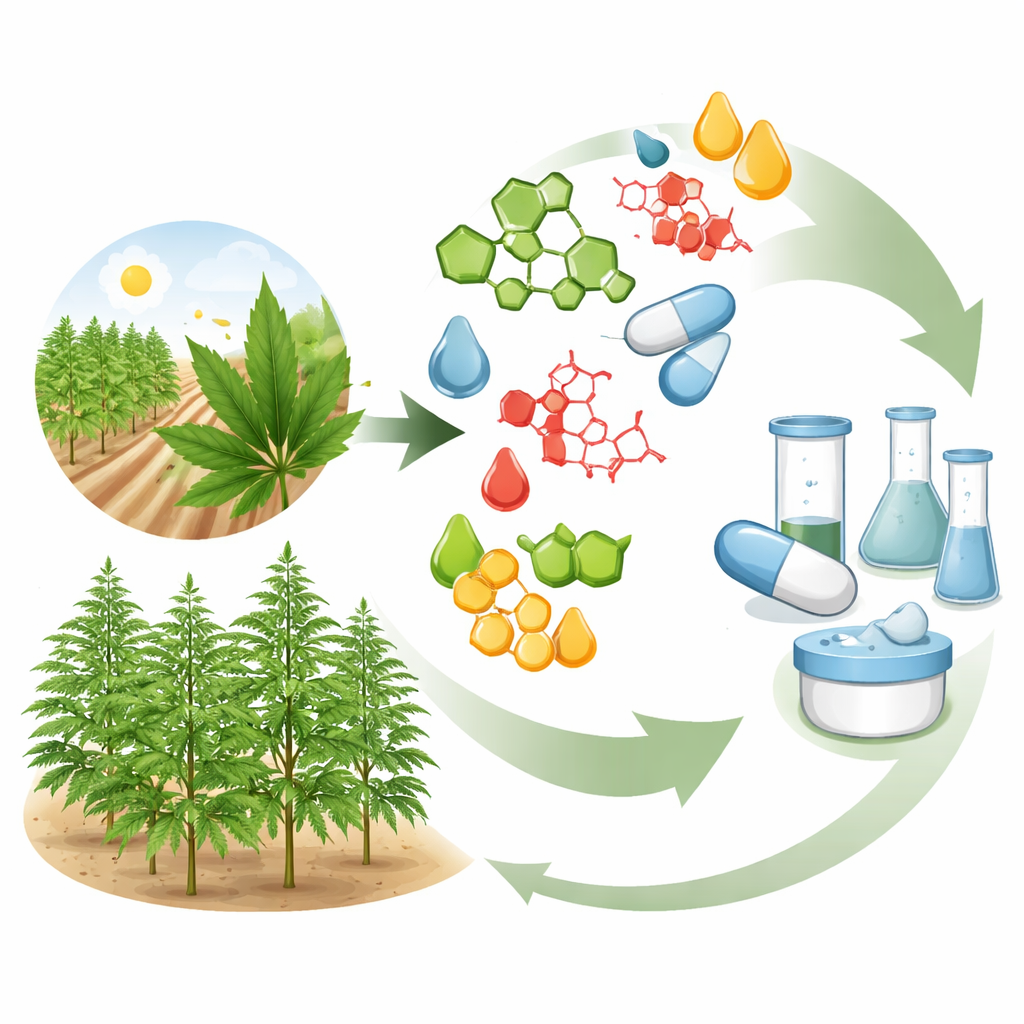
Cannabis is widely known for its flowers, which provide cannabinoids used in wellness and medicine. But in industrial hemp production, the leaves are often treated as little more than green trash. This study asks a simple question with big implications: are we throwing away a valuable pharmacy hidden in those discarded leaves? By carefully mapping what is inside hemp leaves from several non-intoxicating varieties, the authors show that this overlooked material is rich in compounds that could feed future drugs, vaccines, and health products—while supporting a more sustainable, circular use of the whole plant.
From Waste Pile to Resource
The researchers focused on leaves from four types of non-psychotropic hemp that differ in their dominant cannabinoid profile, including one variety that naturally produces almost no cannabinoids at all. Instead of assuming that leaves are chemically poor cousins of the prized flowers, they treated them as a mystery to be solved. Using a suite of modern analytical tools—high-resolution liquid chromatography, gas chromatography, and multiple detectors—they built a detailed “chemical fingerprint” for each variety. Their goal was not just to count the well-known ingredients, but to map the wider landscape of minor and overlooked molecules that might carry biological activity.
Colorful Plant Defenses with Health Potential
One major group of compounds they examined were polyphenols, plant-made molecules often involved in defense and known for antioxidant and anti-inflammatory effects in humans. In hemp leaves, a special subgroup called cannflavins stood out. These flavonoids, unique to cannabis, were consistently present across all samples, with cannflavin A generally more abundant than cannflavin B. Interestingly, the cannabinoid-free variety had the highest level of cannflavin A, suggesting that even plants bred to remove cannabinoids can still be rich in other potentially useful chemicals. The team also detected other phenolic compounds, including phenolic acids and phenolic amides, which together contribute to the leaves’ antioxidant profile and may support future nutraceutical or pharmaceutical uses.
A Broader Look at Hemp Cannabinoids
Although the study did not focus on the intoxicating components of cannabis, it still found that hemp leaves are far from cannabinoid-poor. The leaves contained mainly acidic forms of cannabinoids—the natural “raw” versions found in the plant—such as cannabidiolic acid (CBDA), cannabigerolic acid (CBGA), and cannabichromenic acid (CBCA). Depending on the variety, some leaves contained levels of these compounds comparable to those found in inflorescences, while others had only traces. Beyond the major cannabinoids, the authors cataloged a series of rare, structurally related molecules, adding depth to our understanding of hemp chemistry. Even though one variety was essentially cannabinoid-free, the others showed that leaves could become a secondary source of these high-value compounds, reducing reliance on flowers alone.
New Light on Plant Oils and Fragrances
Beyond polyphenols and cannabinoids, the team turned to the oily fraction of hemp leaves. They identified long‑chain alcohols known as policosanols, which have been studied for cholesterol and vascular effects, though in lower amounts than in hemp flowers. The most striking finding here was the first clear identification and targeted extraction of squalene from hemp leaves. Squalene is a valuable triterpenoid commonly used as an ingredient in vaccine adjuvants and cosmetic formulations; it is still often sourced from shark liver, raising ethical and environmental concerns. The authors developed an optimized, relatively eco‑friendly extraction method using ethyl acetate and showed that hemp leaves contain more squalene than the plant’s inflorescences. They also mapped the leaves’ volatile terpenes—the aromatic components that give cannabis its smell—finding a shared backbone of common sesquiterpenes such as β‑caryophyllene, α‑humulene, and α‑bisabolol, along with variety‑specific nuances that could matter for future product design.
Turning Green Waste into Future Medicines
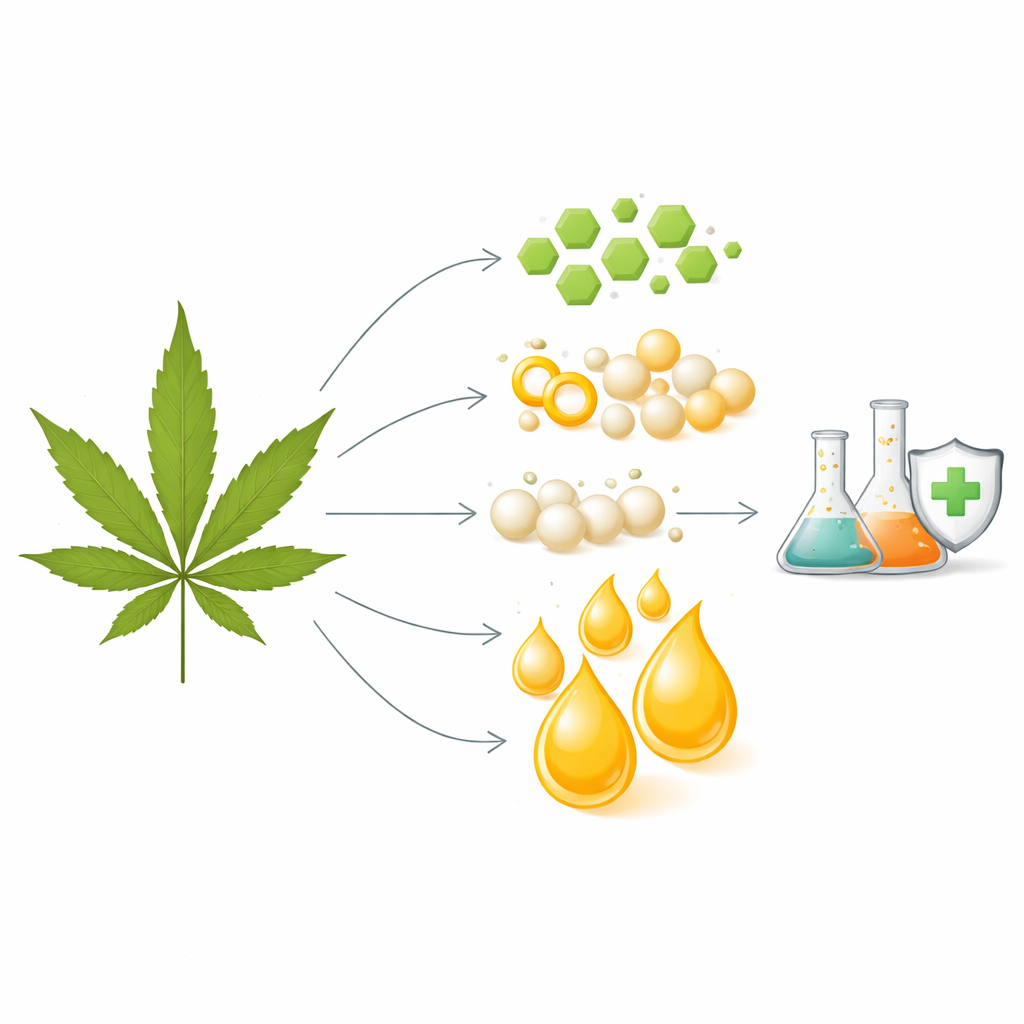
Taken together, this work reframes hemp leaves from an agricultural leftover into a chemically diverse reservoir of health‑relevant molecules: unique flavonoids, cannabinoids, policosanols, terpenes, and, notably, squalene. By characterizing these compounds and showing that they can be recovered with practical extraction methods, the study supports a circular economy approach where more of the plant is put to good use. For lay readers, the key message is that what we once discarded as waste may help supply ingredients for future drugs, vaccines, and wellness products—while easing pressure on animal sources and making better use of every harvested field of hemp.
Citation: Marani, M., Camola, A., Fantino, C. et al. Exploring the chemical space around Cannabis sativa L. leaves as a source of bioactive compounds of pharmaceutical interest. Sci Rep 16, 7994 (2026). https://doi.org/10.1038/s41598-026-39088-0
Keywords: hemp leaves, cannabinoids, cannflavins, squalene, circular economy