Clear Sky Science · en
Nanoarchitectonics of aptamer-based electrochemical sensor using electrospun carbon nanofibers and Au nanoparticles for cd (II) analysis
Why keeping an eye on a hidden poison matters
Cadmium is a metal you rarely hear about, yet it can quietly build up in our food and drinking water, damaging kidneys, bones, and other organs over time. Checking for this contaminant today usually requires large, expensive machines in specialized labs. This study describes a pocket-sized electronic sensor that can spot extremely low levels of cadmium in water, offering a quicker and more practical way to protect public health and the environment.
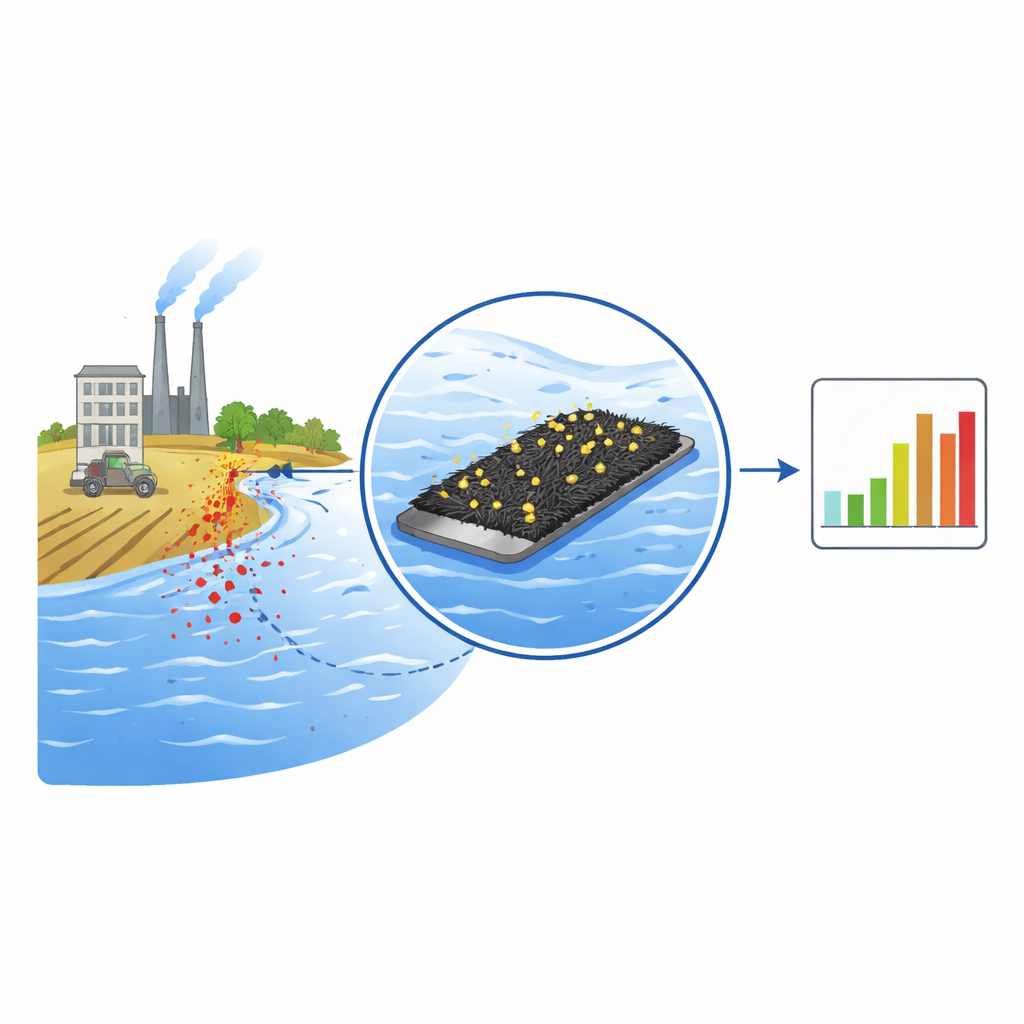
A tiny metal with a big health footprint
Cadmium pollution comes from industry, fertilizers, and burning fuel, and it lingers in soil, water, and air. Because it accumulates in plants, animals, and people, international agencies have set strict limits for how much is allowed in food and drinking water. Standard testing methods, such as atomic absorption and mass spectrometry, are accurate but slow, expensive, and require trained personnel. The authors argue that communities need simpler tools—ones that can be used closer to the source, such as at a water treatment plant or in the field—to flag cadmium before it reaches our taps and plates.
Building a smarter sensing surface
The heart of the new device is a disposable carbon strip that has been carefully “nano‑engineered” to become much more sensitive to cadmium. First, the researchers use a technique called electrospinning to draw a plastic solution into an ultrafine web of fibers, thousands of times thinner than a human hair. These fibers are then heated in a controlled way until they turn into carbon, creating a strong, porous mat with a very large surface area. This carbon nanofiber layer is placed on top of a small printed electrode and decorated with tiny gold particles. The gold not only boosts the electrical performance of the strip but also serves as an anchor for the biological recognition layer.
Teaching the sensor what to look for
To make the strip selective for cadmium, the team uses an aptamer, a short, single strand of DNA folded into a shape that grips cadmium ions in preference to other metals. They design this aptamer with a tail made of repeated building blocks that naturally stick to gold, so it can attach directly and densely to the gold particles without the special chemical hooks commonly used in such devices. When the sensor is dipped into a water sample, cadmium ions bind to the aptamer and change its shape. This rearrangement subtly blocks the flow of electrons at the electrode surface, which the instrument reads as a change in electrical current.

How well the device performs in action
By measuring these current changes, the researchers show that their sensor can detect cadmium across a very low concentration range—from half to ten parts per billion—with a detection limit of just 0.05 parts per billion. That is well below many regulatory limits and compares favorably with other advanced cadmium sensors. The device responds consistently from one strip to another and maintains almost all of its performance after a month in cold storage. Importantly, the sensor still recognizes cadmium even when other common metal ions, such as calcium, magnesium, lead, copper, and zinc, are present. When tested in tap water samples spiked with known amounts of cadmium, it recovered nearly all of the added metal, showing that it can work reliably in real‑world conditions.
From lab bench to everyday water checks
Put simply, the study demonstrates a small, low‑sample‑volume sensor that combines a spongy carbon nanofiber layer, gold nanoparticles, and a cadmium‑grabbing DNA strand to achieve fast, sensitive, and selective detection of a dangerous pollutant. While it still requires a basic electronic reader, the sensing strips themselves are inexpensive and disposable, making them suitable for routine monitoring outside major laboratories. If developed further into a user‑friendly kit, this approach could help water utilities, food producers, and even local communities track cadmium contamination more easily and take action before it becomes a health threat.
Citation: Niknam, S., Shabani-Nooshabadi, M. & Adabi, M. Nanoarchitectonics of aptamer-based electrochemical sensor using electrospun carbon nanofibers and Au nanoparticles for cd (II) analysis. Sci Rep 16, 9271 (2026). https://doi.org/10.1038/s41598-026-39085-3
Keywords: cadmium detection, electrochemical sensor, aptamer, gold nanoparticles, carbon nanofibers