Clear Sky Science · en
Integrated virtual screening, ADMET profiling, and molecular dynamics simulations of novel natural HDAC6 inhibitors with the potential to ameliorate skeletal muscle degeneration
Why Protecting Our Muscles Matters
Skeletal muscle is not just for lifting weights or running; it is the body’s largest store of protein, a major driver of metabolism, and essential for everyday movement. When muscles waste away due to aging, disease, or inactivity, people lose strength, independence, and quality of life. This study explores a computer-guided way to discover new drug candidates from natural substances that might slow or prevent this kind of muscle loss by targeting a key molecular switch inside muscle cells.
A Problem Molecule in Weakening Muscles
Inside muscle fibers, a protein called HDAC6 helps control the organization of internal scaffolding and the breakdown of other proteins. Under normal conditions, it contributes to healthy muscle maintenance. But when HDAC6 activity becomes excessive, it destabilizes the microtubule network that helps maintain muscle shape and the connections between nerves and muscle fibers. This disruption promotes protein damage and shrinkage of the muscle. Animal studies have shown that blocking HDAC6 can preserve muscle size and improve function, making it an attractive drug target for combating muscle atrophy.
Looking to Nature for New Drug Ideas
Many existing HDAC6 blockers were designed synthetically and can cause unwanted side effects or lack precision for this specific target. The authors turned instead to nature’s chemical diversity, reasoning that natural products often have structures that interact gently yet effectively with human proteins. They tapped into the SuperNatural 3.0 collection, which contains nearly half a million distinct natural compounds, and asked a simple question: which of these molecules might nestle into the active groove of HDAC6 in a way that shuts it down while also behaving like a good future medicine? 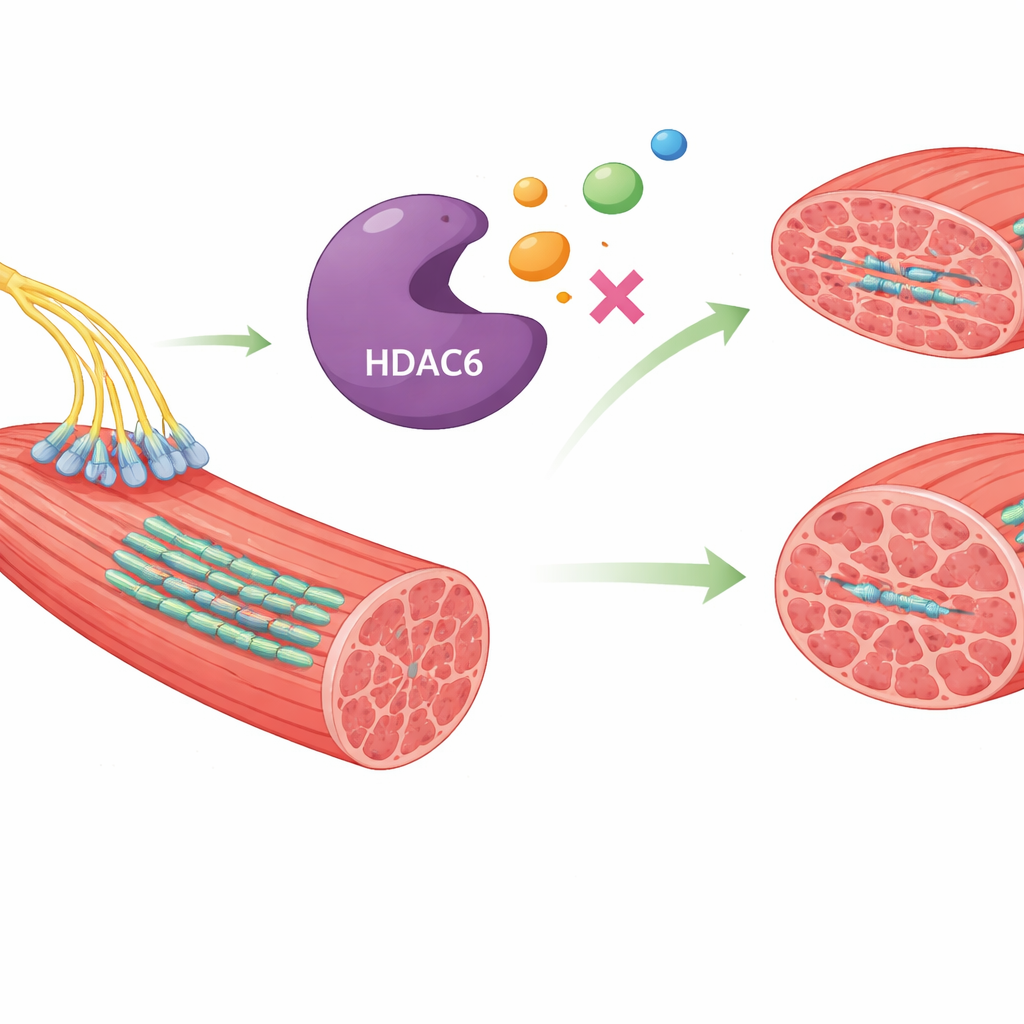
High-Speed Computer Screening of Hundreds of Thousands of Molecules
To answer this, the team used an integrated “virtual screening” pipeline. First, they prepared a detailed three-dimensional model of HDAC6’s catalytic tunnel, based on an experimental structure of the enzyme bound to a known inhibitor. Then, using specialized software, they docked 449,058 natural compounds into this tunnel, scoring how snugly and favorably each one fit. From this huge initial pool, 146 molecules performed better than the reference drug trichostatin A. The researchers then applied a series of filters that mimic what drug developers look for: the right size and polarity, the ability to be absorbed through the gut, acceptable solubility, limited predicted toxicity, and realistic prospects for chemical synthesis. After these steps, two standout candidates emerged, labeled SN0000021 and SN0000043.
Testing Stability and Behavior in a Virtual Cell
Finding a good docking pose is not enough; potential drugs must remain bound under the constant motion of real biological systems. To probe this, the team ran long molecular dynamics simulations, essentially high-resolution movies of the HDAC6–compound complexes over 200 billionths of a second. They monitored how much the protein backbone wobbled, how deeply each compound sat within the tunnel, how exposed it was to surrounding water, and how tightly the complex stayed packed. Both natural compounds formed stable, long-lasting interactions with key amino acids that are known to control HDAC6’s activity. They showed lower fluctuations and tighter packing than the reference inhibitor, suggesting a more robust fit. Advanced energy calculations, which estimate how favorable the binding is from a thermodynamic perspective, further confirmed that these two molecules are likely to bind more strongly than the control drug. 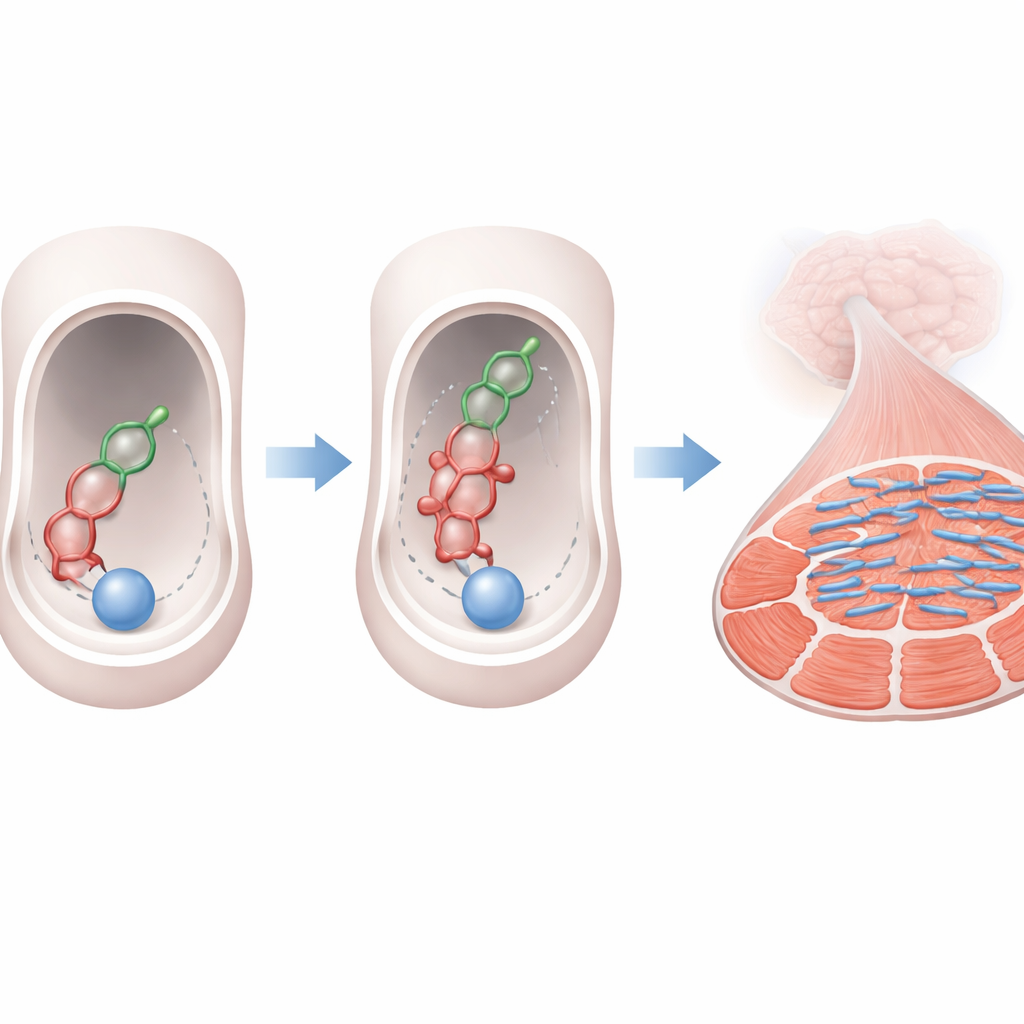
From Computer Hits to Future Muscle-Saving Medicines
For a non-specialist, the bottom line is straightforward: using only computer tools, the researchers sifted through an enormous catalog of natural substances and pinpointed two that appear particularly well suited to latch onto and silence HDAC6, a protein linked to muscle wasting. These candidates not only bind tightly in simulations but also show favorable predicted absorption, distribution, and safety profiles, making them promising starting points for new medicines. The work does not yet prove that these molecules help real muscles; that will require laboratory tests on the purified enzyme, cells, and animal models. But the study provides a powerful roadmap for how digital screening of natural products can uncover potential therapies to protect skeletal muscle from degeneration.
Citation: Ahmad, K., Ahmad, S.S. & Choi, I. Integrated virtual screening, ADMET profiling, and molecular dynamics simulations of novel natural HDAC6 inhibitors with the potential to ameliorate skeletal muscle degeneration. Sci Rep 16, 7840 (2026). https://doi.org/10.1038/s41598-026-39066-6
Keywords: skeletal muscle atrophy, HDAC6 inhibition, natural product drug discovery, virtual screening, muscle regeneration