Clear Sky Science · en
Ex vivo HNSCC clinical studies using saliva and antiviral or antibacterial chewing gums reveal reduction in carcinogenic microbes
Chewing Gum That Could Help Fight Mouth Cancer
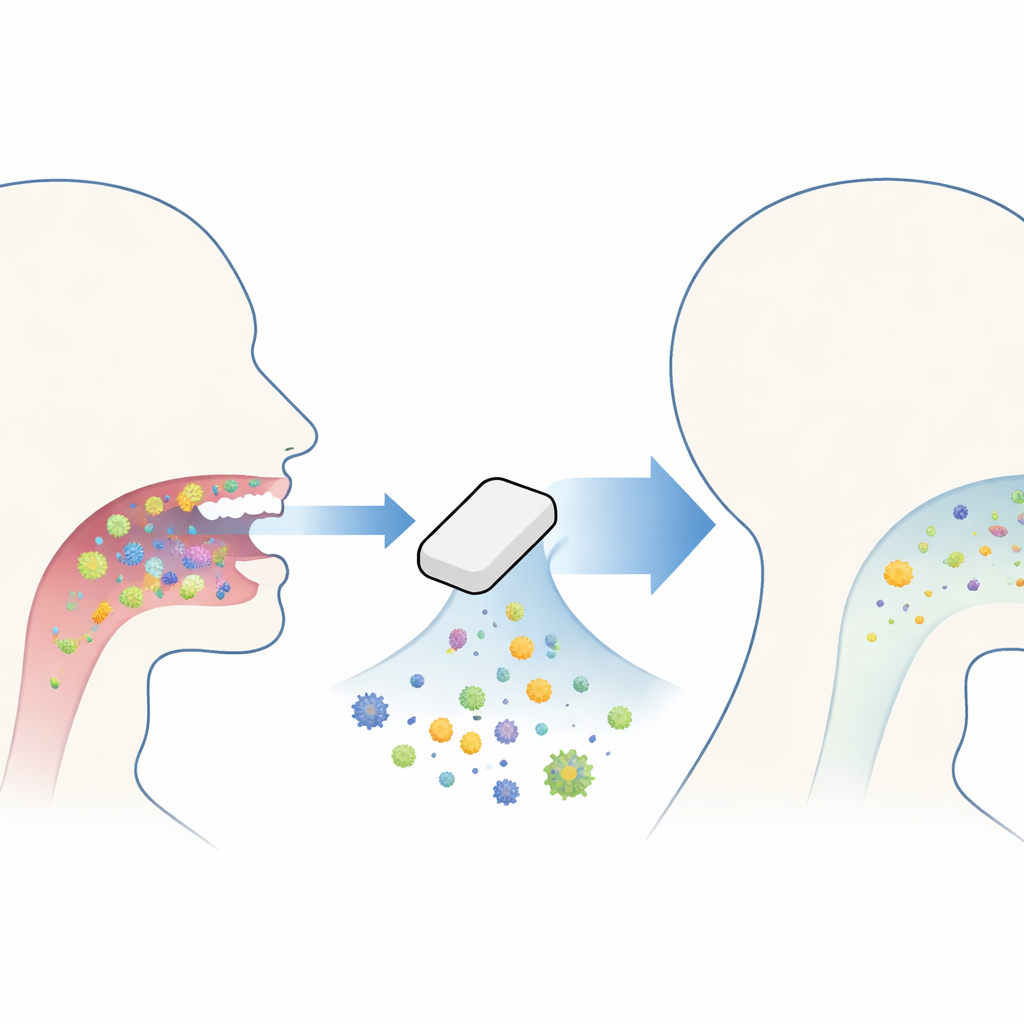
Most of us think of chewing gum as a bit of harmless habit. This study suggests it could become something more: a simple, low-cost way to strip dangerous germs from the mouth that are linked to aggressive head and neck cancers. By loading gum with virus-trapping and bacteria-killing proteins made in plants, the researchers show that a short chew can sharply cut levels of cancer‑associated microbes in saliva taken from patients.
Why Certain Mouth Germs Matter
Head and neck squamous cell carcinoma, a common group of mouth and throat cancers, is tightly linked to both viruses and bacteria that live in the oral cavity. High levels of human papillomavirus (HPV), especially the high‑risk HPV‑16 type spread mainly through oral sex, are associated with poorer survival. Two anaerobic bacteria, Porphyromonas gingivalis and Fusobacterium nucleatum, also foster a tumor‑friendly environment by promoting inflammation, cell growth, invasion, and by helping tumors evade the immune system. Standard cancer treatments target the tumor itself but largely ignore these microbes, even though their abundance in the mouth and tumor tissue predicts worse outcomes.
Turning Beans and Peptides into Oral Defenses
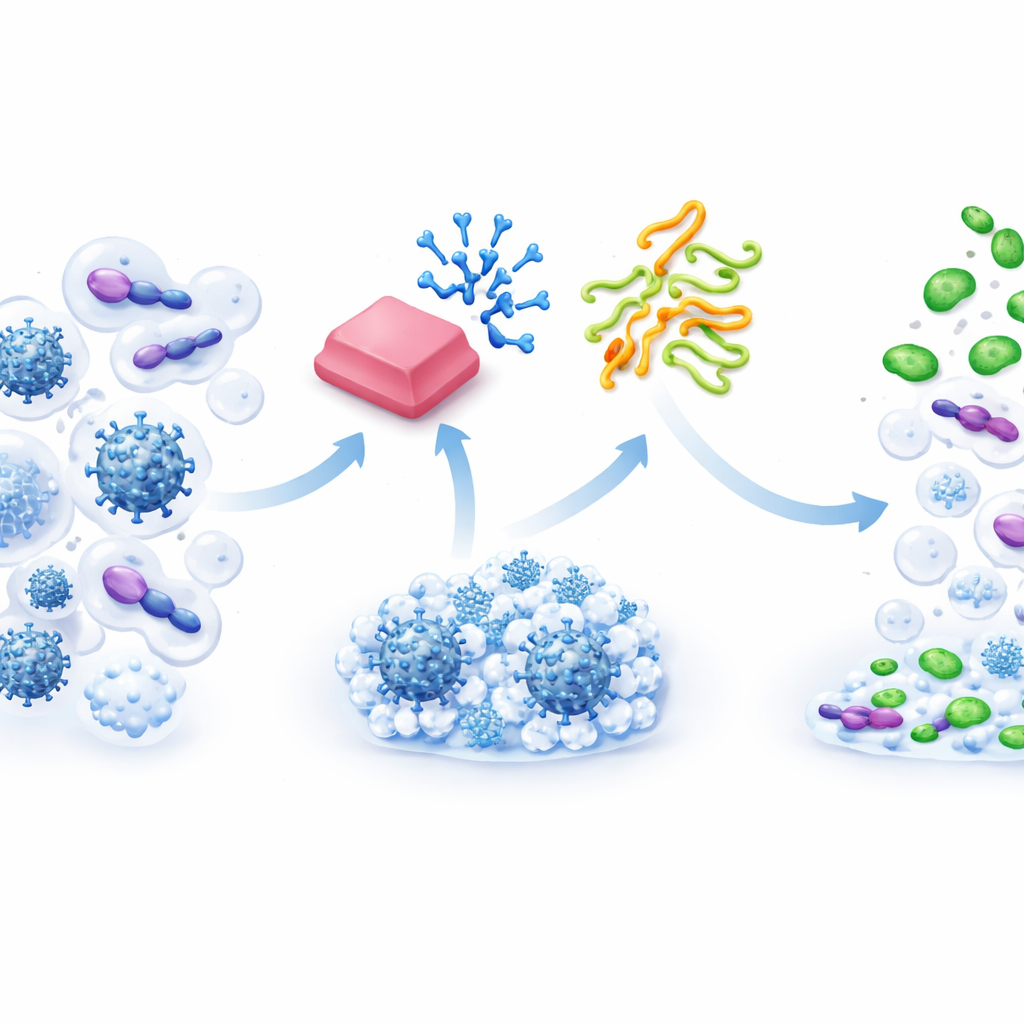
The team built on earlier work using plant‑made proteins as medicines. One key ingredient is a lectin from lablab beans, called FRIL, which sticks to sugar structures on the surface of many viruses. When FRIL meets virus particles, it crosslinks them into large clumps that can no longer enter cells and can also block viruses that have already been taken up inside cells. The second ingredient is protegrin‑1, a short antimicrobial peptide that punches holes in certain bacterial membranes. Both proteins can be produced cheaply in plants and incorporated into a chewing gum, which slowly releases them into saliva as it is chewed.
Testing the Gum on Patient Saliva
This was an ex vivo study, meaning the researchers worked with saliva and oral-rinse samples collected from patients rather than treating people directly. They gathered samples from individuals with head and neck cancer and from cancer‑free volunteers at two medical centers. First, they confirmed that HPV and cancer‑linked bacteria were far more abundant in the cancer group: HPV was detectable in all saliva samples and three‑quarters of oral-rinse samples, while P. gingivalis and F. nucleatum counts were 100–1000 times higher than in controls. Unlike DNA tests that cannot distinguish live from dead microbes, the team cultured bacteria on selective plates and used an antibody‑based test to measure intact virus particles.
How Much the Gum Reduced Harmful Microbes
When saliva or oral-rinse samples from cancer patients were mixed with bean gum extract, roughly 80–93% of HPV particles became trapped in aggregates, greatly lowering the free virus remaining in solution. Adding protegrin‑1 to the bean gum created a powerful combination against the two key anaerobic bacteria. A single one‑hour exposure of patient samples to this cocktail cut P. gingivalis and F. nucleatum by 4–6 orders of magnitude—more than 99.97%—in both saliva and mouth-rinse samples. Importantly, many common mouth bacteria such as Streptococcus species, which help maintain a healthy oral ecosystem and are shielded by protective capsules, were only modestly affected. Another opportunistic microbe, Leptotrichia buccalis, was also strongly suppressed, while yeast such as Candida albicans were seen only in a minority of cancer samples and were not the main target of this work.
What This Could Mean for Patients
Because the study was done outside the body, it does not yet show that chewing this gum will lengthen lives or prevent tumors. But the findings demonstrate that a single, realistic dose of plant‑made FRIL and protegrin‑1 can sharply reduce live cancer‑associated viruses and bacteria in real patient samples while sparing much of the normal mouth flora. The ingredients are stable at room temperature and inexpensive to produce, suggesting that medicated gums could become practical add‑on tools alongside surgery, radiation, and drugs. If future clinical trials confirm that regularly using such gum lowers the microbial burden in the mouth and slows cancer development or recurrence, something as ordinary as chewing gum might one day help curb a deadly disease.
Citation: Daniell, H., Wakade, G., Singh, R. et al. Ex vivo HNSCC clinical studies using saliva and antiviral or antibacterial chewing gums reveal reduction in carcinogenic microbes. Sci Rep 16, 7886 (2026). https://doi.org/10.1038/s41598-026-39062-w
Keywords: oral cancer, HPV, oral microbiome, chewing gum therapy, plant-based biologics