Clear Sky Science · en
KLHDC4 serves as a novel prognostic biomarker and drives tumor progression via PI3K/AKT signaling in clear cell renal cell carcinoma
Why this matters for patients and families
Clear cell renal cell carcinoma is the most common and aggressive form of kidney cancer. Many patients still face poor outcomes, even with modern targeted drugs and immunotherapy. This study uncovers a little-known protein, KLHDC4, as a new warning signal for dangerous tumors and a possible guide to choosing better treatments. It also points to a vulnerable wiring inside cancer cells that future drugs might exploit.
A small protein with a big impact
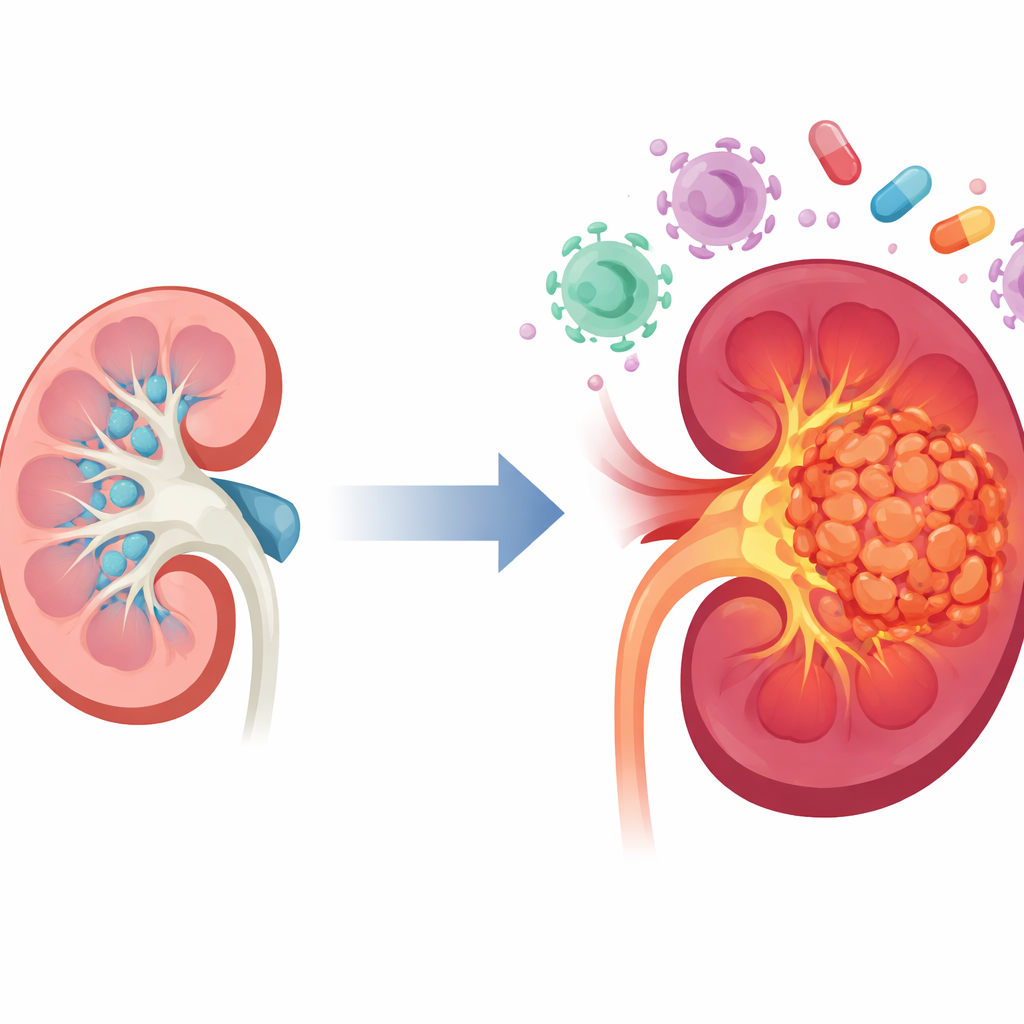
KLHDC4 belongs to a small family of proteins involved in basic cell housekeeping, but its role in cancer has been largely overlooked. Using large public datasets that include thousands of tumors and normal tissues, the researchers showed that KLHDC4 levels are abnormally high in many cancers. In clear cell kidney cancer in particular, both the RNA message and the protein itself are strongly increased in tumor samples compared with nearby healthy kidney tissue, as confirmed by staining patient biopsies under the microscope.
Linking KLHDC4 to survival and the tumor neighborhood
The team next asked whether KLHDC4 levels track with how patients fare. By analyzing survival data from major cancer databases, they found that people with clear cell kidney cancer whose tumors had more KLHDC4 tended to live shorter lives, even after accounting for age and tumor stage. They built a prediction tool that combines KLHDC4 with standard clinical measures and found it could estimate one-, three-, and five‑year survival with high accuracy. Single‑cell sequencing and immune profiling then revealed that tumors rich in KLHDC4 have a distinct immune environment: more killer T cells and natural killer cells are present, but so are suppressive regulatory T cells and certain mutation patterns, suggesting an immune system that is busy yet held back.
Guiding responses to modern therapies
Because immunotherapy and tyrosine kinase inhibitors are standard treatments for advanced kidney cancer, the authors tested whether KLHDC4 might help predict who benefits most. High KLHDC4 expression was closely associated with higher levels of several immune “brakes” on tumor and immune cells, such as PD‑1 and PD‑L1. In an independent patient group treated with an immune checkpoint blocker, KLHDC4 levels helped distinguish responders from non‑responders. Looking at drug sensitivity data, tumors with more KLHDC4 tended to be more easily suppressed by specific targeted medicines, especially the drug axitinib, hinting that KLHDC4 could help tailor drug choice.
How KLHDC4 powers cancer growth
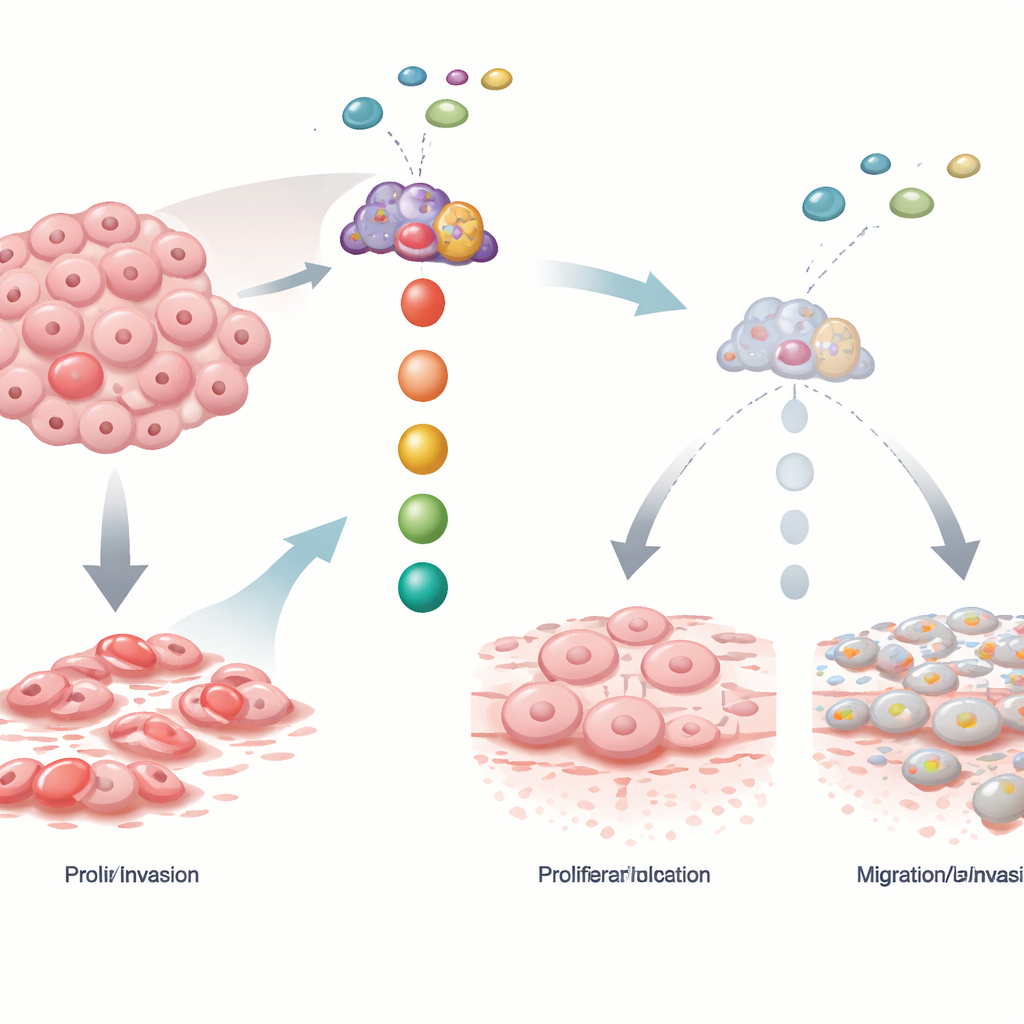
To move from association to cause, the researchers directly altered KLHDC4 in kidney cancer cells grown in the lab and in mouse models. When they reduced KLHDC4, cancer cells divided more slowly, moved less, and were less able to invade through barriers, and tumors in mice grew smaller. When they forced cells to make more KLHDC4, the opposite occurred: faster growth, more movement, and larger tumors. By sequencing RNA and examining key proteins, they traced these changes to a major growth‑control route inside cells called the PI3K/AKT pathway, which acts like a central accelerator for survival, metabolism, and division. KLHDC4 boosted the “on” signals in this pathway, while its loss dampened them.
Turning a vulnerability into a target
Because the PI3K/AKT pathway already attracts interest from drug developers, the team tested whether blocking it could blunt KLHDC4’s effects. Treating KLHDC4‑rich cells with a PI3K inhibitor partially reversed their aggressive behavior, slowing proliferation and invasion. Finally, using computer‑based docking, the authors screened more than 1,600 approved drugs against the three‑dimensional structure of KLHDC4. They identified several candidates, including the antiviral drug ledipasvir, that appear to bind tightly to KLHDC4 and might serve as starting points for future, more specific inhibitors.
What this means going forward
In everyday terms, this study singles out KLHDC4 as a new “danger marker” in clear cell kidney cancer: tumors that make more of it are more likely to behave badly, but they may also be especially vulnerable to certain immunotherapies and targeted drugs. By tying KLHDC4 to a well‑known growth switch inside cancer cells, the work explains how this marker drives disease and suggests ways to shut it down. While more clinical studies are needed, KLHDC4 now emerges as both a promising guide for prognosis and treatment choice and a potential direct target for future kidney cancer therapies.
Citation: Xu, Q., Chen, W., Cao, S. et al. KLHDC4 serves as a novel prognostic biomarker and drives tumor progression via PI3K/AKT signaling in clear cell renal cell carcinoma. Sci Rep 16, 8223 (2026). https://doi.org/10.1038/s41598-026-39061-x
Keywords: clear cell kidney cancer, KLHDC4, cancer biomarkers, PI3K AKT pathway, immunotherapy response