Clear Sky Science · en
Sequential biosorptive-degradative remediation of methylene blue from polluted soil and wastewater by a newly isolated Bacillus safensis SMAH biomass: optimization, kinetics, isotherms and thermodynamics assessments
Why cleaning dyed soil matters
Bright synthetic dyes make our clothes and leather goods eye-catching, but when these colors leak into soil and water, they can linger for years and harm living things. One of the most common dyes, methylene blue, is widely used in textiles and tanning. This study explores a nature-based way to pull this stubborn dye out of polluted soil and break it down, using a newly discovered strain of harmless bacteria instead of expensive chemicals or energy-hungry machines. 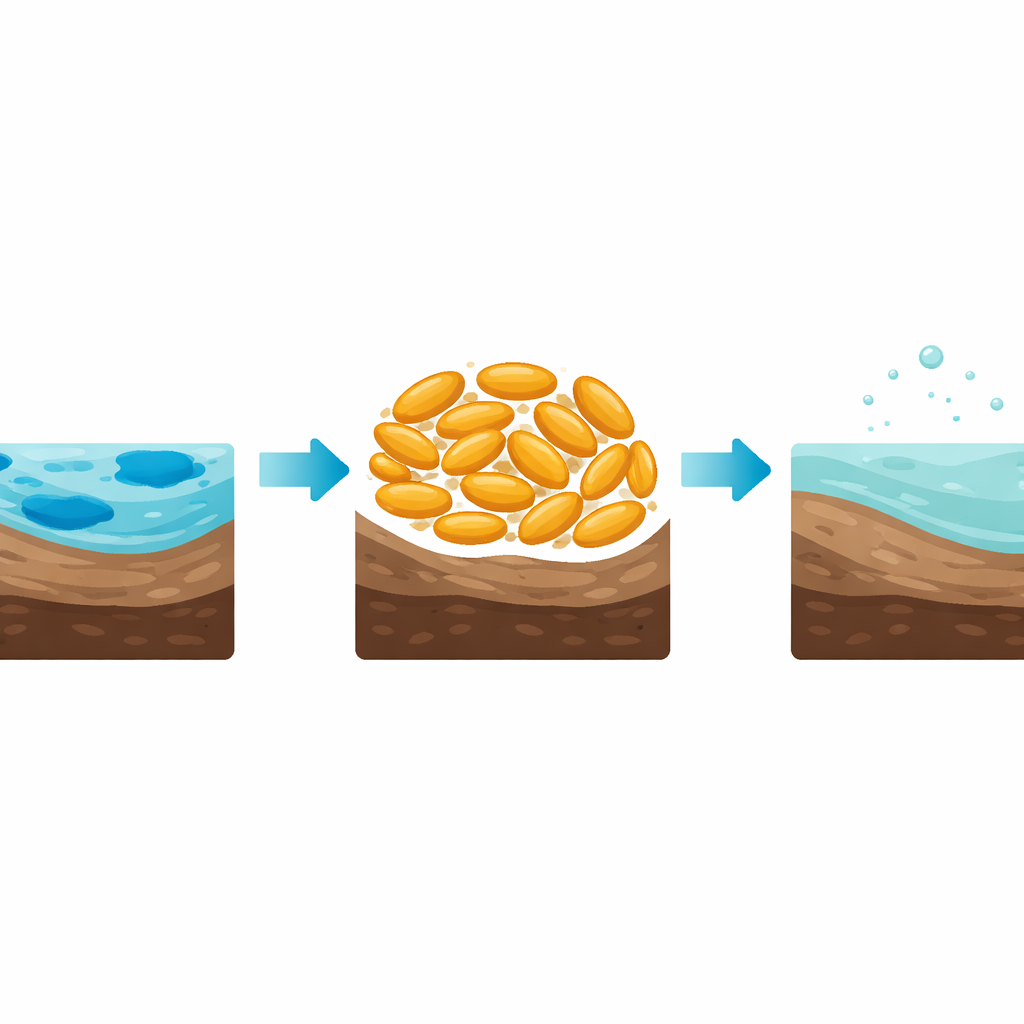
Finding a helpful microbe
The researchers began by searching in places already exposed to large amounts of dye—tannery wastewater, sludge, leather scraps, and a nearby lake. From these environments they isolated sixteen different bacterial strains and tested how well each one could remove methylene blue from a liquid medium. One strain stood out: it removed about 97 percent of the dye within just 24 hours. Genetic analysis showed that this champion strain belongs to a species called Bacillus safensis. The team then grew large amounts of this microbe, gently dried the cells to preserve their surface chemistry, and used the resulting bacterial material—called BS-SMAH-B—as a reusable cleaning agent.
How the bacterial material grabs the dye
To understand why BS-SMAH-B works so well, the scientists examined its surface using several imaging and analytical tools. Electron microscope images revealed a rough, porous texture with many tiny cavities, which together provide lots of area for the dye to stick. Chemical analyses showed that the bacterial surface is rich in carbon, oxygen, and nitrogen, arranged into common groups such as acids, alcohols, and amines. These groups carry negative charges under normal environmental conditions, while methylene blue carries a positive charge. That charge difference helps pull the dye out of the soil solution and onto the bacterial surface, much like static electricity making dust cling to a cloth. Measurements of surface charge confirmed this: the biomass had a clearly negative electrical potential, favoring attraction of the positively charged dye molecules. 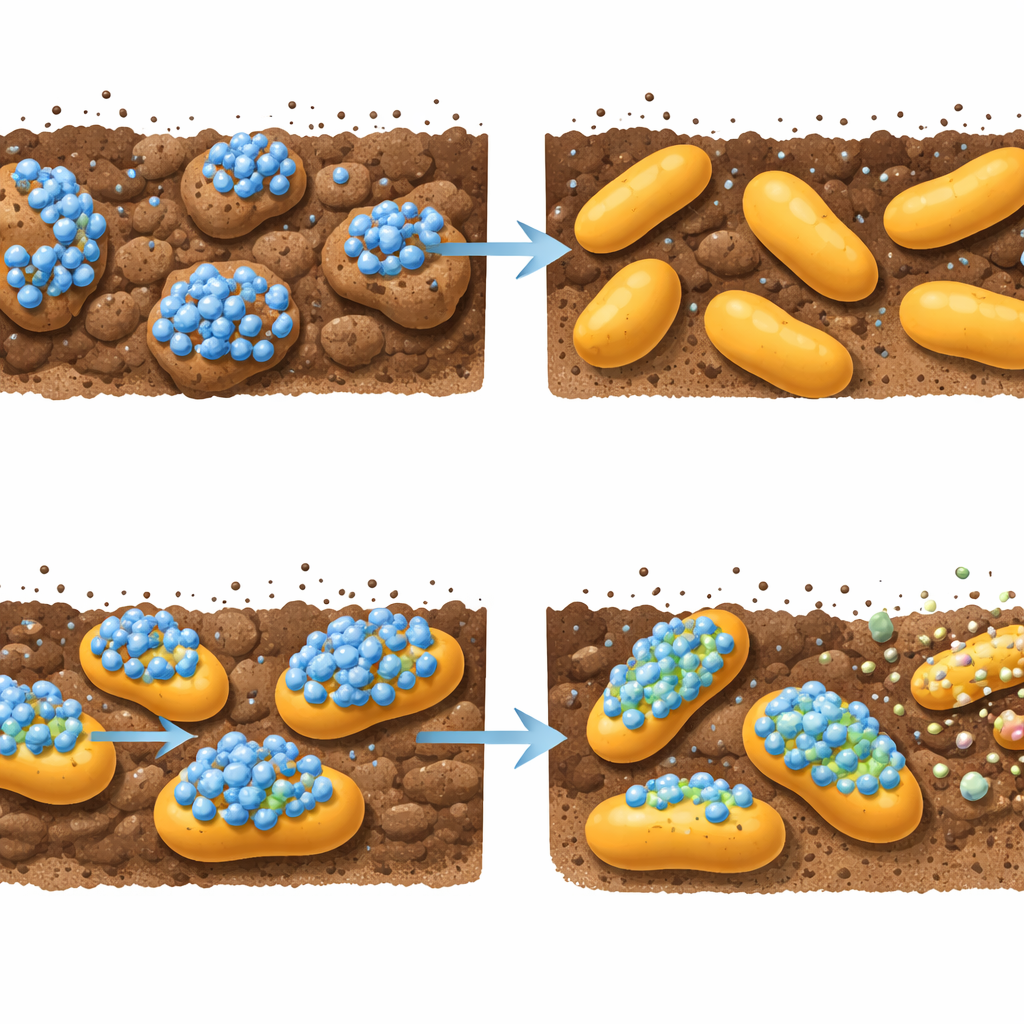
From colored soil to cleaner ground
After characterizing the material, the team tested BS-SMAH-B on soil deliberately contaminated with methylene blue. In the lab, they explored how acidity, bacterial dosage, temperature, salt content, and contact time affected performance. The best conditions were mildly alkaline (around pH 9), with enough biomass added to provide many binding sites and moderate warming, which all boosted dye removal. Under these optimized settings, the system took up dye quickly at first, then slowed as the bacterial surface became saturated. Mathematical models of this time course indicated that the key step involves the dye forming strong chemical bonds with the bacterial surface rather than just loosely sticking. Importantly, when the same approach was applied to real polluted soils taken from tannery areas—where other substances compete for space on surfaces—the bacterial material still removed up to about 82 percent of the dye in only one hour.
What happens to the trapped dye
The study did not stop at simple capture of the dye. Evidence from light-absorption spectra and previous work with related bacteria suggests that, once methylene blue is attached to the biomass, enzymes produced by the microbes begin to cut the dye molecules apart. Over time, the intense blue color fades and the large dye molecules are transformed into smaller, much less harmful fragments, and eventually into simple inorganic forms and short organic molecules. This two-step action—fast "biosorption" followed by slower biological breakdown—means the dye is not just hidden but actively dismantled, reducing the risk that it will leak back into the environment later.
A nature-inspired path to safer soils
Put simply, this research shows that a naturally occurring bacterial strain can act like a smart sponge for a persistent industrial dye: it first grabs the methylene blue from soil and then helps digest it. The BS-SMAH-B material is inexpensive to grow, relies on mild conditions, and avoids the heavy chemical use that can create new pollution problems. Although further testing is needed outside the lab, these results point toward practical, low-cost treatments that use living or once-living microbes to clean up colored soils around tanneries and other dye-intensive industries, making land and water safer for surrounding communities.
Citation: Mahmoud, M.E., Moneer, A.A., Abouelkheir, S.S. et al. Sequential biosorptive-degradative remediation of methylene blue from polluted soil and wastewater by a newly isolated Bacillus safensis SMAH biomass: optimization, kinetics, isotherms and thermodynamics assessments. Sci Rep 16, 8496 (2026). https://doi.org/10.1038/s41598-026-39057-7
Keywords: soil bioremediation, methylene blue, bacterial biosorption, dye pollution, environmental cleanup