Clear Sky Science · en
PFDN2 stabilizes PYCR2 to activate Wnt/β-catenin signaling and promote colorectal cancer progression
Why this research matters for bowel cancer
Colorectal cancer, a common form of bowel cancer, remains one of the leading causes of cancer death worldwide. Many patients are diagnosed after the disease has already begun to spread, and existing treatments do not work equally well for everyone. This study explores a newly uncovered molecular partnership inside tumor cells that helps them grow, move, and resist control. Understanding this partnership could open up fresh ways to predict how aggressive a cancer will be—and to design therapies that specifically weaken its growth engine.
A hidden partnership inside cancer cells
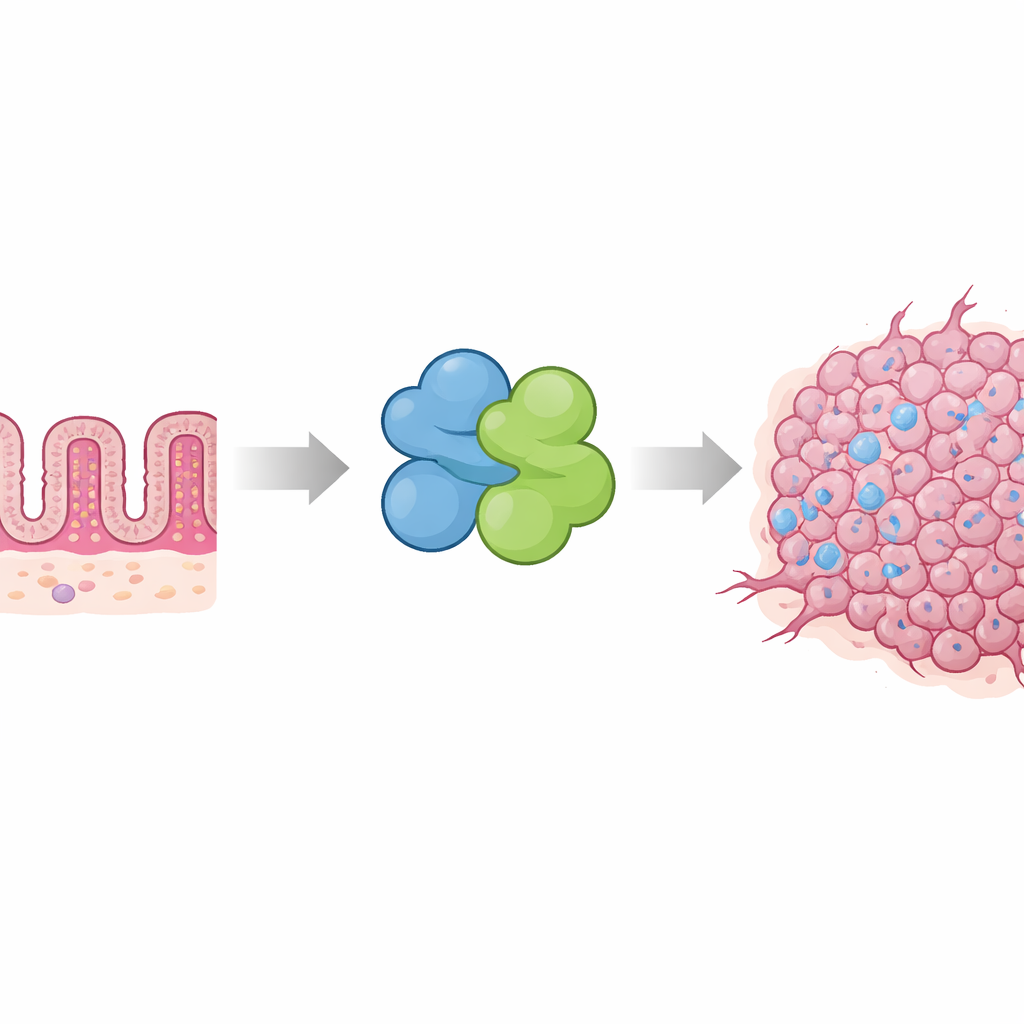
The researchers focused on two proteins, PFDN2 and PYCR2, that normally help cells manage newly made proteins and certain aspects of energy and building-block metabolism. By looking at large public cancer databases and tumor samples from patients, they found that both proteins are present at higher levels in colorectal tumors than in nearby normal tissue. Patients whose tumors had more of either protein tended to have worse survival, suggesting that this pair is not just a bystander but may actively drive disease progression. Staining of surgical samples confirmed that these proteins are mainly found in the cell fluid (cytoplasm) and are especially abundant in more advanced tumors.
Driving faster growth and spread
To see what these proteins actually do, the team manipulated their levels in cultured colorectal cancer cells. When they boosted PFDN2 or PYCR2, the cells multiplied more quickly and moved across laboratory surfaces more readily—behaviors associated with tumor growth and spread. When they reduced either protein, cell growth slowed and movement was impaired. Similar results appeared in a mouse model: tumor cells engineered to produce less PFDN2 formed smaller tumors, with fewer dividing cells and reduced levels of a key cancer-promoting signal inside the tumor tissue. Together, these findings show that PFDN2 and PYCR2 act as accelerators for colorectal cancer cell growth and migration.
How one protein shields another
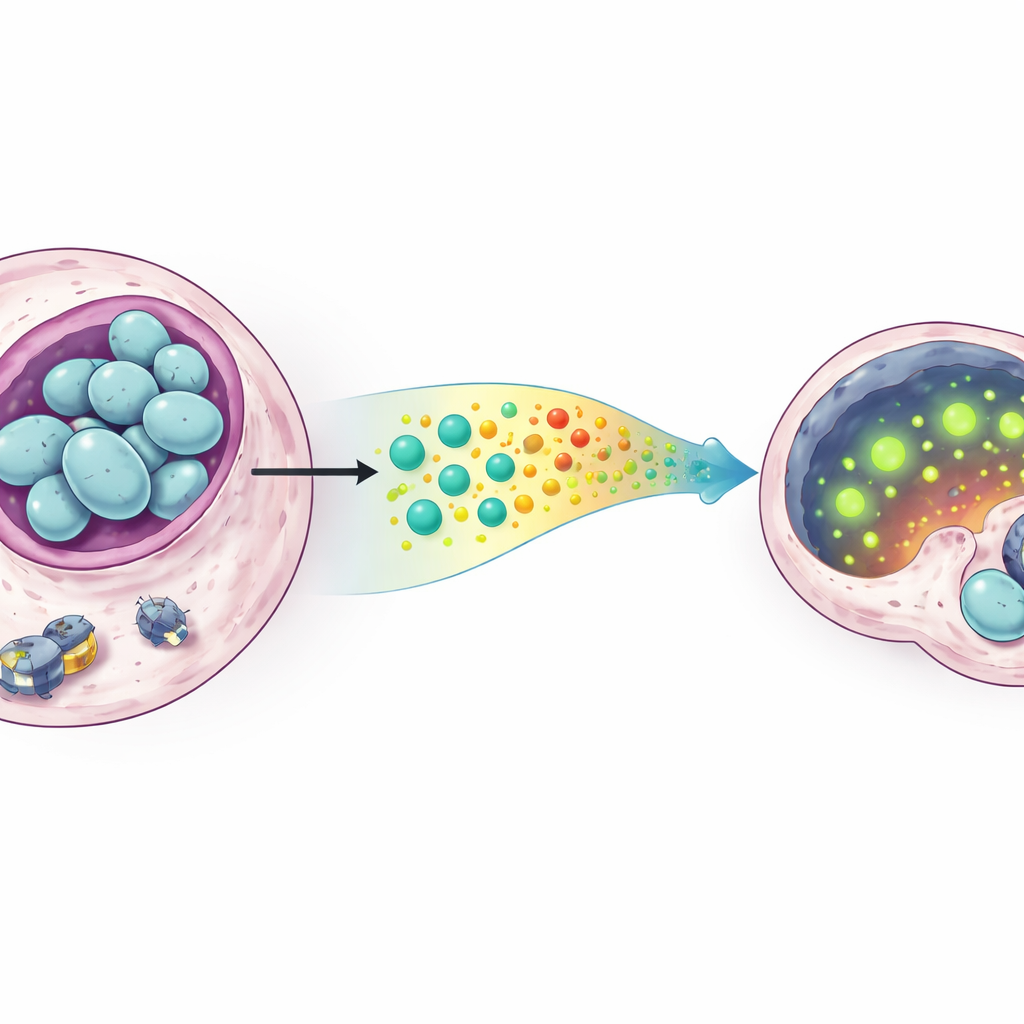
Diving deeper, the scientists discovered that PFDN2 and PYCR2 physically interact and sit in the same part of the cell. When PFDN2 levels were lowered, the amount of PYCR2 protein dropped sharply, even though the genetic instructions (its RNA) stayed about the same. Blocking the cell’s protein-disposal machinery, known as the proteasome, prevented this loss. Timed experiments tracking protein decay showed that without PFDN2, PYCR2 is broken down much faster. These results indicate that PFDN2 acts like a molecular bodyguard, stabilizing PYCR2 and shielding it from being tagged and destroyed, thereby helping cancer cells maintain higher levels of PYCR2 than they otherwise could.
Turning up a well-known cancer signal
PYCR2 is involved in proline metabolism, which ties into how cells manage energy, redox balance, and the structure around them. The team found that this PFDN2–PYCR2 pair feeds into Wnt/β-catenin signaling, a pathway already famous for its role in colorectal cancer. When PFDN2 or PYCR2 was reduced, levels of β-catenin and its downstream growth drivers, such as c-Myc and Cyclin D1, declined, and β-catenin was less able to accumulate in the cell nucleus where it switches genes on. Reporter tests that read out Wnt/β-catenin activity confirmed a drop in pathway strength. Importantly, re-introducing PYCR2 into cells lacking PFDN2 partially restored both the signaling activity and the cells’ ability to grow and move. Conversely, drugs that dampen Wnt/β-catenin signaling blunted the growth boost normally caused by extra PFDN2 or PYCR2. This places the PFDN2–PYCR2 partnership upstream of, and feeding into, an already hyperactive cancer signal.
What this means for patients
The study suggests that many colorectal tumors exploit a PFDN2–PYCR2 “support module” to fine-tune a major growth pathway and maintain a biochemical environment favorable to rapid division and spread. In everyday terms, PFDN2 helps keep PYCR2 on the job, and together they turn the Wnt/β-catenin volume knob up a notch in cells that are already wired for overgrowth. While more work is needed in larger patient groups and additional models, both proteins could eventually serve as warning markers of more aggressive disease, and as starting points for therapies that selectively destabilize this partnership, weakening the tumor’s internal machinery without directly targeting DNA.
Citation: Chang, X., Chen, P., Li, L. et al. PFDN2 stabilizes PYCR2 to activate Wnt/β-catenin signaling and promote colorectal cancer progression. Sci Rep 16, 7909 (2026). https://doi.org/10.1038/s41598-026-39055-9
Keywords: colorectal cancer, Wnt signaling, protein stability, cancer metabolism, tumor progression